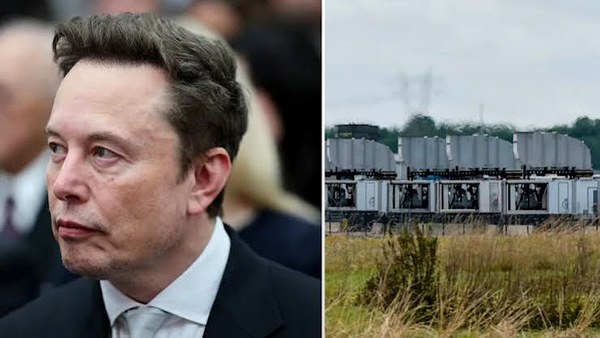

A federal judge just told xAI it cannot walk away from a pollution fight over the turbines powering its Memphis-area data center.
Chief U.S. District Judge Debra M. Brown ruled on October 30, 2026, that the NAACP's Clean Air Act lawsuit against xAI and MZX Tech LLC can move forward, rejecting the companies' attempt to dismiss the case over gas turbines running the Colossus data center in Southaven, Mississippi, near Memphis, Tennessee.
Tesla and SpaceX Merger Talks Confirmed by Musk But There's a Huge Catch
Judge rejects every argument xAI raised against the Memphis data center pollution lawsuit
The NAACP filed its lawsuit on April 14, 2026, through the Southern Environmental Law Center and Earthjustice, accusing xAI and MZX Tech of running roughly 27 methane gas turbines without the air permits or pollution controls required under federal law. The turbines sit close to homes, schools and churches in a mostly Black, working-class part of Southaven, and the NAACP argues that location is central to the harm being caused.
xAI and MZX Tech pushed back hard. In a motion filed June 15, they claimed the turbines count as mobile sources under Mississippi's State Implementation Plan, which would let them dodge standard stationary-source permitting rules. They also argued the NAACP had no legal right to sue and that the Clean Air Act's citizen-suit provision was unconstitutional. Judge Brown shot down all three arguments in one ruling, writing that the plaintiffs have statutory standing, that the turbines are not mobile sources under the state plan, and that the citizen-suit provision does not violate Article II or the private nondelegation doctrine.
Reliance Elon Musk Starlink Competition Rules Spark India Satellite Showdown
Why the xAI Memphis data center pollution lawsuit matters beyond one courtroom
This ruling does not decide whether xAI actually broke the law. It simply means the case is strong enough on paper to keep going. But that distinction matters less to residents living next to the turbines than the fact that the fight is far from over. The lawsuit will now move into discovery, where lawyers on both sides will dig into permitting records, emissions data and health impacts tied to the gas-fired equipment.
The stakes go beyond Southaven. AI companies across the country are racing to build massive data centers that need huge amounts of electricity, often faster than local power grids can supply. xAI's solution was to install turbines near its Colossus facility rather than wait on the existing grid. That shortcut is exactly what triggered the legal fight, since the NAACP argues the equipment functions as a stationary power plant, not some temporary or mobile fix.
Government involvement adds another twist to the Southaven gas turbine case
The U.S. Department of Justice also tried to get involved on xAI's side. According to CNBC, the government argued that the relief the NAACP wanted could threaten what it called American, national, economic and energy security, and it specifically objected to any order that might temporarily cut power to the Colossus facility. A separate court ruling rejected the idea that the government could unilaterally kill the NAACP's case, stating there was no reasonable reading of the Clean Air Act that gave Washington that kind of override power.
That back-and-forth shows how much weight this case carries. It is not just a local dispute over turbines and permits. It has pulled in federal regulators worried about AI infrastructure and energy supply, while residents and civil rights groups push back on what they see as pollution dumped on a community with little power to stop it.
Home buyout offers raise new questions for Colonial Hills residents
While the lawsuit played out, reports surfaced that an xAI-related subsidiary was quietly trying to buy homes in the Colonial Hills neighborhood near the turbines. Forbes and The Guardian reported the offers could affect as many as 418 properties, with the catch being that homeowners had to give up their right to join legal claims tied to the power plant. One report mentioned a realtor claiming 18 homeowners had already agreed to sell, though xAI has not confirmed that number or the full scope of the buyout plan.
Separately, three Colonial Hills residents filed their own lawsuit in June over what they describe as constant noise and vibrations from the turbines, seeking damages for nuisance, emotional distress, health problems and falling property values. That case runs alongside the NAACP's Clean Air Act lawsuit, adding more pressure on xAI from multiple directions at once.
What comes next in the fight over Colossus and its gas turbines
With the motion to dismiss denied, the case now heads toward deeper fact-finding. Expect fights over whether the turbines needed permits from the start, what pollution controls were missing, and what remedies a court might eventually order if the NAACP wins. Any outcome could set a precedent for how fast-growing AI companies power their data centers without running into the same legal wall.
For now, the ruling sends a clear signal: xAI cannot end this fight with paperwork arguments alone. The turbines, the permits and the community's health concerns will all face scrutiny in court, and the next moves from both sides will shape how this environmental justice case plays out in the months ahead.