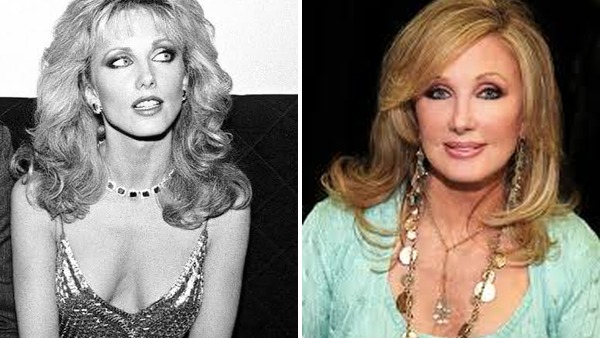

A soap star's simple contract decision turned into one of daytime TV's most dramatic murder plots.
Morgan Fairchild's character Sydney Chase was killed off ABC's soap opera The City in 1996 after Fairchild's one-year contract expired and she chose not to return, with writers folding her exit into the show's "Happy Now" serial-killer storyline.
Barbara Barrie Dead at 95: Why Her Final Choice Honored Her Own Advocacy
How Morgan Fairchild's The City Character Was Killed
Fairchild joined The City in November 1995, playing Sydney Chase, a wealthy and powerful media executive. The show itself was a reworked version of ABC's older soap Loving, which had just wrapped up its run with a huge serial-killer plot that wiped out a large chunk of its cast. When Loving became The City, Sydney was one of the brand-new characters brought in to pull viewers into Manhattan with the rest of the surviving cast.
At the time, press coverage painted Sydney as rich but unhappy, a character built to be one of the new show's biggest draws. The New Yorker even compared her public image to media mogul Rupert Murdoch, calling her a sharp-tongued tycoon. She was meant to be a centerpiece of the relaunch, not someone written off quickly. But that's exactly what happened less than a year later.
Patrick Stewart Dies at 86 , Star Trek and X-Men Legend's Final Days Revealed
Why Morgan Fairchild Left The City
Fairchild had only signed a one-year contract with the show. When that deal ran out in late 1996, she decided not to renew it. Instead of simply having Sydney move away or retire quietly, the writers used her exit as fuel for a second serial-killer storyline, mirroring the trick that had already worked once during the Loving-to-City transition.
That storyline became known as the "Happy Now" plot, named after notes left behind by a mysterious figure called the Masquerader. This killer stalked much of the cast throughout 1996, and Sydney ended up among the victims. The killer's identity was eventually revealed to be Molly Malone, played by Melissa Dye, a character who had seemed cheerful and harmless right up until the twist.
The City's Serial-Killer Strategy Explained
This wasn't the first time producers leaned on a murder mystery to solve a cast problem. Executive producer Jean Dadario Burke told the Los Angeles Times that the show didn't have the luxury of rebuilding slowly. "We didn't have the time to go the natural route to take a year and build a show back up," she said, explaining why she told head writers James Harmon Brown and Barbara Esensten to "get radical."
ABC liked the idea, and the original Loving murder storyline eliminated eight characters total. Six were victims, one was the killer who died by suicide, and one simply moved to Florida once the killings stopped. A network spokesperson explained why one major Loving character, Stacey, had to die, saying she "symbolized the old Loving," adding, "So we decided to kill her off to demonstrate that we were serious." That first murder arc reportedly brought in new affiliates and pushed ratings up by 20 percent, which likely encouraged the show to repeat the formula when Fairchild left.
What Happened After Sydney Chase's Death
Despite reusing a strategy that had worked before, The City couldn't recreate that earlier success. ABC canceled the series in 1997 after it failed to build strong enough viewership, even with the splashy murder mystery and Fairchild's high-profile casting. The available reporting doesn't tie the cancellation directly to her departure, but the timing shows the show never fully recovered its momentum after she left.
Fairchild's career kept rolling right along. She went on to appear in other soaps including Days of Our Lives, General Hospital, and The Bold and the Beautiful, along with assorted film and television roles over the following years. Her stint as Sydney Chase remains a memorable footnote, mostly because of how her real-life contract decision got turned into a soap opera murder mystery instead of a quiet goodbye.
A Soap Opera Exit That Became Must-See TV
Looking back, Sydney Chase's death says less about the character and more about how daytime television operated in the mid-1990s. A contract expiring didn't just mean an actor left the show. It meant writers had to build an entire storyline around that absence, often in the most dramatic way possible. For The City, that meant another serial killer, another round of suspects, and another character picked off to keep audiences guessing.
There's no indication of any revival or continuation of The City in the years since its 1997 cancellation. What remains is the story itself, a reminder of how a simple scheduling decision between an actress and a network turned into one of the more talked-about murder plots in 1990s daytime drama.