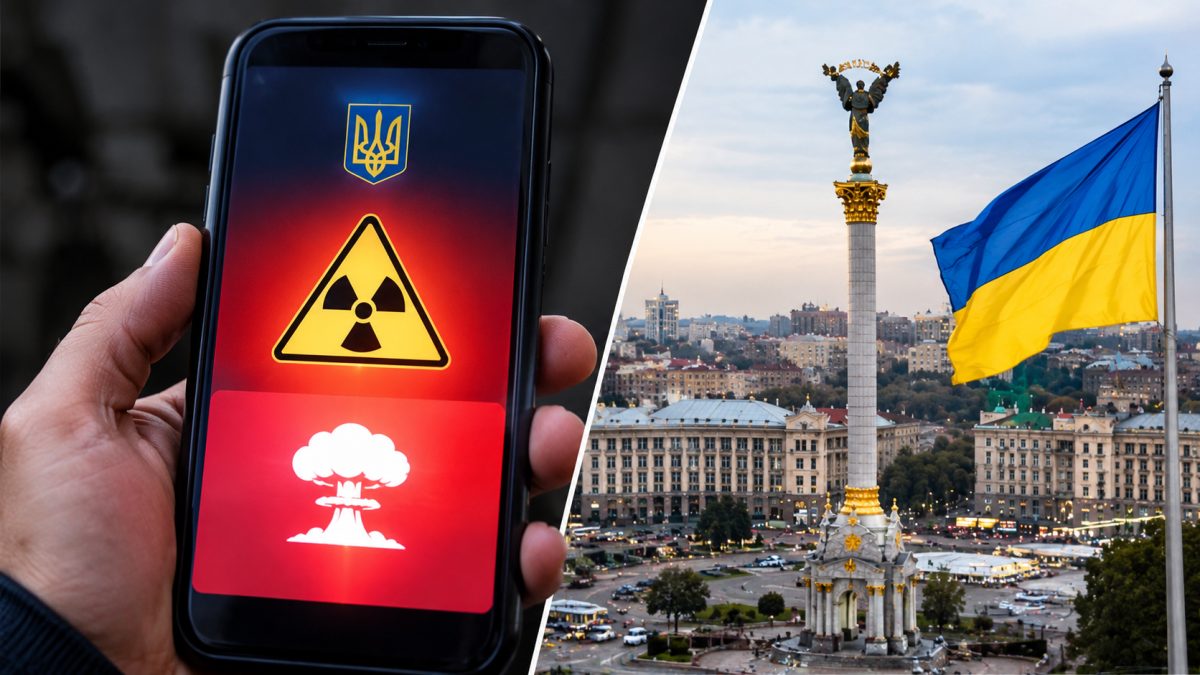

A trusted wartime safety app suddenly started warning of nuclear strikes and radiation danger, and nobody saw it coming.
Ukraine's Air Force said late Sunday, November 1, 2026, that the country's Air Raid Alert app was apparently hacked, sending false warnings about radiation, nuclear and chemical threats, plus street fighting, to users in Kyiv and other areas before officials stepped in to calm the public.
Life in Kyiv During Russian Attacks: How a City Keeps Going at 3 A.M.
Ukraine Air Raid App Hacked During Sunday Night Chaos
The trouble started around 22:47 local time when the app pushed out a chilling message in Ukrainian and Russian. It read simply: "Radiation threat. Radiation threat declared in Kyiv." A minute later, a second message in Russian claimed a nuclear alert would soon cover the entire country, and it even name-dropped Oreshnik, the Russian hypersonic missile that has worried Ukrainian officials for months.
Then came a third alert at 22:49, warning of a chemical attack in Kyiv and telling people to stay indoors. Other reports described additional fake alerts about street fighting, including in Kharkiv, Ukraine's second-biggest city. None of it was real, but for a few tense minutes, plenty of people believed it.
The Air Force posted on Telegram that the app had "probably been subjected to hostile interference," and added a direct plea for calm: "There is no radiation threat! Stay calm and follow our updates on our channel." Reuters reported the Air Force also called it a case of "enemy influence."
Gen. Alexus Grynkewich Warns NATO Will 'Fight' If Russia Ever Attacks Europe
Officials Rush to Confirm There Is No Real Danger
Ukraine's Ministry of Internal Affairs and the Center for Countering Disinformation quickly backed up the Air Force's account, warning that the threat levels showing up in the app were simply not true. The Ministry for Digital Transformation confirmed the app itself wasn't working normally, even as the rest of the warning network kept running fine.
That distinction mattered a lot. Air raid sirens kept sounding as normal. Public loudspeakers stayed active. The Kyiv Digital app, a separate government tool many residents rely on, continued working without interruption. Kyiv city authorities directly addressed the panic, stating there was no radiation threat and no active air-raid alert in the capital, while pointing residents toward Kyiv Digital and the street-level alert system as trustworthy alternatives.
By around midnight, Ukraine's State Emergency Service said the alert system had returned to normal operation. Even so, officials urged people to keep checking local authorities and listening for loudspeaker announcements, just to be safe while the situation was still being sorted out.
Why Fake Nuclear Alerts Hit So Hard in Ukraine
This wasn't just any prank notification. Ukraine has lived under constant wartime alert since Russia's full-scale invasion began in February 2022, and the Air Raid Alert app has become something people genuinely depend on to know when it's safe to go outside. A fake radiation warning lands differently in a country sitting near the Zaporizhzhia nuclear plant, with years of nuclear-related fears already baked into daily life.
Referencing the Oreshnik missile wasn't random either. Russia has used that weapon as a symbol of nuclear-capable firepower in its messaging before, so folding it into a fake alert likely amplified the fear factor on purpose. Whoever was behind this understood exactly which buttons to push.
Still, nobody has officially named a culprit. Ukrainian reports describe the incident using careful language like "likely hacking" and "hostile interference" rather than pointing fingers at a specific country or group. One report from Ukrainian outlet UNN noted that confirmation of who exactly was responsible wasn't available right away, and that remains the case.
What Comes Next for Ukraine's Warning Systems
For now, the app is reportedly back to functioning normally, and officials have shifted their focus toward reassurance and redundancy. Residents are being told to lean on multiple channels at once, sirens, Kyiv Digital, official Telegram posts, and street alerts, rather than trusting a single app blindly after this kind of scare.
What hasn't happened yet is a full technical explanation. There's no confirmed forensic report explaining how the hack worked, whether it involved stolen access credentials, a server breach, or something else entirely. No arrests have been announced, and no security upgrades to the app have been detailed publicly so far.
Going forward, the big questions center on accountability and prevention. Will Ukraine's Digital Transformation Ministry release a detailed breakdown of how attackers got in? Will the app get stronger authentication to stop this from happening again? And will investigators ever confirm who was actually behind it? Until those answers come, Ukrainians are being told the same thing again and again: stay calm, check multiple sources, and don't panic over a single notification.