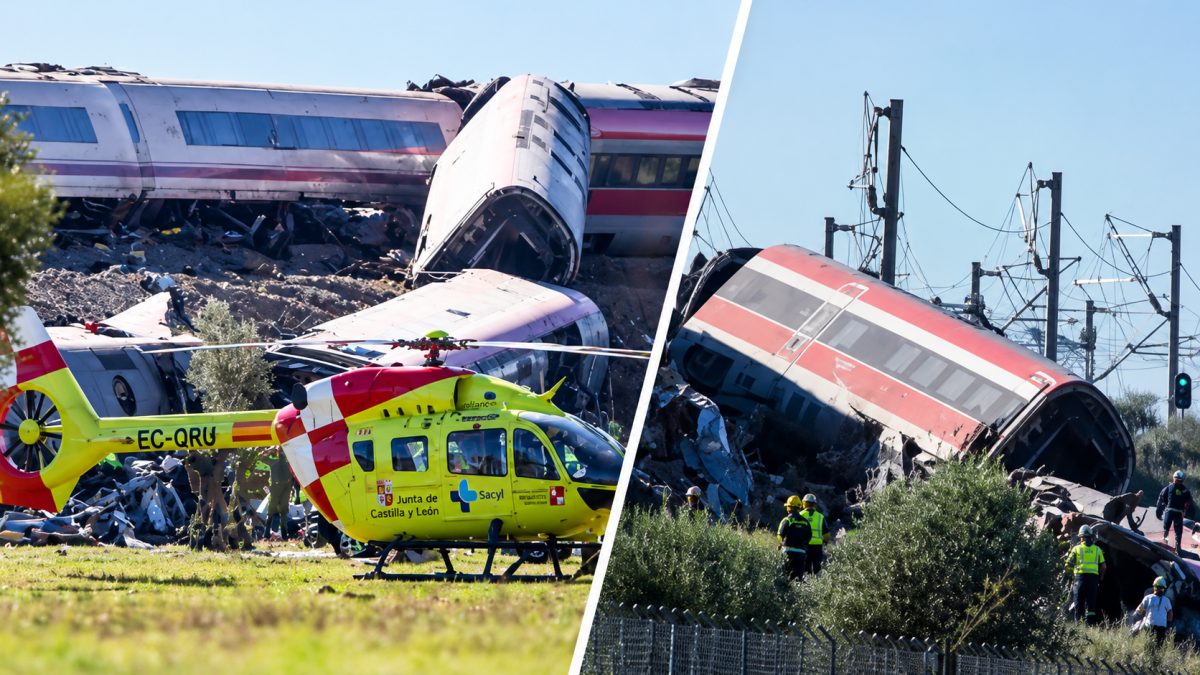

A high-speed train slammed into another that had already stopped, and now Spain is counting its dead and asking how this happened.
At least 68 people died and dozens more were hurt when a Renfe high-speed train crashed into a stationary Iryo train on Wednesday, October 28, 2026, in Toledo province, south of Madrid. The Spain train crash happened on the busy Madrid–Seville rail line near the town of Urda, officials said, turning a normal morning commute into one of the deadliest rail disasters in the country's modern history.
Ecuador Priest Crucifix Falls During Livestreamed Mass, Killing Him Instantly
How the Spain Train Crash Unfolded Near Urda
The collision happened on the high-speed corridor that runs between Madrid and Andalusia, in an area infrastructure manager ADIF placed between the towns of Mora, Orgaz and Urda. Early reports pointed to a crash time shortly before 9:15 a.m. local time, but later official accounts from Transport Minister Óscar Puente put the actual impact closer to 8:53 a.m. Either way, the outcome was the same: a Renfe train plowed into the back of an Iryo train that was not moving, and at least two carriages derailed from the force of the hit.
Together, the two trains were carrying roughly 500 passengers, according to a spokesperson for the regional government of Castilla-La Mancha. Witnesses told CNN that people were thrown into the air inside the carriages, and one passenger described the aftermath simply as awful. Fire crews, ambulances and police vehicles rushed to the site, and rescue teams worked through the night pulling survivors from the wreckage while the death toll climbed through the day.
Air Traffic Controllers 2.8% Pay Raise Comes With a Catch After LaGuardia Crash
What Caused the Deadly Collision
Puente said the disaster traced back to a failure in the LZB train-management safety system, a technology meant to keep trains a safe distance apart automatically. That failure hit a stretch of track about 63 kilometers long, and when it happened, around 8:30 a.m., trains in the area were supposed to stop on their own. That part of the system apparently worked. What went wrong came next.
According to Puente, a train controller gave the Renfe train permission to keep moving without any speed limit, even though the safety system had just failed. He called that order inexplicable. The train then picked up speed, traveling at roughly 124 miles per hour between 8:36 and 8:52 a.m., before smashing into the back of the Iryo train that remained stopped on the tracks ahead. Investigators have not yet released a final report, but the early picture points to a combination of a technical breakdown and a human decision that should not have been made.
Government Response and National Mourning
Prime Minister Pedro Sánchez traveled to the crash site and addressed the country directly. Today all of Spain is grieving, he said, announcing three days of national mourning for the victims. His government also confirmed that Copa del Rey football matches would be postponed out of respect for those killed and injured, a sign of how deeply the crash has shaken the country.
The regional government of Castilla-La Mancha confirmed the death toll of at least 68 and said dozens more were injured, though the exact number kept shifting as hospitals admitted new patients throughout the day. Some reports cited 58 injured, others put the figure above 100, reflecting how fast and chaotic the response was in the first hours after the crash. Renfe and Iryo, the two companies running the trains involved, along with ADIF, now face intense scrutiny over how the failure was handled in real time.
Rail Service Disruption and the Road Ahead
The Madrid–Andalusia high-speed line was suspended immediately after the crash, cutting off one of Spain's most heavily used rail routes connecting the capital to the south of the country. Thousands of regular travelers were left scrambling for alternatives as repair crews and investigators moved onto the damaged section of track. There is no confirmed timeline yet for when service will resume.
Reports noted this was the third rail disaster in Spain in 2026 alone, though details on the earlier incidents were not immediately available, leaving it unclear whether they share any common cause with Wednesday's crash. Investigators are expected to dig into the dispatch center's decision-making, the communication between controllers and train crews, and whether backup safety measures should have kicked in before a speeding train was ever allowed near a stopped one. For now, Spain is left burying its dead and waiting for answers about why a known system failure turned into a fatal collision.
Families of victims are still being notified as identification work continues at local hospitals and makeshift centers near the crash site. Officials have not set a date for a judicial or parliamentary hearing on the incident, but pressure is mounting on both Renfe and national rail regulators to explain the gap between the system's warning and the fatal order that followed it.