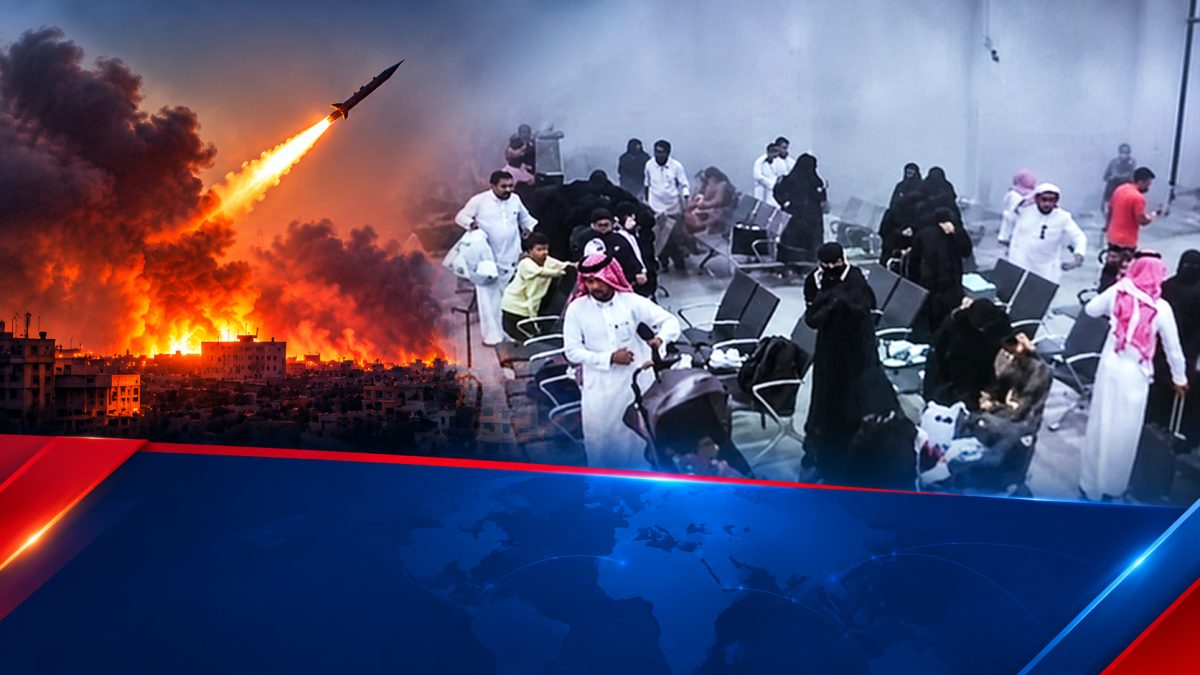

Washington pulled families and non-essential staff from Riyadh after Houthi missiles rattled Saudi airports, and quiet moves are now spreading across the Gulf.
US diplomats leaving Saudi Arabia became official on October 21, 2026, when the State Department ordered non-emergency government employees and their family members to depart the kingdom. The order came after Iran-aligned Houthi forces launched a wave of attacks on Saudi airports and infrastructure, killing civilians and raising fears the fighting could spread across the region.
Iran Attacks Sink Two Ships Near Strait of Hormuz in Just 24 Hours
Why US Diplomats Are Leaving Saudi Arabia Right Now
The decision covers the US Embassy in Riyadh and nearby consular offices. State Department spokesperson Tommy Pigott confirmed the move in a short statement, saying the department had issued an ordered departure for non-emergency staff and their families in Saudi Arabia. He did not call it a full evacuation, and he stressed that essential embassy work would continue.
The trigger was a string of Houthi strikes that hit far beyond Yemen's borders. A security alert from the US Mission to Saudi Arabia, posted on October 21, said Iranian-backed Houthis had attacked civilian airports and other critical infrastructure, causing casualties and major travel chaos. The alert warned that the fighting could escalate rapidly beyond the areas already hit, a line that officials in Washington clearly took seriously.
Rosneft Ukraine Refinery Strikes Push Russian Oil Giant Toward Lasting Damage
Airports Shut Down and Travel Chaos Spreads
Riyadh's King Khalid International Airport reportedly suspended operations, while Jeddah's King Abdulaziz International Airport and Dammam's King Fahd International Airport kept running but with heavy delays and cancellations. US government employees were told they now need special permission from the chief of mission before using any Saudi airport, a restriction put in place right after the missile and drone attacks.
By October 22, reports tied the unrest to three deaths from Houthi strikes across the country. The scale of the damage, hitting both civilian travel hubs and energy infrastructure, pushed the security alert beyond a routine warning. US citizens in Saudi Arabia were told to watch for Saudi Civil Defense alerts sent through cellphone broadcasts and to check airline updates constantly, since airspace closures could happen with little notice.
Gulf-Wide Staffing Shifts Beyond Saudi Arabia
CNN reported on October 23 that the United States was quietly shifting diplomats and family members out of several other posts too, including Jordan, Bahrain, Kuwait, Qatar, the United Arab Emirates, and Lebanon. Unlike Saudi Arabia, none of these countries received a formal public ordered-departure notice. Sources described the moves as discreet, with embassies in those countries technically remaining under their existing operating status.
Reuters reported that four US officials said additional Gulf missions were expected to pull out family members as well, even though the public language from the State Department stayed narrow and focused only on Saudi Arabia. That gap between private planning and public messaging has created confusion among some families caught in the middle.
The American Foreign Service Association flagged a real problem on the ground. A union spokesperson told CNN that some families outside Saudi Arabia were directed to leave their posts without clear answers on housing help or daily living allowances, even though their embassies weren't officially reclassified. That uncertainty has left diplomatic families scrambling to figure out logistics on short notice.
What This Means for Americans and the Region
Nothing in the current record points to a full shutdown of US embassies or a blanket order for all American citizens to leave the Gulf. The confirmed action is narrower: non-emergency personnel and their families out of Saudi Arabia, with quieter adjustments happening elsewhere. Essential diplomatic and security staff are staying in place for now.
Still, the symbolism is hard to miss. Pulling diplomatic families out of six or seven countries at once, even informally, signals that Washington sees real risk of this conflict spreading. The Houthi movement has hit Saudi Arabia before, but the targeting of civilian airports and critical infrastructure this time, combined with the explicit warning about rapid escalation, pushed officials to act fast rather than wait for things to calm down.
Watching for the Next Move in This Crisis
What happens next depends almost entirely on whether the Houthis keep striking and whether the violence stays contained to Saudi Arabia or spreads further into the Gulf. If attacks continue hitting airports or energy sites, expect more formal ordered departures, wider travel warnings, and possibly disruptions to commercial flights across the region.
For now, the State Department has not set any timeline for bringing diplomats and families back to Riyadh or lifting the current restrictions. A return to normal staffing would likely require a real stretch of calm, not just a pause in strikes. Until then, the moves in Saudi Arabia and the quieter shifts across Jordan, Bahrain, Kuwait, Qatar, the UAE, and Lebanon stand as the clearest sign yet that Washington is bracing for this crisis to grow before it shrinks.