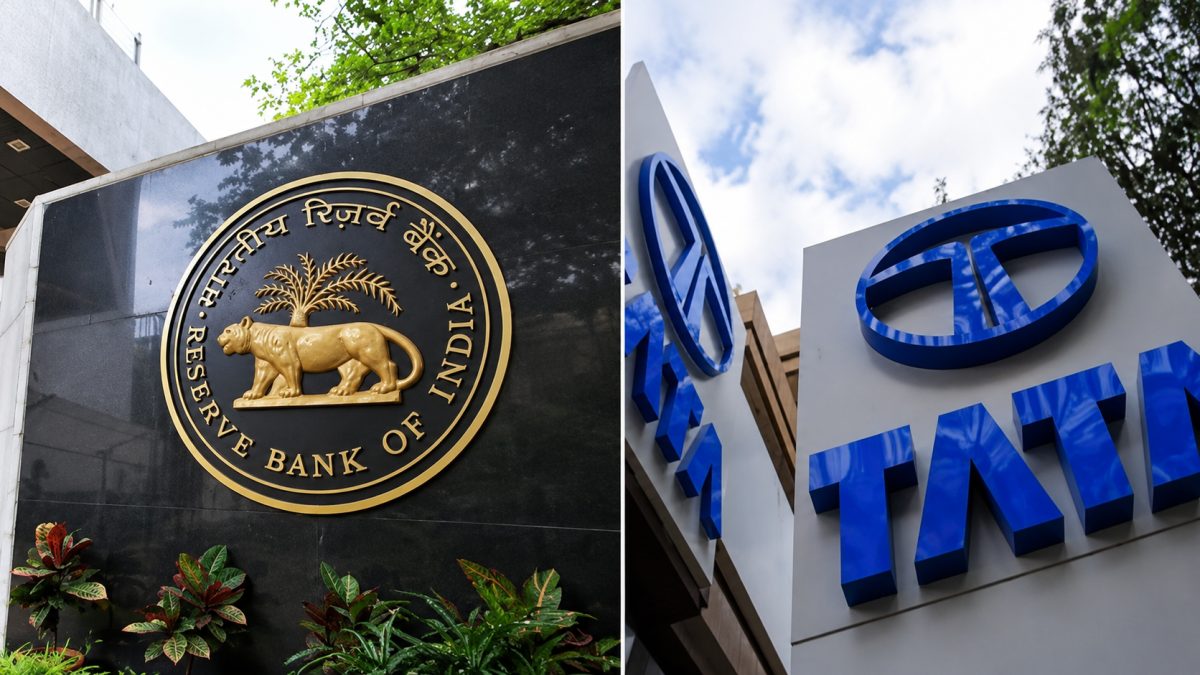

The country's top banking regulator just made it much harder for Tata Sons to quietly sidestep a stock market debut.
Reserve Bank of India Governor Sanjay Malhotra said on October 23, 2026, at the NDTV World Summit in New Delhi, that any non-banking finance company sitting in the RBI's upper layer must list on stock exchanges, a comment widely read as directly addressing Tata Sons and its long-running regulatory standoff with the central bank.
Jio IPO Valuation Could Push Reliance Past Tata Group In India Rankings
Governor Malhotra spells out the rule that traps Tata Sons
View this post on Instagram
Malhotra did not dodge the question. Asked about the Tata Sons listing RBI upper layer NBFC issue, he laid out the logic in plain terms. "As long as it's an NBFC within our definition, it's a CIC, it has access to funds, direct or indirect, it's required to be registered, and if it is in the upper layer, then it is required to list," he said. That single sentence closed off much of the wiggle room Tata Sons had been hoping to find.
He also explained the one real exception. A core investment company, or CIC, that has no direct or indirect access to public funds can sometimes skip registration altogether. But Malhotra made clear this carve-out does not help Tata Sons, since the company does have access to public funds through its sprawling network of group holdings. His comments effectively shut down the idea that paperwork changes alone could get Tata Sons out of its listing obligation.
Once Allies for Tata, Singhvi and Salve Now Battle Each Other Over Chandrasekaran's Fate
How the Tata Sons listing RBI dispute reached this point
This did not start in October. The RBI placed Tata Sons in the upper layer of its scale-based regulatory framework back in September 2022. That framework exists to keep a closer eye on the biggest, most systemically important NBFCs in the country, the ones large enough that trouble at the top could ripple across the whole financial system. Once a company lands in the upper layer, the clock starts ticking. It gets three years to list on a stock exchange.
That three-year window for Tata Sons ran out in September 2025. Rather than list, Tata Sons tried a different move. It applied to the RBI to surrender its core investment company registration entirely, a step that, if approved, might have pulled the holding company out of the upper-layer rules altogether. The RBI said no. In a letter dated September 11, 2026, the central bank rejected that application and told Tata Sons to proceed with an immediate stock market listing, according to reporting based on a source who had seen the communication.
Boardroom split over whether to list or restructure
The rejection set off visible tension inside the Tata empire. On September 17, 2026, the Tata Sons board met and resolved to begin the process of listing the holding company. But reports say Tata Trusts Chairman Noel Tata pushed back against that direction, exploring other options instead of accepting a public float outright.
One idea floated in connection with Noel Tata's position involves merging two Tata Sons subsidiaries into the parent company, a restructuring that could change the group's corporate shape. When asked directly about this proposal, Malhotra declined to comment on whether it would help Tata Sons avoid listing. But his broader remarks suggest the RBI would look past any corporate reshuffling and ask the same three questions: Is it still an NBFC under our rules? Is it still a CIC? Does it still have access to public funds, directly or indirectly? If the answer to all three stays yes, the upper-layer listing requirement would still apply, no matter how the company is restructured.
Despite the internal disagreement, Tata Sons appears to be moving toward compliance rather than confrontation. Sources cited in late September reporting said the company told the RBI it would expedite the process and work toward meeting the central bank's directive. That suggests the board's September 17 decision to initiate listing is the path currently being followed, even as alternative structures are reportedly still being discussed behind the scenes.
Why regulators care so much about one holding company
The RBI's stance is not just about Tata Sons. Malhotra defended the broader principle behind the upper-layer rule, saying large NBFCs and CICs that handle public funds or lean on a group's balance sheet need to be registered and follow proper listing norms. Core investment companies are unusual because they mostly just hold stakes in group companies rather than lending money directly. But when one of these holding companies sits at the center of a business empire as large as the Tata Group, with stakes across dozens of companies and access to enormous pools of capital, the RBI sees a systemic risk worth watching closely.
That is precisely why Tata Sons became the test case for this rule. It is the principal holding company behind one of India's largest conglomerates, and its classification as an upper-layer NBFC in 2022 was always going to draw scrutiny once the three-year listing deadline arrived. The September 2025 deadline came and went without a listing, the September 2026 deregistration request was denied, and now Malhotra's October remarks have removed much of the ambiguity about what comes next.
What remains unresolved as the standoff drags on
No one has announced a listing date, a stock exchange, an issue size, or a finalized corporate structure for Tata Sons. The RBI has also not laid out any specific penalty or enforcement timeline if Tata Sons continues to delay. What is confirmed is that the regulatory pressure is real and ongoing, that the original deadline has already passed, and that the company's own board has voted to start the listing process despite internal resistance.
The next real signal to watch will be whether Tata Sons formally files listing paperwork, whether the subsidiary merger proposal gains any traction with regulators, or whether Noel Tata and the Tata Trusts leadership find another way to influence the outcome. Until one of those things happens, the Tata Sons listing RBI upper layer NBFC question remains open, with Malhotra's October 23 comments standing as the clearest public statement yet of where the central bank stands.