
A tiny fossil bone from Brazil might hold the closest thing to real dinosaur blood scientists have ever studied.
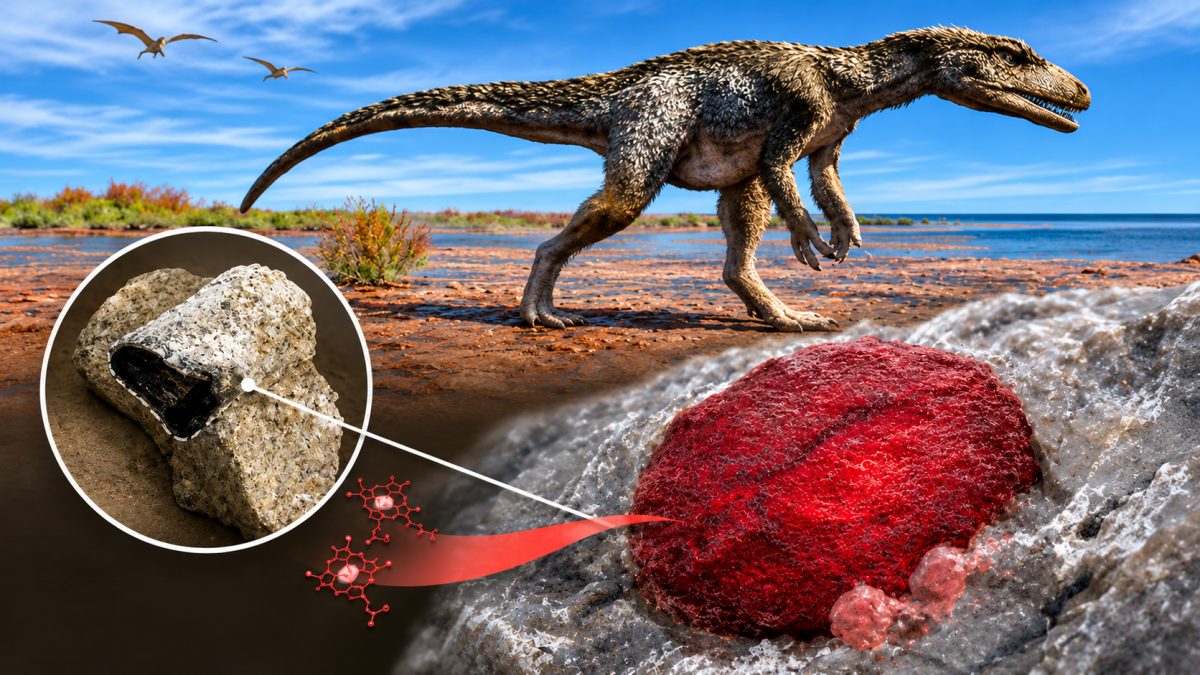
Researchers examining limb-bone material from Aratasaurus museunacionali, a small feathered dinosaur that lived about 115 million years ago in what is now northeastern Brazil, say they found microscopic structures that look like fossilized red blood cells, according to a study reported November 2 in the Proceedings of the National Academy of Sciences and covered by Science News on November 6, 2026. The claim adds new weight to a long-running question about whether dinosaur blood fossilization is actually possible.
Dinosaur Blood Fossil Found in Brazil Bone Stuns Scientists Worldwide
How the Fossilized Bone Revealed Its Secrets
The fossil came from Mina Pedra Branca, a well-known fossil site in northeastern Brazil. Scientists sliced thin sections of the bone and scanned them with focused electron beams, searching the internal structure for anything unusual. Inside what looked like old blood vessel channels, they spotted tiny ellipse-shaped objects, roughly the size and shape you might expect from blood cells.
That shape alone wasn't enough to convince anyone. So the team ran a chemical element map across the structures and found iron, carbon and nitrogen bunched together, a combination tied to heme, the iron-rich part of hemoglobin that carries oxygen in blood. That finding pushed the dinosaur blood fossilization theory from a simple visual hunch toward something backed by chemistry.
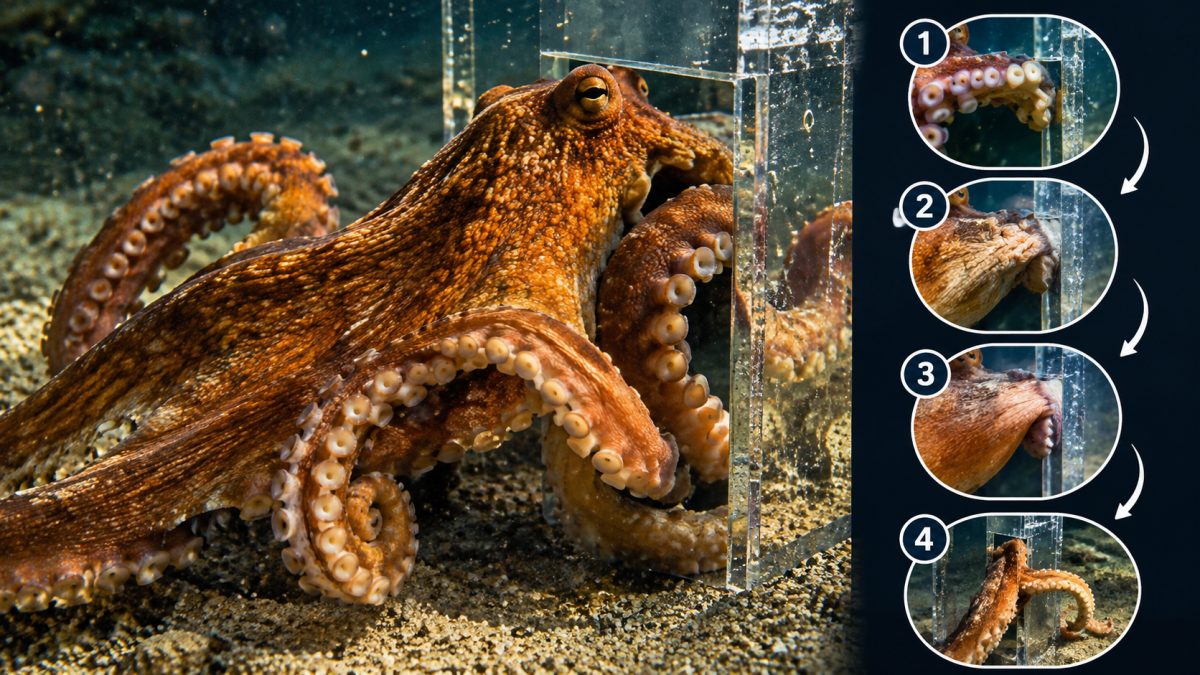
How Octopuses Squeeze Through Tiny Openings Using a Clever Step-by-Step Trick
Testing for Signs of Real Blood Chemistry
Researchers didn't stop at element mapping. They used a laser-based technique to hunt for specific molecules and reportedly detected porphyrins, ring-shaped compounds connected to heme and blood chemistry in general. To rule out contamination from something like plant chlorophyll, which can also contain porphyrins, the team extracted material from the bone and broke it down to check its molecular makeup. That test also pointed toward heme-related material rather than outside contamination.
The researchers also noticed a mineral called hausmannite sitting inside the ellipse-shaped structures. Hausmannite is a manganese oxide, and the team thinks it may have played a role in locking the blood-related material in place before it could break down completely. This mineral-based preservation idea offers one explanation for how something as fragile as blood chemistry could survive well over 100 million years underground.
Scientists Remain Split on What the Evidence Proves
Not everyone studying the findings is ready to call this fossilized dinosaur blood. Science News reported skepticism from researchers who question whether the ellipse shapes are truly the remains of red blood cells or something else entirely shaped by millions of years underground. A key voice in that pushback, identified as Grice, pointed out that nobody actually knows what a dinosaur red blood cell looked like in the first place, which makes comparisons tricky.
Grice also raised a deeper problem: even if heme-related molecules are present, fossilization itself could have warped the original shapes or let those molecules drift beyond the boundaries of whatever cell they once belonged to. In other words, finding blood chemistry in the right general area doesn't automatically prove it sat inside an intact, identifiable blood cell for 115 million years. That gap between chemical evidence and confirmed cellular identity is exactly where this debate now lives.
Why Scientists Care About Ancient Blood Chemistry
Nobody doubts dinosaurs had blood. They were living, breathing animals with circulatory systems just like other vertebrates. The real mystery is whether any trace of that blood, down at the cellular or molecular level, could survive the fossilization process intact enough to study today. Iron shows up naturally in rocks and groundwater, so finding iron alone proves very little. That's why researchers leaned on multiple layers of evidence, shape, location, element composition, and molecular signatures, all stacked together inside the same tiny structures.
Aratasaurus museunacionali lived during the Early Cretaceous period, and the sedimentary rock in northeastern Brazil where it was found is known for producing exceptionally well-preserved fossils. That unusual preservation quality is part of why this specimen offered researchers a rare shot at testing ideas about ancient blood chemistry that would be impossible with more weathered bones.
What Comes Next for This Fossil Discovery
The next real test will be replication. Scientists will likely look at other Aratasaurus bones and fossils from entirely different dinosaur species to see whether the same ellipse shapes, the same iron-carbon-nitrogen pattern, and the same hausmannite mineral keep showing up together. If that pattern repeats across multiple fossils and dig sites, the dinosaur blood fossilization theory gets much stronger.
Researchers may also try recreating fossilization conditions in a lab using modern blood samples, watching how red blood cell shapes and heme molecules change when exposed to similar heat, pressure, and mineral environments over time. That kind of controlled comparison could help settle whether what scientists found in this 115-million-year-old bone really is ancient blood, or something fossilization only made to look that way. For now, no additional studies, reviews, or follow-up announcements have been confirmed.