
Chip stocks clawed back some losses Friday, but a surprisingly strong jobs report left Wall Street nervous about what the Fed does next.
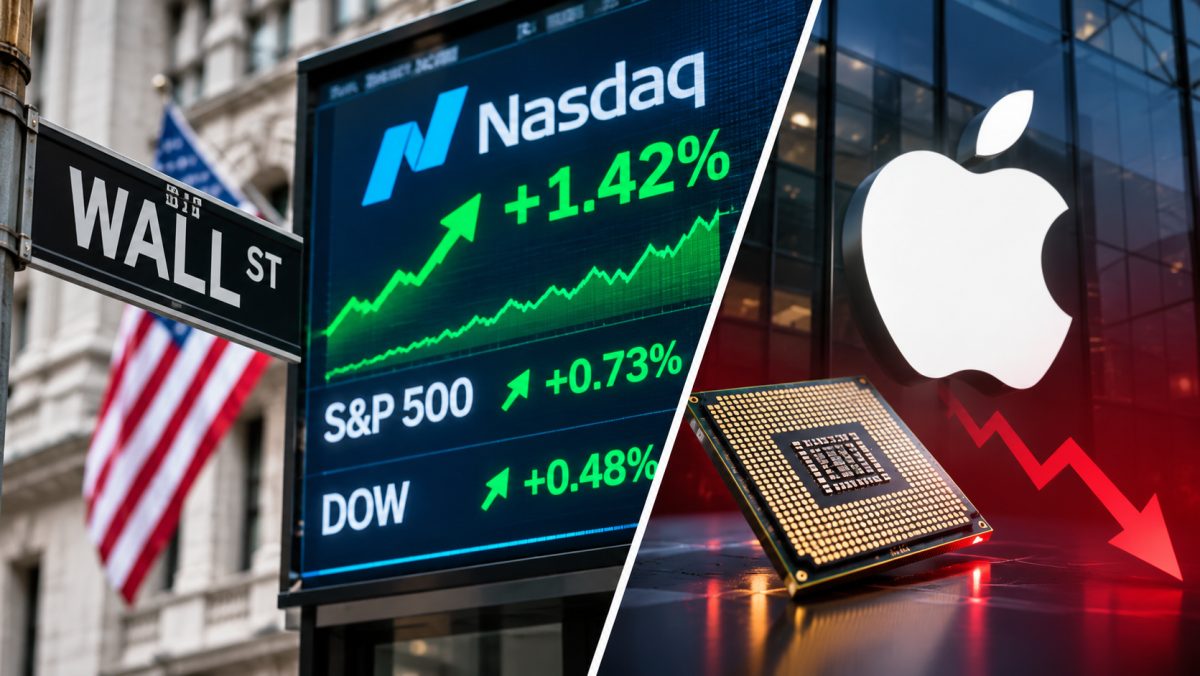
US stocks today saw the Nasdaq rebound sharply on Friday, November 6, 2026, as investors scooped up beaten-down semiconductor shares a day after a steep AI-driven selloff. The Nasdaq Composite climbed 1.73% to 24,736.2, while the S&P 500 added 1% to close at 7,426.29, even as strong October jobs data stoked fears of a December interest rate hike.
US Stocks Today October 30 2026: Why Intel's Crash Sank the Nasdaq
Nasdaq Rebounds As Chip Stocks Lead Market Recovery
The comeback was led almost entirely by chipmakers that had been hammered just one day earlier. The semiconductor index jumped 4.6% on Friday after tumbling more than 12% on Thursday, marking one of the sector's sharpest two-day swings in months. Nvidia rose 5.6%, clawing back part of its worst single-day drop since January 2025. AMD, Intel and Micron Technology all posted gains ranging from 3% to 10.5%, with some market trackers placing AMD's jump closer to 11% and Intel's near 8%.
Not every index moved in lockstep. One market account showed the Nasdaq up a more modest 1.1% and the S&P 500 up just 0.3% by the closing bell, while the Dow Jones Industrial Average actually slipped 0.5%. These differences likely reflect separate intraday and closing snapshots, but the overall story held steady across every report: chip stocks powered the rebound, while rate worries kept a lid on broader gains. Airbnb shares also moved higher after the company raised its full-year revenue growth forecast, while Atlassian shares fell, showing the recovery wasn't universal across tech.
US Stocks Today: Alphabet Revenue Miss Sparks AI Capex Jitters on Wall Street
What Triggered Thursday's Brutal AI Selloff
Friday's bounce only makes sense against the backdrop of Thursday's rout. AI and chip stocks suffered their steepest losses in months after a post-election rally unraveled into what several reports called an AI trade meltdown. Much of the pressure traced back to concerns that a Democrat-led Congress, following midterm election results, might push for tougher regulation on artificial intelligence companies.
The damage was severe. The iShares Semiconductor ETF sank roughly 12% during Thursday's selloff, and the Nasdaq 100 briefly slid into correction territory. Major chip stocks recorded losses between 9% and 17% in a single session, according to market coverage, as investors suddenly questioned whether AI valuations had sprinted too far ahead of actual earnings. Nvidia and seven other large chip stocks had, by Friday afternoon, recovered only about a third of what they lost on Thursday, on average, underscoring just how deep the damage went before buyers stepped back in.
Strong October Jobs Report Complicates The Rebound
Friday's recovery came with a major catch. The October jobs report, released the same morning, showed US employers added 165,000 jobs, nearly triple the roughly 65,000 economists had forecast. The unemployment rate fell to 4.1%, better than the expected 4.2%, and wages rose 0.4%, a stronger gain than anticipated. The Bureau of Labor Statistics also revised August and September job numbers higher by a combined 84,000, pushing the three-month average job growth noticeably higher.
That kind of labor market strength usually sounds like good news, but on Wall Street it raised a different worry. A hot jobs market gives the Federal Reserve less reason to cut interest rates and more reason to consider raising them. Traders quickly adjusted their expectations, pushing the implied probability of a December Fed rate hike up to 78%, compared to 70% just a day earlier. Higher rates tend to hit high-growth technology and AI stocks hardest, since investors have to discount future earnings more heavily when borrowing costs rise.
Why The AI Trade Remains Fragile Despite The Bounce
The tug-of-war between eager dip buyers and cautious bond markets shows just how shaky confidence in the AI trade has become. Investors clearly still believe in the long-term story around AI infrastructure spending, which is why they jumped back into Nvidia, AMD, Intel, Micron, Broadcom, Lam Research and Applied Materials as soon as prices dropped. But the speed and size of Thursday's crash, followed by only a partial Friday recovery, suggests many traders are far more nervous about stretched valuations than they were just weeks ago.
Regulatory uncertainty adds another layer of risk. If a Democrat-controlled Congress does move toward stricter oversight of AI companies, that could weigh on sentiment again regardless of what the Fed decides. For now, chip stocks remain caught between strong underlying demand for AI hardware and growing doubts about how long that demand can justify sky-high stock prices.
What Comes Next For Markets And The Fed
All eyes now turn to the Federal Reserve's December 8-9 meeting, where officials will decide whether to raise interest rates in response to the surprisingly strong labor market. Between now and then, investors will be watching every new inflation report, employment figure, and Treasury yield move for clues about which way the Fed leans.
For chip stocks, the real test is whether Friday's bounce turns into a steady climb or fades back into selling pressure. Airbnb's upgraded revenue forecast offers a reminder that company-specific news can still move stocks even during a turbulent week, while Atlassian's decline shows the rebound didn't lift everything equally. Markets head into the weekend still digesting a wild five-day stretch, with both AI valuations and interest rate policy hanging over whatever comes next.