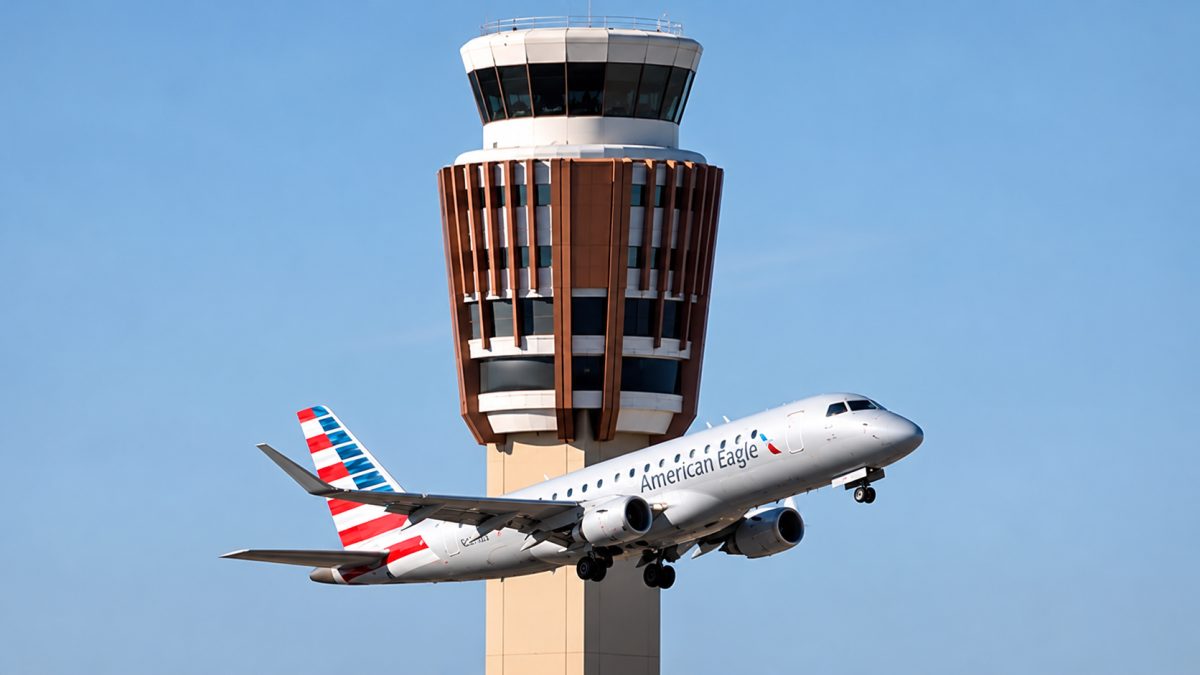

Thousands of travelers got stuck at airports after officials pulled the plug on departures across the whole country.
The Federal Aviation Administration ordered a nationwide ground stop on Friday, November 13, 2026, stopping all departing flights across the United States after a communications breakdown hit air traffic control centers. The agency said the move was necessary "due to extraordinary circumstances and for reasons of safety," leaving thousands of passengers stranded with no clear timeline for when flights would resume.
CoreWeave Earnings Beat Expectations as AI Demand Crushes Wall Street Doubts
How the FAA nationwide ground stop unfolded Friday afternoon
The trouble started earlier in the day when the FAA halted air traffic around Chicago because of communications problems. That local fix turned out to be just the beginning. By Friday afternoon, the issue had spread far beyond one city, hitting the network of Air Route Traffic Control Centers that guide planes between airports across the entire country.
Around 3:54 p.m. Eastern Time, the FAA made it official. All departing flights had to stay on the ground. Planes already in the air were allowed to land safely, but nothing new could take off. Reuters reported that flight-tracking data showed nearly 7,000 flights delayed or canceled as the disruption rippled through airline schedules nationwide. CNN reported that the numbers kept climbing, with no clear end in sight while officials worked to figure out what went wrong.
The FAA's initial advisory listed an end time of at least 11:30 p.m. Eastern Time. But that wasn't a promise flights would resume right then. It simply marked the point where officials would review the situation again, meaning the real wait could easily stretch longer depending on what technicians found.
Nevada Economy Diversification Banking Finance Insurance Push Gains Steam
Officials confirm telecommunications outage behind the FAA ground stop
Transportation Secretary Sean Duffy said the problem affected Air Route Traffic Control Centers nationwide, not just one region or airport. Homeland Security Secretary Markwayne Mullin backed that up, describing it simply as a telecommunications outage hitting the FAA's systems. "It's just a telecommunication outage as of right now," Mullin told reporters.
The FAA's own statement put it plainly: "The FAA issued a nationwide ground stop for all U.S. airports following a communication issue impacting all Air Route Traffic Control Centers." In a separate post, the agency said there had been a "temporary telecommunications outage," adding, "Out of an abundance of caution all flights have been halted."
Duffy also said FAA technicians were already digging into the problem. "FAA technicians are investigating the issue. We will provide immediate updates as we have them," he said. Officials had not identified whether the failure came from hardware trouble, software glitches, network damage, human error, or something more serious like a cyberattack. As of Friday evening, no evidence pointed to any intentional cause.
Why this ground stop stands out in aviation history
Air traffic controllers rely heavily on communications systems to track planes and talk to each other across different sectors and control centers. When those systems can't be trusted to work properly, grounding flights becomes the safest option, even if it causes massive headaches on the ground.
Reuters noted this was only the second time since the September 11, 2001 terrorist attacks that the FAA ordered a full nationwide ground stop covering every departing flight in the country. That comparison shows just how rare and serious this kind of action is. Unlike 2001, though, officials were clear from the start that Friday's shutdown was tied to a technical outage, not a security threat.
International flights weren't swept into the same blanket order. The FAA said those would be handled on a case-by-case basis rather than grounded automatically, giving some relief to travelers flying overseas even as domestic departures sat frozen.
Airports packed as airlines scramble to manage the fallout
Terminals across the country filled up fast as delays and cancellations piled on top of each other. Passengers faced long waits, confusing updates, and missed connections, with many unsure whether their flights would ever leave that night. CNN described the scene as delays and cancellations continuing to grow hour by hour.
Behind the scenes, airlines faced a logistical mess. Planes ended up stuck in the wrong cities. Crews ran into scheduling limits. Gates filled up with aircraft that had nowhere to go. Even after the FAA eventually lifts the ground stop, airlines typically need extra time to untangle displaced planes and crews before schedules return to normal.
Mullin said officials hadn't even settled on a timeline yet, since the focus stayed on passenger safety rather than speed. That uncertainty made it tough for airlines to give travelers solid answers about rebooking or refunds while the investigation continued.
What travelers should watch for next
The next big step is a full technical explanation from the FAA about what exactly failed and why. Investigators still need to confirm which systems were involved, whether radar or frequency issues played a role, and how long the repair process will take.
Even once technicians fix the outage, the ripple effects won't disappear overnight. Thousands of already-delayed or canceled flights mean airlines will spend days reshuffling planes, crews, and passengers. Travelers with upcoming flights should expect to check airline apps and airport boards closely, since this kind of disruption tends to echo through schedules well after the original problem gets solved.