
A cliff in the Texas Panhandle just rewrote what we know about ancient bison hunting in North America.
Archaeologists have confirmed that the Nighthawk bison jump in Caprock Canyons State Park, Texas, was used by Indigenous hunters for at least seven separate bison hunts spanning roughly 3,000 years, according to a study published in American Antiquity on November 21, 2026.
Two New Howler Monkey Species Amazon Discovery Reveals Hidden Primates
How The Nighthawk Bison Jump Was Found And Studied
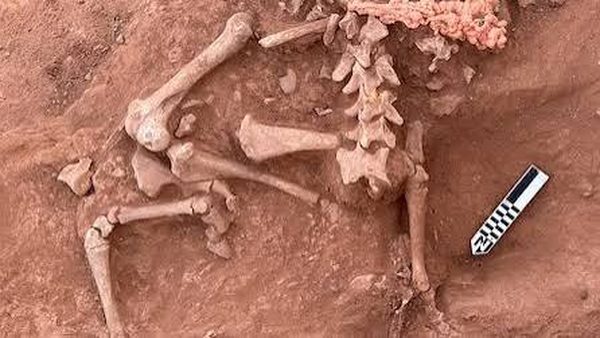
The story starts with bones. Bison remains began washing out from under a cliff spur nearly 65 feet tall, catching the attention of archaeologists working in Caprock Canyons State Park. What they found underneath was not a random pile of bones. It was a packed bone bed sitting below a steep, narrow rock spur that bison could not have wandered onto by accident.
Researchers led by August Costa of Rice University dug into the site and pulled out hundreds of bone fragments, stone tools, and projectile points. Many bones showed cut marks that only come from butchering with stone tools. That detail matters a lot. It tells researchers these animals were not just unlucky strays that fell off a ledge. They were hunted, killed, and carved up on purpose.
To nail down the timeline, the team ran 27 radiocarbon tests. Twenty-five came from bison bone collagen and two came from charcoal found at the site. Those results lined up into at least seven distinct kill events, spread across a span running from about 1550 B.C. to roughly A.D. 1550. One event, labeled Kill 3, produced most of the bones recovered from the site, suggesting it was an especially large hunt.
Primate Brain Evolution Mystery: How One DNA Switch Built Bigger Brains
Why The Nighthawk Bison Jump Site Is So Rare In Texas
Bison jumps are well documented in places like Montana and Alberta, where cliffs and natural chutes made this kind of hunting possible. In Texas, confirmed examples are almost nonexistent. Nighthawk is only the second scientifically verified bison jump ever documented in the state, which is part of why researchers are calling it an exceptional find.
Pulling off a bison jump was never simple. Hunters had to understand how a herd moves, where it would try to escape, and how to keep pressure on the animals from behind without letting them scatter. People had to work together, block exit routes, and time everything so the herd kept moving forward instead of turning back. Once the animals went over the edge, more people were waiting below to finish the hunt and process the meat, hides, and bones on the spot.
What makes Nighthawk stand out even more is that the bison may have been able to see the drop coming. Many bison jump sites elsewhere rely on hidden drops that animals cannot spot until it is too late. At Nighthawk, the shape of the spur and the steep scarps around it seem to have mattered more than surprise. Researchers think the narrow path itself, combined with a moving herd and hunters pressing from behind, left the animals with no real way to turn back.
What The Bones And Tools Reveal About Indigenous Hunting Skill
The site has produced at least 2,143 identified bone specimens, all confirmed as American bison, representing a minimum of 27 animals. Because the bone bed is fragmented and incomplete, researchers are careful about treating that number as a hard ceiling. Still, it paints a picture of repeated, large-scale hunting rather than a single isolated event.
The gap between hunting episodes is just as telling as the hunts themselves. Dating shows at least a century passed between each recorded kill, with roughly 500 years separating events on average. That pattern suggests Nighthawk was not a one-time discovery by a single group. Instead, it looks like knowledge of this cliff, and how to use it, got passed down or rediscovered across many generations of hunters spanning the Late Archaic through the Protohistoric period.
Researchers describe the site as a rare window into communal hunting strategy on the Southern Plains, where cooperation and deep knowledge of the land made the difference between a successful hunt and a failed one. The study frames Nighthawk as proof that Indigenous communities were reading the landscape with real precision, not just reacting to whatever animals crossed their path.
What Comes Next For The Nighthawk Bison Jump Research
Work at the site is far from finished. Archaeologists plan to keep studying the bones, tools, and butcher marks already pulled from Nighthawk, while also checking whether more kill events are buried in areas not yet excavated. Because bones are still eroding out of the cliff, there is real urgency to document what is exposed before weather and time wash more evidence away.
No tribal governments, state officials, or park administrators have issued public statements tied to the find so far, based on available reporting. The clearest next step is simply continued scientific study and discussion of the American Antiquity paper, which now places Nighthawk alongside a very short list of confirmed bison jump sites anywhere in Texas.
For now, Nighthawk stands as a rare, detailed record of how Indigenous hunters used one unusual cliff again and again, across roughly 3,000 years, to feed and sustain their communities on the Southern Plains.