
Ocean temperatures in the Pacific just did something they have never done before, and the ripple effects are already reaching hurricanes, coastlines and weather patterns around the world.
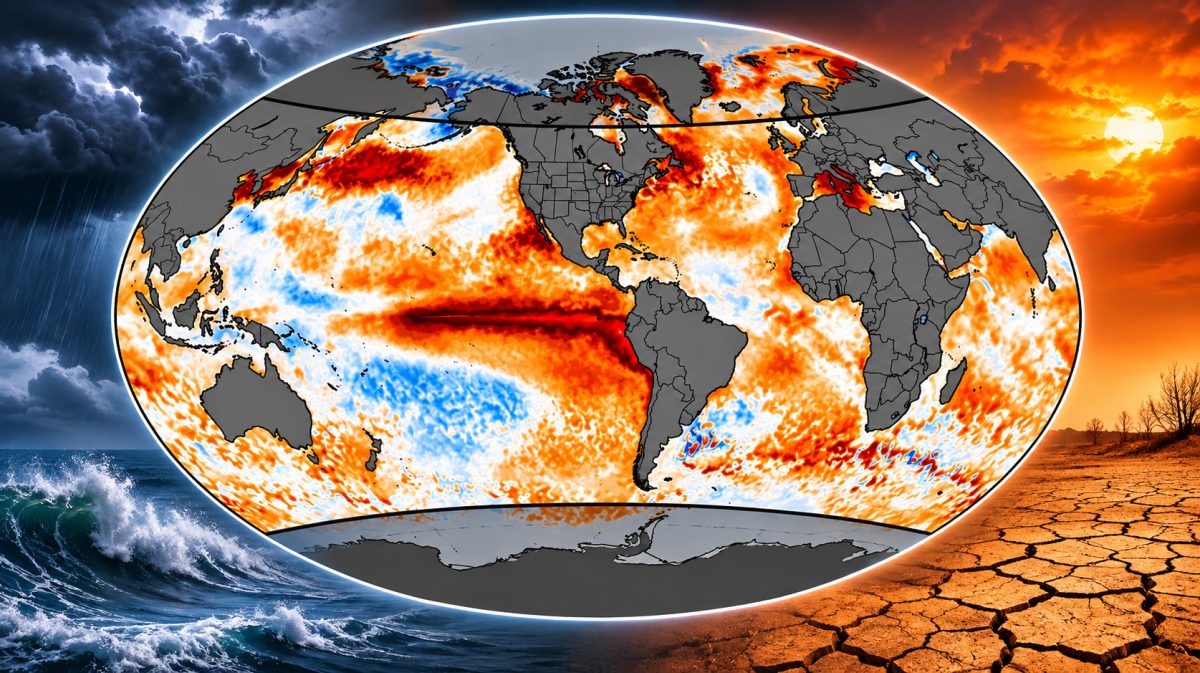
The 2026 super El Niño has become the most extreme event of its kind ever tracked, with sea surface temperatures in the central and eastern equatorial Pacific hitting 3.08°C above the 1991–2020 average on September 21, 2026, breaking the previous daily record of 3.02°C set in November 2015.
Amygdala Memory Neurons May Act Like a Save Button in Your Brain
How the 2026 super El Niño broke its first record
Scientists watch a specific patch of the Pacific Ocean to track El Niño's strength. That patch kept heating up all through the fall. By October 18, the average temperature there climbed above 30°C, or 86°F, for the first time since records began. It did not stop climbing after that either.
The World Meteorological Organization now projects the anomaly could peak near 3.7°C above the long-term average by January 2027. Waters that run more than 2°C above average are often called a very strong or super El Niño, though that is a nickname scientists use rather than an official scientific category. Still, the numbers behind the 2026 super El Niño put it in a class by itself.
Primate Brain Evolution Mystery: How One DNA Switch Built Bigger Brains
Hurricane seasons turned upside down
The warm water did not just sit quietly in the ocean. It changed how storms formed on both sides of the Pacific and Atlantic. By mid-October, the eastern and central Pacific had racked up 331 units of what meteorologists call Accumulated Cyclone Energy, a way of measuring how strong and how long storms spin. That beat the old full-season record of 318 units, set back in 2018, and the season still had weeks left to run.
Meanwhile, the Atlantic did almost the opposite. Storm activity there stayed unusually quiet. This is actually a textbook sign of El Niño at work. The pattern tends to crank up high-altitude winds over the Atlantic, and those winds act like scissors, cutting storms apart before they can grow strong. Forecasters saw exactly that happen in 2026, matching what past El Niño years have shown.
Why the ocean behaves this way
El Niño is one half of a bigger climate seesaw called the El Niño–Southern Oscillation. Normally, trade winds blow warm surface water toward the western Pacific. When those winds weaken, as they did heading into 2026, the warm water sloshes back eastward instead. That shift raises sea levels in places and dumps extra heat into the atmosphere above it.
That extra heat does not stay put. It shifts the Pacific jet stream and nudges global weather patterns off their usual track. Some regions end up drenched, others dry out. California is already bracing for giant waves and possible flooding rains tied to the pattern, while Central America has already seen drought conditions connected to the same circulation changes. Past strong El Niño years, including 1997–98 and 2015–16, brought flooding to Peru and East Africa, drought and fire risk across Southeast Asia, and damaging storms along the California coast.
Scientists urge caution before calling it the strongest ever
Despite the record-breaking single-day numbers, NOAA has not officially crowned 2026 the strongest El Niño in history. The agency's main yardstick, the Oceanic Niño Index, relies on a rolling three-month average rather than one standout day. Under a newer measurement NOAA built called the Relative Oceanic Niño Index, early comparisons still placed the 1997–98 event ahead of 2026.
That distinction matters. A single extreme day can grab headlines, but climate scientists need the fuller picture before updating the record books. Even so, researchers tracking the pattern describe 2026 as an unprecedented year for El Niño, given how far and how fast the ocean has warmed compared to anything on record.
What comes next for a warming planet
The real test arrives this winter. January 2027 is the window when the anomaly is expected to peak, possibly near that 3.7°C mark. Once it peaks, the event will not simply vanish. Ocean heat and shifted wind patterns tend to linger, meaning drought, flooding and storm risks tied to the 2026 super El Niño could stretch into spring 2027.
There is also a bigger worry layered on top of the natural cycle. El Niño already releases huge amounts of stored ocean heat into the air. Add that to decades of human-caused warming, and scientists say there is a real chance 2027 could end up the hottest year ever measured. For now, forecasters are watching the same places closely: Pacific storm tracks, Atlantic wind shear, California's coastline, Central American rainfall, and the slow climb toward whatever number January finally brings.