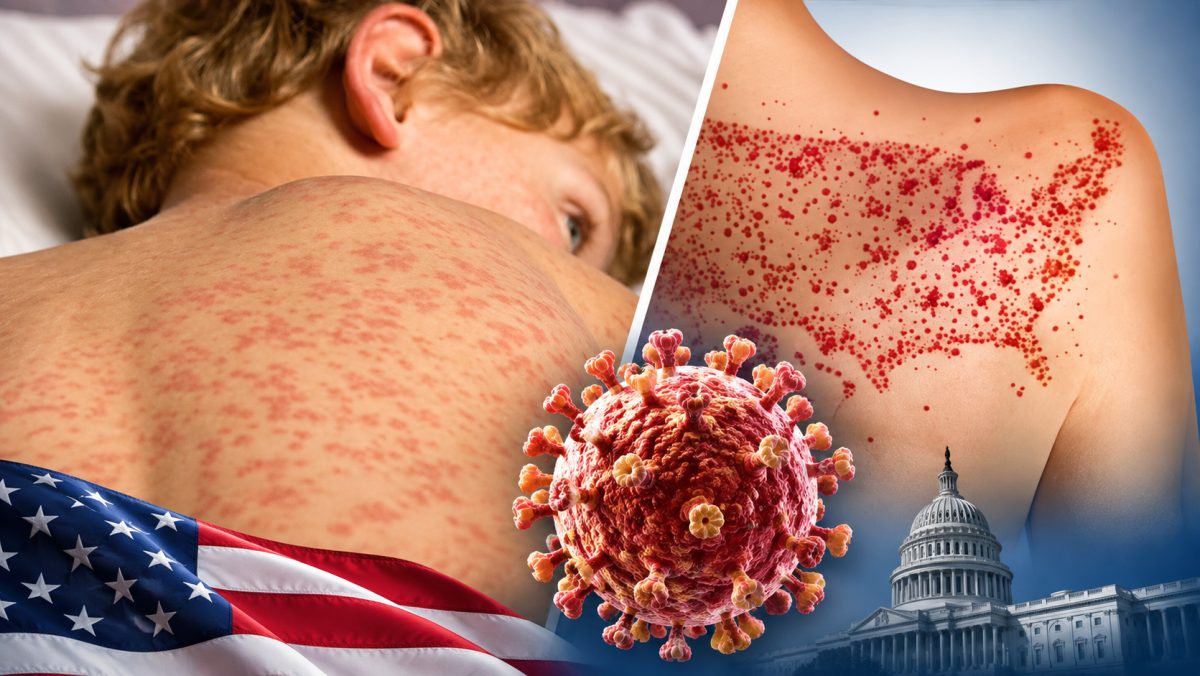

Measles is back for good this time, and health officials say unvaccinated communities are the reason why.
The United States officially lost its measles elimination status on November 17, 2026, when the Pan American Health Organization declared the virus had spread without stopping for more than 12 months. The announcement means measles is now endemic in the country again, ending a streak that started in 2000.
Human Sacrifice Violence Peru Study Reveals a Strange Ancient Peace
How the U.S. loses measles elimination status after 26 years
View this post on Instagram
PAHO did not make this call lightly. The organization looked at how measles had moved through the country since an outbreak began in West Texas in 2025. Normally, a measles case shows up because someone brought it in from overseas, it spreads a little, then health workers stop it. That is what elimination status protects. This time, the chain never broke. It just kept going, month after month, until it crossed the one-year mark that defines endemic spread.
Canada already lost its own elimination status back in 2025. This latest PAHO announcement grouped the United States together with Mexico and Bolivia, meaning three countries in the Americas dropped the designation on the same day. That is a notable shift for a region that had been considered measles-free in terms of sustained transmission for years.
Semaglutide Chronic Kidney Disease Study Reveals Surprising Repair Signs
Case counts and deaths behind the U.S. loses measles elimination status decision
The numbers tell a rough story. The CDC counted nearly 2,300 measles cases in 2025, then 5,412 more in 2026 through November 12. Add it up and the country passed 7,000 cases since the West Texas outbreak kicked things off. That is a massive jump for a disease that had mostly been showing up in small, contained clusters for two decades.
More than 90 percent of the people who got sick were unvaccinated or had no known vaccination record. That single statistic points straight at the root cause. State health departments reported 13 deaths connected to the outbreaks, though the CDC had only formally confirmed nine by the time PAHO made its announcement. Health experts say that gap usually comes down to how long it takes federal agencies to verify each case, not any disagreement over whether people actually died.
Why vaccination gaps let measles come roaring back
Measles is not a disease that forgives low vaccination rates. Experts say a community needs about 95 percent of people vaccinated to keep it from spreading once it shows up. Drop below that number in enough places, and the virus finds room to move from person to person, town to town, for as long as those gaps exist.
That is basically what happened here. The West Texas outbreak in 2025 did not stay local. It found unvaccinated pockets elsewhere, jumped between them, and never ran out of fuel. Bento, a health expert quoted in the original Science News report on this story, made a point of saying the elimination status loss is "not a punishment." It is simply a label that describes what the data shows: measles is spreading on its own now, not just arriving from somewhere else.
What losing elimination status actually changes for Americans
Losing the status does not mean every American is suddenly at risk of catching measles tomorrow. It means the classification system now treats U.S. transmission as self-sustaining rather than imported. For families, the practical advice stays the same it always was: get the MMR vaccine, check your kids' records, and pay attention if measles shows up in your area.
For public health agencies, this is a wake-up call to go harder on outbreak tracking and vaccination outreach, especially in communities where coverage has slipped. The 95 percent threshold is the real target now. Anything lower keeps leaving doors open for the virus to walk back in and stay.
Path back to elimination status remains open but unclear
PAHO's declaration is not permanent. The United States can earn elimination status back if health officials manage to stop endemic spread and keep it stopped. There is no set timeline for that to happen. It depends entirely on whether vaccination rates climb back up and whether new cases get caught and isolated fast enough to prevent another year-long chain of infections.
Until that happens, measles sits in a different category in the U.S. than it did a few years ago. Travelers can still bring in cases from abroad without automatically restarting the endemic clock, but sustained spread anywhere in the country would confirm the problem is still unresolved. For now, the message from health officials is straightforward: vaccination is still the one tool that actually works.