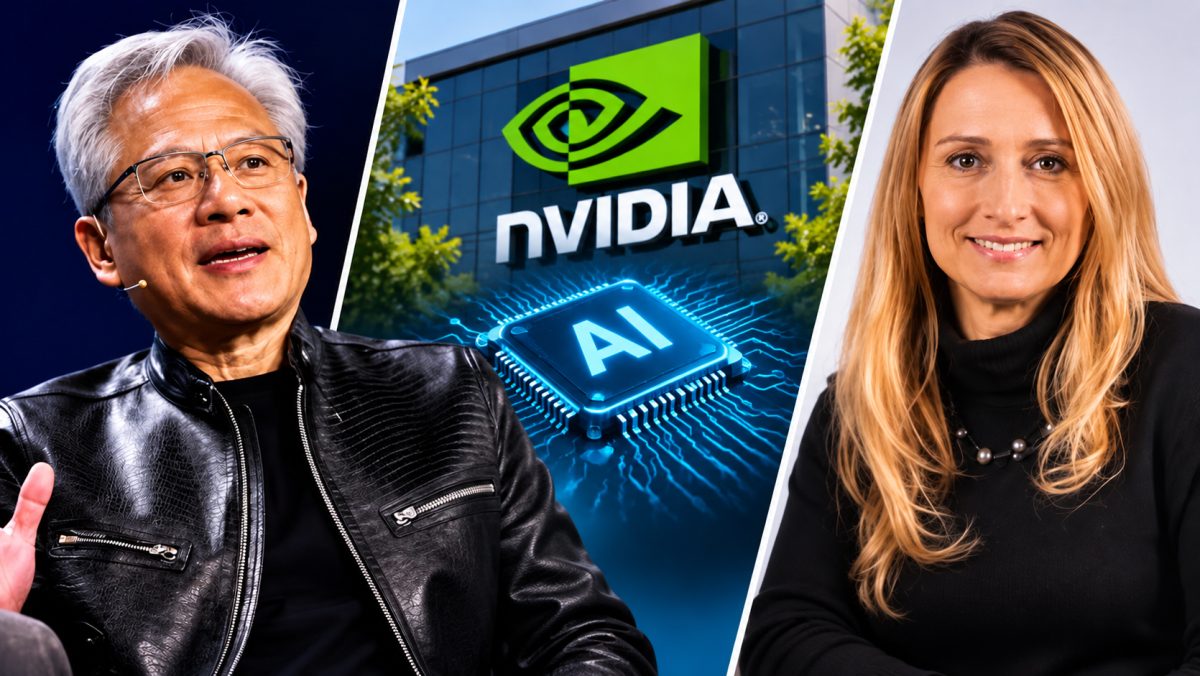

Nvidia's new leader wants proof that AI data centers can actually pay their bills before the company backs them.
On November 18, 2026, Nvidia interim CEO Colette Kress told analysts the company would start rigorously reviewing future investments, commitments and guarantees tied to artificial intelligence infrastructure, a direct response to growing worry over so-called circular financing involving neocloud providers and data-center builders.
Dow Falls 500 Points After Fed Minutes Spark New Rate-Hike Fears
Kress Draws A Line On Nvidia AI Financing Guarantees
Nvidia disclosed that its financial guarantees connected to AI infrastructure had climbed to $118 billion, up $9.5 billion from the previous quarter. That figure is Nvidia's maximum possible exposure under various deals, not money it has already spent or owes right now. Still, the jump rattled investors, and Nvidia shares fell sharply in the days around the earnings call.
Kress explained that these guarantees don't kick in right away. A customer has to first line up financing, secure a site, build the facility, install Nvidia's equipment and get everything running before Nvidia's backing even applies. She said Nvidia's commitments take effect only after a customer raises funding, finishes construction, installs the gear and gets Nvidia's sign-off. That's a much higher bar than how these deals were often described before.
Trump Commerce Closes Nvidia Chip Loophole Tied to Spy Scandal in China
Why Circular AI Financing Became A Problem For Nvidia
Under former CEO Jensen Huang, Nvidia pushed far beyond just selling chips. The company invested in AI startups, backed neocloud operators, and helped data-center developers secure loans. Sometimes Nvidia acted as a financial backstop, making it easier for companies without strong credit ratings to borrow large sums.
Critics called this a circular AI economy. Nvidia would help a customer get financing, that customer would use the money to build a data center and buy Nvidia chips, and the resulting sales and valuations would then justify even more investment from Nvidia. The company's own stake in OpenAI and infrastructure firms like Lambda added to concerns about how tangled these financial relationships had become. One proposed plan, a $250 billion commitment tied to an OpenAI data-center project in Ohio, reportedly got scaled back to $120 billion after internal pushback.
That pushback reportedly came from Kress herself. Reports from November 13, 2026 described Kress and her finance team clashing with Huang and Nvidia's sales organization over how big and how risky these financing deals had gotten. Days later, Huang departed and Kress stepped in as interim CEO, putting a finance-first voice in charge of a strategy she had already questioned internally.
What Kress Actually Said About Nvidia's New Rules
Kress told analysts Nvidia was "rigorously evaluating future investments, commitments and guarantees." She said the company would "look very closely at the types of companies we support," with priority going to financial help tied to concrete assets like land, power and buildings for data centers rather than open-ended cash support.
She also made clear that guarantees aren't permanent once granted. "If... they are delayed or they have a challenge in terms of building that, our guarantee doesn't exist anymore," Kress said. In a separate comment, she laid out the sequence customers must follow, saying there's "the raising of capital that they may need through equity and or debt, in order to build out any of the buildings, get them ready for use, but also the ability to procure the compute, install the compute, and get ready." Nvidia's updated CFO commentary backed this up, stating commitments only take effect once neocloud companies secure funding, build and activate capacity, and get Nvidia's approval.
Neocloud Providers And Investors Brace For Tighter Nvidia Rules
The shift creates real problems for neocloud operators, companies that buy huge amounts of Nvidia chips and rent out computing power to AI developers. Many of these firms don't have investment-grade credit on their own. Nvidia's guarantees had been the thing that let them walk into a bank and get a loan, or lock in equipment purchases without putting up their own strong balance sheet.
Going forward, customers without solid credit ratings will likely need to show what Kress and Nvidia describe as "solid offtake," meaning real, paying customer demand lined up before Nvidia will back them. Nvidia is expected to weigh a customer's financial health, construction progress, access to power, land ownership and realistic demand forecasts before extending any new support.
Nvidia isn't walking away from the neocloud sector entirely. Kress indicated existing commitments will be honored, and the company will keep supporting data-center growth where it makes sense. But customer cash infusions will now rank behind other priorities, including returning capital to shareholders and paying suppliers. Future deals are expected to lean toward financing hard infrastructure, things like land, power and buildings, rather than unrestricted equity checks.
What Comes Next For Nvidia's AI Infrastructure Bets
The immediate path forward is a deeper, slower review process for every new investment, commitment or guarantee Nvidia considers. Projects will need stronger proof of viability, covering financing, construction timelines, power access and actual customer demand, before Nvidia agrees to stand behind them.
Nvidia appears set on protecting its role in strategically important data-center projects while cutting exposure to weaker or speculative ones. Existing guarantees still carry their original contract terms, but nothing new will be treated as automatic. The bigger question hanging over investors and neocloud operators alike is whether real demand from AI users is strong enough to keep this infrastructure boom running without Nvidia continuing to fund both sides of the transaction.