
Scientists peered into hundreds of donated brains and found trauma leaves its own distinct molecular fingerprint, separate from depression.
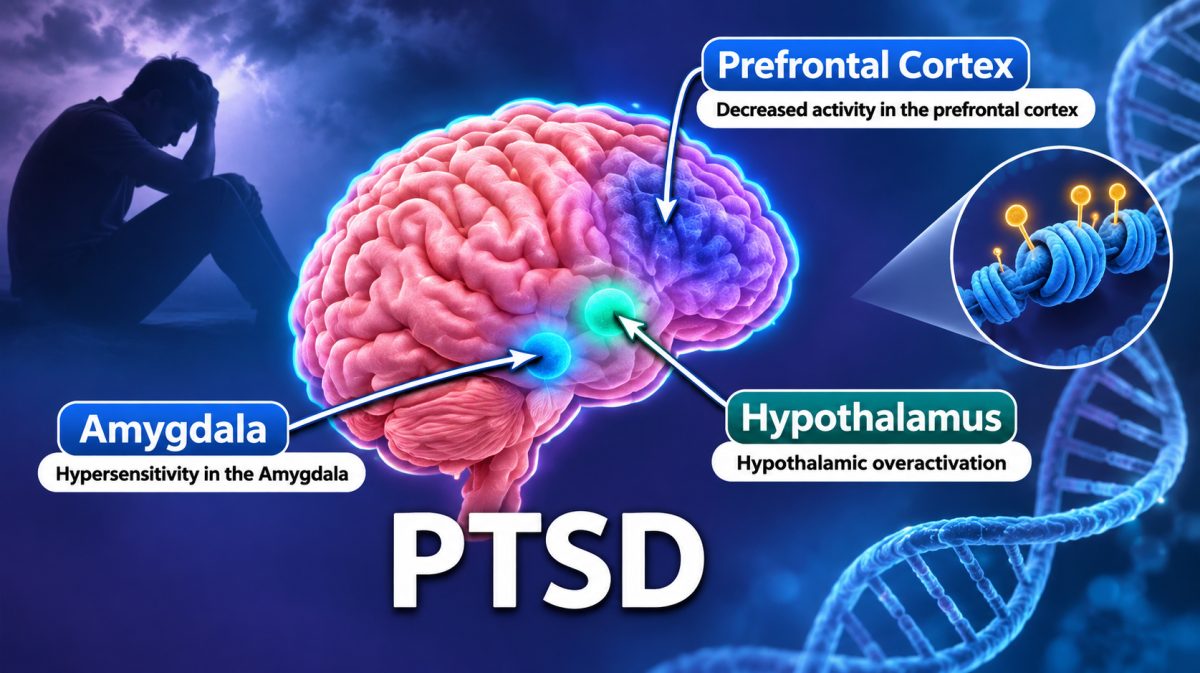
Researchers studying PTSD brain epigenetic marks have found that trauma changes the brain in ways that look nothing like ordinary depression, according to a study published Nov. 20, 2026, in Cell Reports. The team examined 302 postmortem brains and discovered region-specific DNA-methylation patterns unique to people who had PTSD, offering fresh proof that the condition is biologically distinct, not just emotionally similar to other mental illnesses.
Rapidly Rising Antarctic Bedrock Stuns Scientists, Who Finally Found the Reason Why
Inside the Largest Brain Study of Its Kind
The research team pulled together 101 brains from people diagnosed with PTSD, 101 from people with major depressive disorder, and 100 from people with no psychiatric diagnosis. That's 302 donated brains in total, making this one of the most detailed looks ever taken directly inside human PTSD brain tissue. Past studies had mostly relied on blood or saliva samples to hunt for epigenetic clues, so testing actual brain tissue marks a real step forward.
The study was led by scientists including Frances Champagne of the University of Texas at Austin, working alongside researchers tied to the National Institute of Mental Health, Emory University and the University of Maryland. Champagne told Live Science, "These epigenetic features of the brain are important for shaping the way the brain functions." That simple line captures the heart of the study: these are not random chemical smudges, they appear tied to how the brain actually operates.
Rather than treating the brain as one giant blob of tissue, the researchers broke their analysis down by region. That decision paid off. The PTSD brain epigenetic marks didn't show up evenly everywhere. Instead, they clustered differently depending on which part of the brain was examined, hinting that trauma doesn't hit the whole brain the same way. Some circuits seem to carry a heavier molecular burden than others.
U.S. Loses Measles Elimination Status After Virus Spreads For Over A Year
Why PTSD and Depression Look Different Under the Microscope
PTSD and depression often get lumped together because their symptoms overlap. Both can involve poor sleep, trouble concentrating and a loss of interest in daily life. But this study found real molecular daylight between the two conditions. By comparing PTSD brains directly against MDD brains instead of just healthy ones, the researchers could separate out what belongs to psychiatric illness broadly and what belongs specifically to trauma.
The results showed overlap, yes, but also clear points of separation. Some epigenetic patterns showed up only in the PTSD group, not in the depression group. That distinction matters because doctors have long struggled to tell the two conditions apart when symptoms blur together. Having a biological marker that leans toward one diagnosis over the other could eventually change how clinicians think about treatment.
One of the more striking findings centered on the amygdala, the brain's fear-processing hub. Researchers noticed an apparent drop in oligodendrocytes there among people with PTSD. These cells produce myelin, the fatty coating that helps nerve signals travel efficiently. Fewer of these cells could mean slower or less efficient communication in a region that controls how we respond to danger and threat. The study stops short of saying this causes PTSD, but it's a strong clue worth chasing further.
Trauma's Timing and a Person's Sex Both Leave a Mark
The study didn't stop at identifying differences between PTSD and depression. It also found that the age when trauma happened seemed to shape the resulting epigenetic pattern. Trauma experienced in adulthood appeared to leave a different molecular signature than trauma from earlier in life, according to the findings. That lines up with other research suggesting the brain responds differently to stress depending on when it strikes during development.
Sex also played a role. The PTSD brain epigenetic marks observed in men didn't always match those seen in women, according to coverage of the study. This fits a growing body of evidence showing that PTSD doesn't behave identically across the population. A related EurekAlert summary of the same Cell Reports paper noted that genes tied to PTSD varied more than expected across different brain regions, and that these patterns differed by gender, race and the timing of trauma.
None of this means scientists have found a single "PTSD gene" or a tidy biological switch. The researchers were careful to note that their sample, while large for postmortem brain work, wasn't big enough to pin down exact individual genes responsible for each pattern. What they found instead is a broad molecular landscape, one that shifts depending on sex, age and brain region.
What Comes Next for PTSD Research and Patients
This study builds on a long line of earlier work. Scientific Reports published research earlier in 2026 linking glucocorticoid receptor gene methylation to PTSD through hippocampal changes. Other researchers have looked at histone changes in the amygdala tied to fear-response genes. And a 2026 PubMed study found PTSD severity linked to faster epigenetic aging in more than 43,000 U.S. military veterans. Together, these studies paint a picture of PTSD as a condition with measurable, if complicated, biological footprints.
Still, there's no diagnostic blood test or brain scan ready for doctors to use tomorrow. The Cell Reports findings are exploratory. They need to be repeated in other brain collections and combined with genetic and clinical data before anyone can turn them into real-world tools. Researchers say the long-term goal is sorting PTSD into biological subtypes, which could eventually help match patients with treatments that fit their specific brain changes rather than a one-size-fits-all approach.
For now, the clearest takeaway is narrower but still meaningful. PTSD leaves behind distinctive, region-specific epigenetic marks in the human brain, marks that set it apart from depression even when the two conditions look similar on the surface. That distinction alone could reshape how scientists, and eventually doctors, understand trauma's lasting grip on the brain.