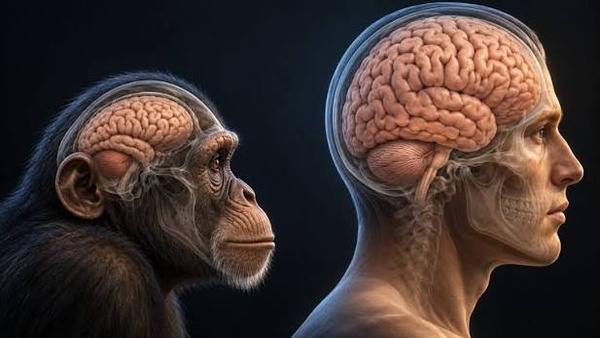

A tiny stretch of DNA near an ordinary gene may explain why primate brains grew so big and complicated.
Researchers in Taiwan and Japan have found a new clue to primate brain evolution involving the DACH1 gene and basal radial glia, specialized stem cells that help build the human neocortex. The study, published in Science Advances in 2026 and reported by Phys.org on November 13, 2026, shows that evolution did not need a brand-new gene to make brains bigger. It just needed to change how an old one gets turned on.
Brain-Computer Interface Speech Restoration Hits 95 Percent Accuracy in New Tests
A Genetic Switch Near an Old Gene
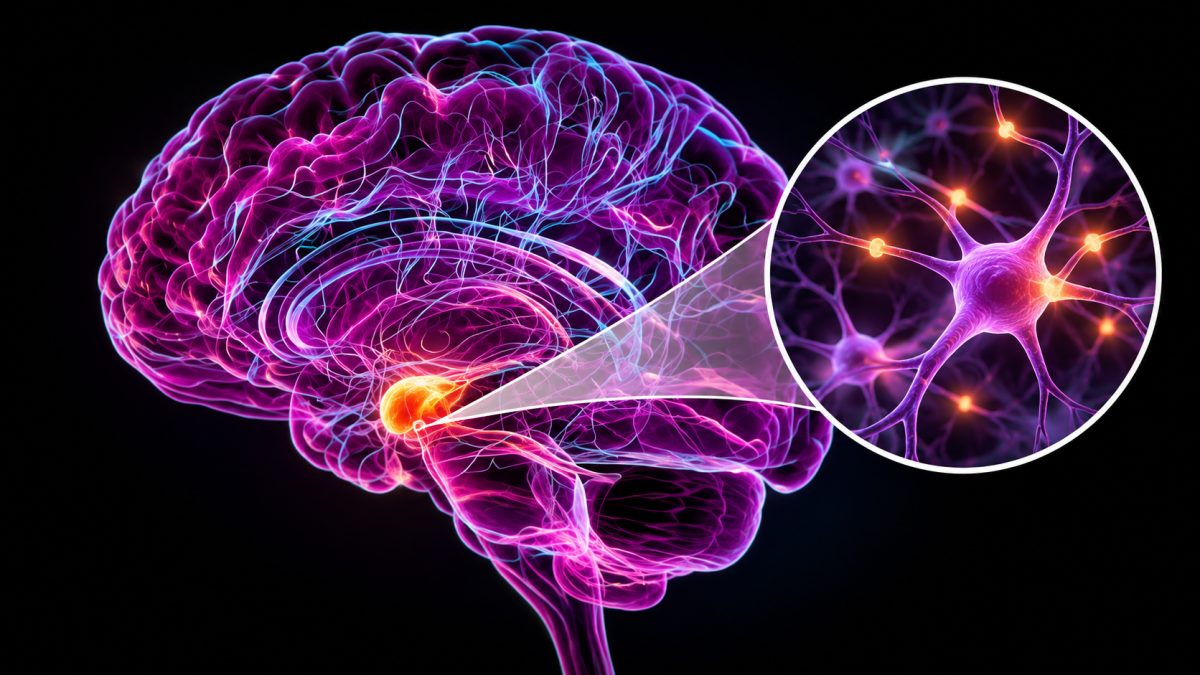
The research team, based at National Yang Ming Chiao Tung University, Academia Sinica, and Kyoto University, studied DACH1, a gene found in humans, monkeys, and even mice. DACH1 itself is nothing new. What caught the scientists' attention was a small regulatory DNA region sitting near the gene, one that works like a dimmer switch, controlling how active DACH1 becomes during brain development.
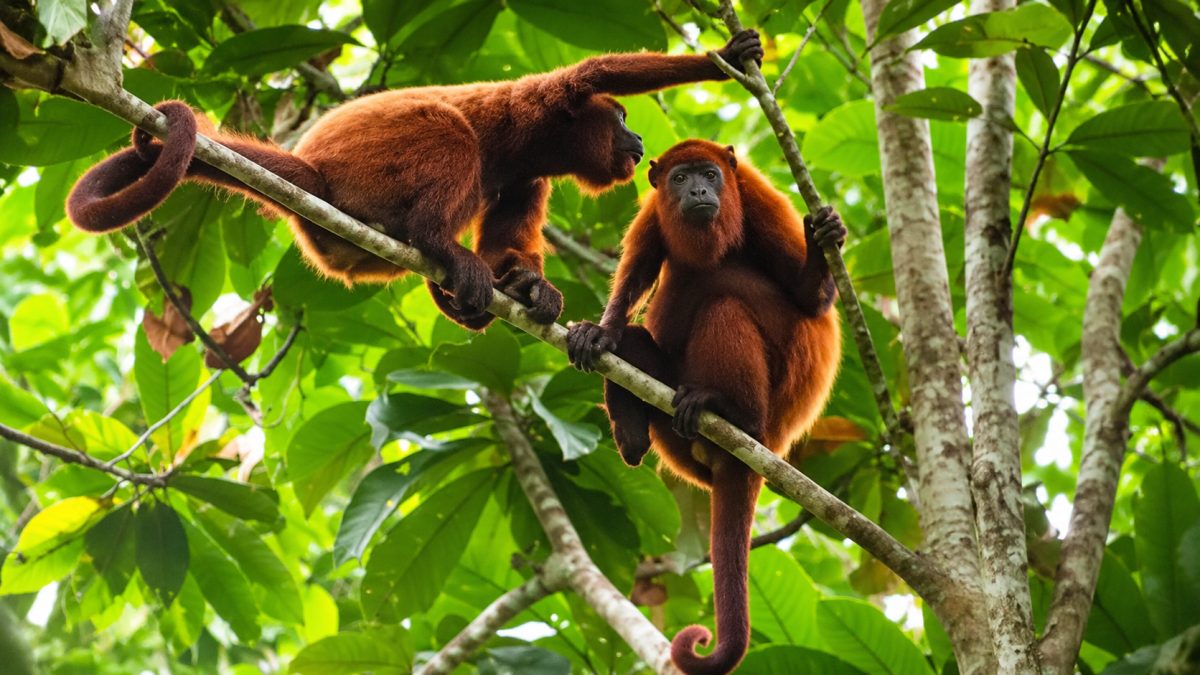
That switch looks different in primates compared to non-primate animals. The researchers, led by Pei-Shan Hou, zeroed in on this difference because it lined up with something striking: primate brains make far more basal radial glia than mouse brains do. These cells matter because they help produce the extra neurons that give the neocortex its size and its folds, the wrinkled outer layer tied to complex thinking.
Amygdala Memory Neurons May Act Like a Save Button in Your Brain
Testing the Theory With Lab-Grown Brain Tissue
To see if the switch really mattered, the team grew three-dimensional cortical organoids from human and rhesus monkey stem cells. These organoids are small clumps of tissue that mimic early stages of brain development in a dish. They are not full brains, but they let scientists watch how stem cells divide and specialize.
When the researchers deleted the primate-associated regulatory sequence from these organoids, something changed. Fewer cells showed the markers typical of basal radial glia. Then the team flipped the experiment. They inserted that same primate DNA sequence into mouse brains, which normally make few of these cells. The mice responded by producing more basal radial glia-like cells than usual, basically borrowing a piece of primate biology and watching it work in a different species.
A Fourfold Jump in Stem Cell Identity
The most eye-catching number from the study involves what happened when researchers directly boosted DACH1 activity. Before the change, about 4 percent of daughter cells developed into basal radial glia-like cells. After increasing DACH1 activity, that number jumped to nearly 15 percent, almost four times higher.
That shift is not just a lab curiosity. It shows that turning up one gene's activity, through this specific regulatory switch, can change the fate of thousands of developing brain cells. Fewer cells end up as one type of progenitor, and many more cells shift into becoming basal radial glia, the kind of progenitor linked to a bigger, more folded neocortex in primates.
Why a Tiny DNA Change Matters So Much
Scientists have debated for years why human and primate brains ended up so much larger and more layered than those of many other mammals. Past research has pointed to longer development times, shifts in cell division timing, and changes in which genes turn on and off. This study adds another piece to that puzzle: evolution can reshape a brain by tweaking the control panel of a gene that already exists, rather than inventing a whole new one.
Basal radial glia are especially important in this story because of where they sit and what they do. Unlike many early stem cells that stay anchored in the ventricular zone near the center of the developing brain, basal radial glia move outward and keep dividing. That extra round of cell production can mean more neurons packed into the final cortex, which may help explain why primate brains grew larger relative to body size over evolutionary time.
What Comes Next for This Line of Research
The study does not claim DACH1 alone explains human intelligence or the entire story of primate brain evolution. It identifies one regulatory change with a measurable effect on stem cell identity, nothing more and nothing less. Brain evolution almost certainly involved many genetic and developmental changes working together over millions of years.
Future work is likely to explore how this DACH1 switch interacts with other genes, including LHX2, which was highlighted in the original paper's title. Researchers will also want to know whether similar regulatory switches affect other types of brain stem cells, and whether comparing more primate and non-primate species can reveal additional pieces of this evolutionary puzzle. For now, the findings offer a clearer answer to a basic question about why primate brains, including our own, took the shape they did.