
A genetic deep dive into the Amazon's loudest primates just rewrote the family tree, and conservationists are already worried.
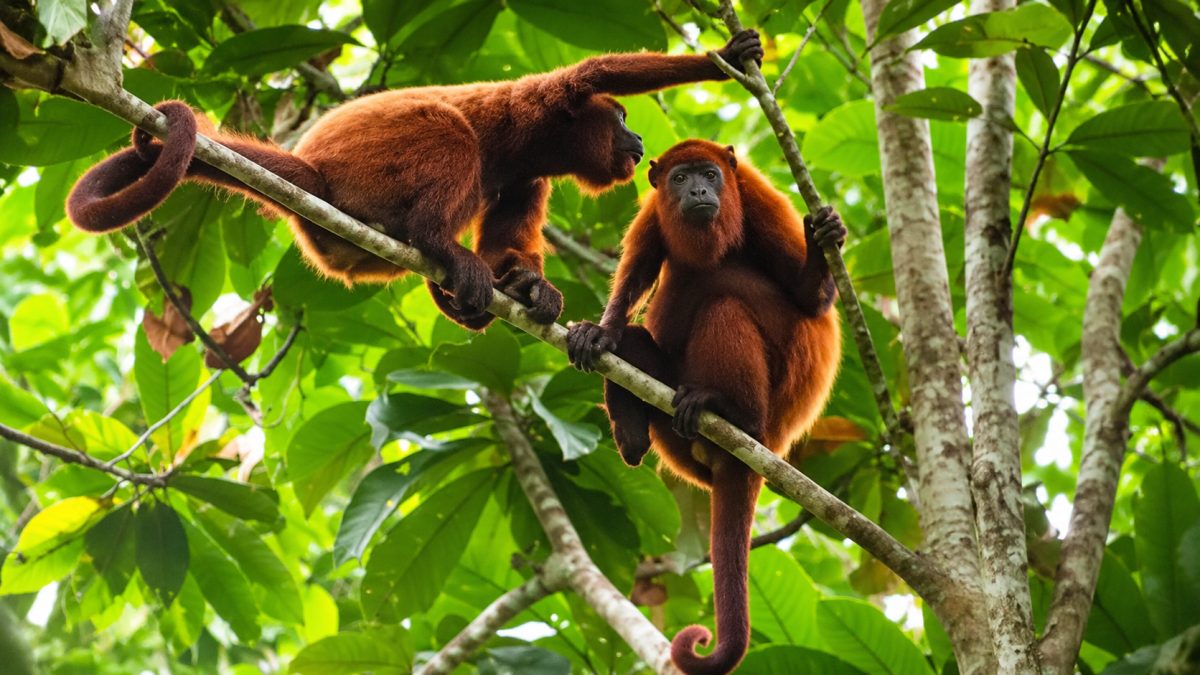
Scientists have confirmed two new howler monkey species in the Amazon rainforest, ending roughly 84 years without a new description in this primate group. The study, published October 30, 2026, in Communications Biology, used genome-wide DNA analysis led by researchers from the University of Salford to uncover the Pantepui red howler and the Mato Grosso red howler hiding within populations once thought to be ordinary variants.
Dinosaur Blood Fossilization Claim Sparks Debate Over 115-Million-Year-Old Bone
How the two new howler monkey species Amazon researchers found came to light
Scientists in Brazil have identified a new species of Howler Monkey that had been living in the Amazon for hundreds of thousands of years without being recognized as a separate species https://t.co/Jq9uXIAqCn
— Nature Unedited (@NatureUnedited) November 11, 2026
The team, including scientists Romina Batista and Jean Boubli along with partners from CIBIO-BIOPOLIS and the Bavarian State Collection of Zoology, pulled genetic material from 11 of the 13 howler monkey species known before this study. Their work drew on data from 86 individual monkeys, combining fresh genetic samples with specimens pulled from Brazilian zoological and museum collections that had been sitting in storage for years.
Instead of relying only on looks and location, the way howler monkeys were traditionally classified, the researchers used what's called integrative taxonomy. That means mixing genome-wide evidence with physical traits and historical records. This approach caught something earlier methods missed. Two populations that looked similar on the outside turned out to carry enough genetic separation and distinct evolutionary history to count as entirely new species.
2,200-Year-Old Gold Bear Kazakhstan Dig Reveals a Burial Mound Full of Secrets
Meet the Pantepui red howler and the Mato Grosso red howler
The first new species, Alouatta iroi, got the name Pantepui red howler. It lives in northwestern Amazonia, spreading across parts of Brazil, Guyana and Venezuela, roughly between the Rio Branco and Rio Cauaburi. Its coat runs yellowish-brown to golden, setting it apart from close relatives.
The second, Alouatta matogrossensis, is now called the Mato Grosso red howler. It occupies southern Amazonia inside Brazil, in the stretch between the Rio Madeira and Rio Teles Pires. This one carries a reddish-brown coat. Researchers believe the population has likely existed as its own distinct species for more than half a million years, kept apart by rivers on one side and the Cerrado, the dry savanna bordering the southern Amazon, on the other.
Why rivers and old assumptions both played a role
Geography did a lot of the heavy lifting in creating these new species. The Amazon, Xingu and Branco rivers acted like walls, splitting monkey populations apart and letting them evolve on separate paths for thousands of generations. Genetic evidence places the broader split between howler monkeys and their closest relatives somewhere between 19 million and 13.5 million years ago, a reminder of just how long these isolating forces have been at work.
The study also upended some long-held assumptions. Researchers concluded that the Tapajós red-handed howler and the Amazonian black howler, two species long assumed to be close cousins, are actually not as closely related as scientists previously thought. That finding alone suggests the howler monkey evolutionary tree needs more than just two new branches added. It may need some branches moved entirely.
Conservation worries follow the genetic breakthrough
CIBIO-BIOPOLIS framed the discovery as something to celebrate and worry about at the same time. The institution described the find as ending an 84-year hiatus in howler monkey descriptions while warning of urgent extinction risks driven by deforestation. That warning matters because of simple math. When one widespread species turns out to be two separate species, each one automatically has a smaller range than scientists assumed.
A monkey population that seemed safe because it was part of a large, widespread species might actually be a small, localized population facing serious pressure from logging, agriculture, roads and fires. Neither Alouatta iroi nor Alouatta matogrossensis has a confirmed formal IUCN Red List category documented in the available research, so it would be premature to label them officially endangered. But their narrow, river-bound ranges put them squarely in the kind of territory where habitat loss hits hardest and fastest.
What comes next for Amazon primate research
With the recognized howler monkey count now standing at 16 species, according to National Geographic's reporting on the study, researchers face a practical next step. Conservation groups will need to assess population sizes, habitat connectivity and threat levels for both new species before any official protection status can be assigned. Field teams may also need to confirm whether the mapped ranges are continuous forest or already broken into fragments.
The bigger ripple effect may be felt across the rest of the Alouatta genus. Since the study already found that two well-known species are less closely related than assumed, scientists are likely to revisit other howler populations using the same genome-wide approach. Mongabay's coverage of the study even points to a potentially distinct population in the Caribbean that could warrant similar scrutiny. For now, the discovery stands as proof that old museum specimens and modern DNA tools, used together, can still find entirely new mammals hiding inside the Amazon's dense canopy.