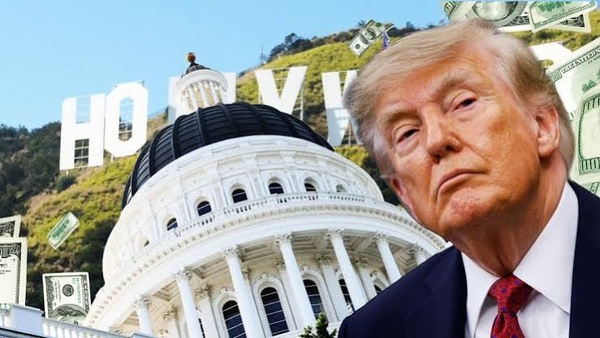

Thousands of flights sat frozen on runways while the president's attention turned to a very different kind of industry.
A rare nationwide flight shutdown gripped the United States on Friday, November 13, 2026, after the Federal Aviation Administration ordered all departing flights grounded starting at 3:54 p.m. Eastern time, citing a telecommunications outage hitting air traffic control centers nationwide, even as President Trump used the moment to publicly press Congress to pass a federal film and television tax incentive.
Trump Administration Perpetual Futures Plan Sparks Wall Street Lawsuit Fight
FAA Orders Rare Nationwide Ground Stop
Trump Hasn't Commented on Nationwide Flight Shutdown, But He's Promoting the Federal Film Incentive https://t.co/Q1HgqTkroN
— Variety (@Variety) November 13, 2026
The FAA said all airports were ground stopped due to extraordinary circumstances and for reasons of safety. The advisory took effect at 3:54 p.m. Eastern and was set to run until 11:30 p.m., covering departing aircraft at airports across the country. Planes already in the air faced delays, rerouting, or holding patterns while the agency worked through the problem.
Officials traced the trouble to a communication issue affecting multiple Air Route Traffic Control Centers. The FAA described it as a nationwide ground stop tied to communication failures, not a weather event or mechanical breakdown. By roughly 4:45 p.m., FlightAware was tracking more than 7,800 delays and about 350 cancellations across the country, numbers that were still climbing as the shutdown dragged on.
This kind of nationwide flight shutdown is extremely rare. Grounding every departing flight in the country requires a serious and immediate safety concern, and the scale of Friday's disruption put airports, airlines, and travelers in a holding pattern with no clear end time in sight during the early hours of the crisis.
SNL Halloween Cold Open Brings Back Trump and David S. Pumpkins With a Wild Twist
Homeland Security Secretary Points to Telecommunications Failure
Homeland Security Secretary Markwayne Mullin spoke to reporters outside the White House and said the cause was a telecommunications outage running throughout the FAA. He said officials had not yet pinned down exactly what caused the failure or how long it would take to fix, but he moved quickly to calm fears about a possible attack.
Mullin said there was no indication as of yet that anything nefarious was behind the ground stop. He added there was no sign the incident posed a threat to the United States, and officials said it was unrelated to a separate Microsoft outage that had caused problems earlier in the week.
Mullin also said President Trump had been briefed on the situation and had spoken by phone with Transportation Secretary Sean Duffy. Despite the briefing, the available reporting shows no public statement from Trump specifically addressing the flight shutdown during the early hours of the emergency.
Trump Pushes Film Tax Incentive as Flights Stall
While networks were covering the nationwide ground stop, Trump posted on Truth Social urging lawmakers to pass the Motion Picture, Television, and Entertainment Revitalization Act. He wrote that he was working with a bipartisan group of lawmakers and told them to get it done, naming senators from both parties including Adam Schiff, Tim Scott, John Cornyn, Raphael Warnock, Steve Daines, Bernie Moreno, Tim Sheehy, Alex Padilla, Mark Warner, Thom Tillis, Chris Coons, Katie Britt, and Dick Durbin.
He also credited House members Jason Smith, Nathaniel Moran, Brian Jack, and Linda Sanchez for backing the bill. The timing drew attention because it placed Trump's entertainment-industry messaging directly alongside an unfolding aviation emergency affecting travelers nationwide, a split-screen moment that stood out across news coverage that afternoon.
The proposed bill would create a 20 percent transferable tax credit for qualifying film and television production costs, covering above-the-line and below-the-line wages, post-production, and visual effects. Eligible projects need a minimum spend of 1 million dollars and must film at least 75 percent of the project inside the United States.
A Bill Six Months in the Making
Trump first called for bipartisan support for a federal production incentive back on August 14, 2026, telling supporters to get it done. Six weeks later, on September 24, matching bills were introduced in both the Senate and the House under the Motion Picture, Television, and Entertainment Revitalization Act name.
Supporters say a federal incentive would help American studios and crews compete against production subsidies offered by other countries and by individual U.S. states, keeping jobs and investment at home. Critics have raised cost concerns, with the Cato Institute estimating the measure could run between 33 billion and 49 billion dollars.
The bill's path got more complicated after the November midterm elections, when Democrats reportedly retook control of both chambers of Congress. That left a narrow lame-duck window between November 9 and the end of the year for lawmakers to act before new political dynamics take hold in January.
What Comes Next for Travelers and Lawmakers
For travelers, the immediate question was how fast the FAA could restore its telecommunications systems and lift the ground stop. The advisory listed 11:30 p.m. Eastern as its end point, but officials gave no guaranteed restoration time, leaving airlines to manage cascading delays and cancellations through the evening.
For Congress, the question is whether the film and television incentive can move during the short lame-duck session. With bipartisan sponsors on board but real doubts about cost, the bill's fate remains uncertain, and Friday's split headlines, a grounded aviation system next to a Hollywood tax pitch, are likely to be remembered as an odd snapshot of a single, chaotic news day.