
A man named Casey is helping scientists prove that thoughts alone might soon become spoken words, no screen required.
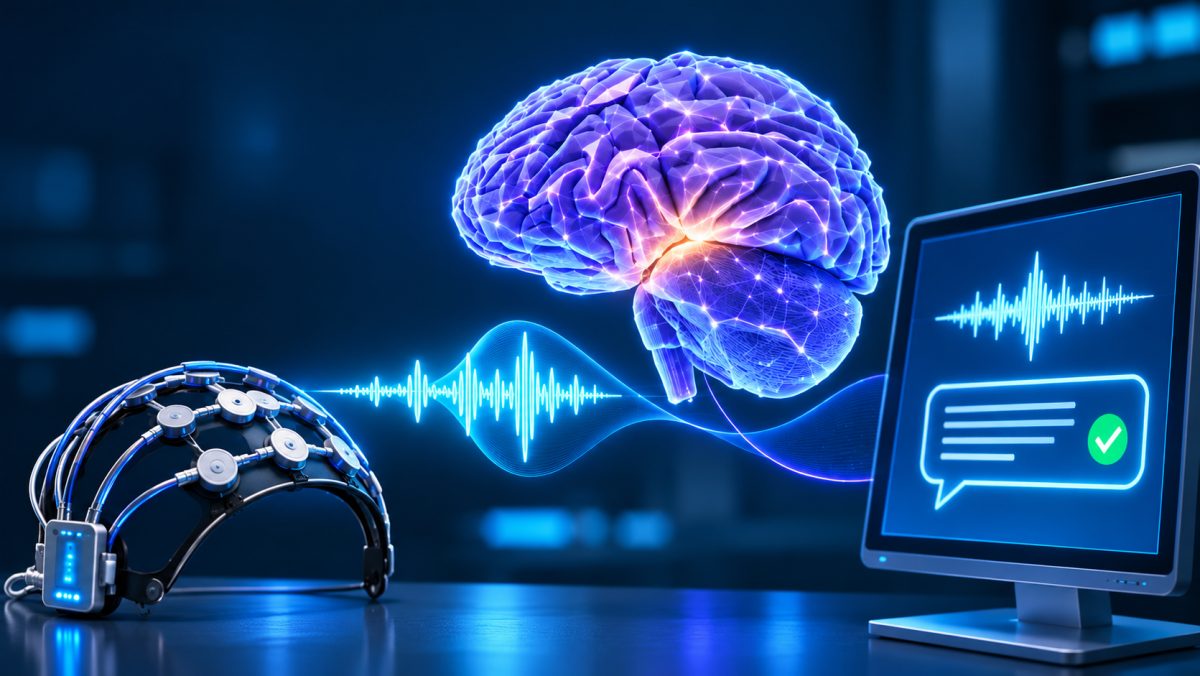
Brain-computer interface speech restoration just crossed a major threshold, according to a Science News podcast feature published November 10, 2026, which reports that listeners understood about 95 percent of words generated by a direct brain-to-voice system, a sharp jump from earlier attempts that were hard to decipher.
What Ended the Cosmic Dark Age? New Study Upends Old Supernova Theory
How Casey's brain-computer interface turns thoughts into talk
View this post on Instagram
Casey cannot speak the way he used to, so he relies on an implanted device that reads brain activity tied to attempted speech. The system decodes those signals and puts the intended words on a screen in front of him. From there, Casey picks a button using either his eyes or the brain-computer interface itself, and a digital voice reads the chosen words out loud.
It works, and it gives Casey a way to communicate that he would not otherwise have. But it is slow. Real conversation does not usually involve pausing to select words off a screen one at a time. That gap between what current brain-computer interface speech restoration tools can do and how people actually talk is exactly what researchers are trying to close next.
FLIP Exoplanet Imaging Tool Finds Hidden Planet JWST Missed Before
Scientists aim to skip the screen entirely
The next big step in brain-computer interface speech restoration is removing the middle step altogether. Instead of decoding brain signals into text first, researchers want to turn those signals directly into audible speech. No screen. No button. Just intention becoming sound.
Early versions of this direct brain-to-voice approach did not go well. Listeners struggled to understand what the synthesized voice was saying. But newer testing described in the Science News report shows real progress, with comprehension reaching roughly 95 percent among listeners. That is a big leap, though it still falls short of guaranteeing smooth, effortless conversation in every situation, like a noisy room or a fast back-and-forth exchange.
Casey calls seamless speech the holy grail
For Casey, the goal is not just better technology. It is getting back something closer to normal conversation. He describes direct brain-to-voice communication as the holy grail of what this technology could become, saying he wants to simply intend to speak and have that thought turn into speech automatically, creating what he calls a seamless conversation.
Researcher Brandman offered a timeline for when something like that could reach real patients. Brandman said, I think I'm about five years away from being able to meet a patient with ALS and offer a device that helps despite paralysis. Brandman described the goal device as implanted, fully wireless, and cosmetically invisible, something a person could use to talk with family and friends without anyone noticing hardware at all. The broader estimate given for that kind of device reaching patients sits at roughly five to 10 years.
Why this matters for people who have lost their voice
Conditions like ALS, stroke, and traumatic injury can leave someone's mind fully intact while the muscles needed for speech stop responding. Current tools, including eye-tracking boards and typing systems, help, but they are often slow and tiring to use. Brain-computer interface speech restoration research is trying to bypass the damaged pathway entirely by reading the brain's intended message before it ever needed muscles to carry it out.
This is not a finished product sitting on a shelf. The 95 percent accuracy figure comes from testing, not from a device cleared for widespread medical use. Questions remain about surgery risks, wireless reliability, long-term durability of implants, and how to keep a person's own vocal identity intact when a machine is doing the talking. Researchers still need to prove the technology works consistently outside controlled lab settings.
What comes next for brain-to-voice research
The path forward involves tightening accuracy further, cutting down delay between thought and sound, and making the synthesized voice sound more like the person using it rather than a generic computer voice. Scientists also need to figure out how devices will function safely over years, not just during a lab demonstration.
Casey's experience shows both how far brain-computer interface speech restoration has come and how far it still has to go. The screen-and-button method already gives him a voice. The next version, if it works the way researchers hope, could give him back something closer to a real conversation, without needing to stop and pick words at all.