
India just put real money behind a plan to stop depending on other countries for lithium and nickel.
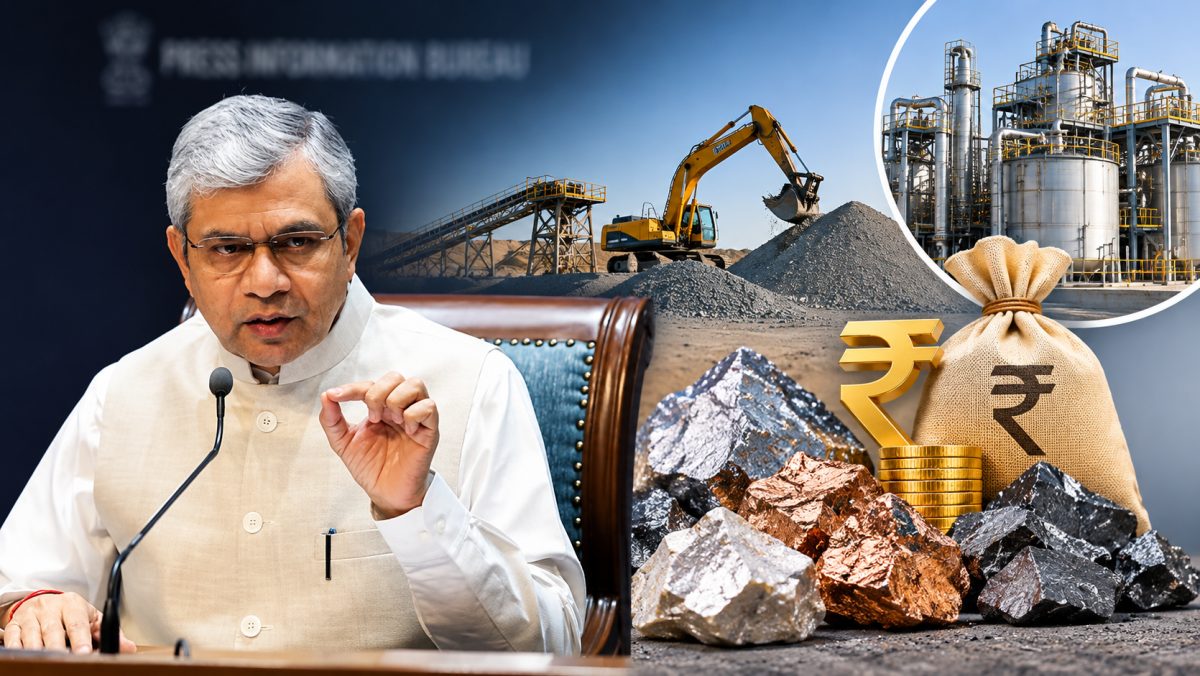
The Union Cabinet, led by Prime Minister Narendra Modi, approved the ₹2,814 crore critical mineral processing scheme on November 4, 2026, to build domestic lithium and nickel processing plants across India over the next five years, running from FY 2026-27 through FY 2030-31.
Goyal Slams Europe's Regulatory Burden, Tells Dutch Firms India Does It Better
Cabinet Clears Funding For Four New Processing Plants
The scheme, officially called the Capex Support Scheme to Promote Critical Mineral Processing, will fund four plants in total. Two will process lithium, each with a minimum capacity of 30 kilotonnes. The other two will handle nickel, each with a minimum capacity of 50 kilotonnes. These aren't mining projects. They focus on something India has struggled with for years: turning raw ore and rough material into pure, usable compounds that factories can actually use.
Companies that win a spot in this scheme will get a capital subsidy covering 30% of their eligible investment. That's a big chunk of the upfront cost taken off the table. But there are caps. Lithium plant operators can get up to ₹500 crore each, while nickel plant operators can receive up to ₹900 crore each. Add it up across all four plants, and the maximum support comes to around ₹2,800 crore, which lines up closely with the scheme's total outlay.
MCA Role in NCLT Appointments: Why It Denies Control After SC's 'Hijacked' Jab
Why Lithium And Nickel Processing Scheme Matters For India's Supply Chain
Electric vehicles, batteries, solar panels, and even defence equipment all need lithium and nickel. India has these minerals on its wish list, but getting raw material isn't the hard part. Processing it into battery-grade material is where the real bottleneck sits. Most of that refining happens overseas today, which leaves Indian manufacturers waiting on imports and exposed to price swings and trade disruptions they can't control.
Information and Broadcasting Minister Ashwini Vaishnaw addressed the decision at a press briefing after the Cabinet meeting. He described it as a major step for the country's mineral processing ambitions and noted that the scheme will accept feedstock from both mining and recycling. That second part matters more than it sounds. Old batteries and industrial scrap already contain usable lithium and nickel, and pulling material from recycling means India doesn't have to rely purely on fresh mining output to keep these plants running.
Official government statements tie this scheme directly to reducing import dependence and pushing more value addition inside India. The broader goal fits into a larger list of 24 minerals the government has flagged as critical for the economy, even though this particular scheme is targeted at just lithium and nickel for now.
How Companies Will Be Selected And Paid
The process to pick which companies get funded isn't a simple application form. It runs in two stages. First, companies go through technical qualification to prove they can actually build and run these plants. Then comes financial bidding, where the government picks winners based on the least-cost criterion, meaning the companies asking for the smallest subsidy relative to their project size get an edge.
Once selected, payouts won't arrive in one lump sum. The subsidy will be released in three tranches, each tied to specific project milestones. That structure protects public money by making sure companies hit real construction and production targets before getting more funding. It also means beneficiaries need staying power, since they'll have to fund early-stage work before government money starts flowing in.
There's also a bonus angle here. Processing nickel ore often produces cobalt as a by-product, another mineral used heavily in batteries. The government expects this scheme to generate some cobalt recovery naturally, even though the scheme itself wasn't designed around cobalt specifically.
What This Means For India's Battery And EV Industry
For companies in mining, battery manufacturing, electric vehicles, and recycling, this scheme lowers the financial risk of entering a capital-heavy business. Building a processing plant from scratch costs a huge amount of money, and a 30% subsidy changes the math for a lot of potential investors who were sitting on the sidelines.
That said, nobody knows yet which companies will actually win these four slots. The government hasn't released detailed application guidelines, eligibility rules, or a timeline for when bidding will open. No company has been publicly named as a frontrunner, and no plant locations have been confirmed. Industry watchers are likely to pay close attention to how the government defines "eligible investment" and what qualifies as meeting the milestone targets for each tranche payment.
Next Steps In The Five-Year Rollout
The scheme is now in its early implementation phase, with the five-year clock already running from FY 2026-27. Expect the government to release detailed operational guidelines next, followed by a formal call for applications. From there, the two-stage selection process will determine the final four companies, their plant locations, and construction timelines.
Until those details come out, this remains a funding framework rather than a set of finished projects. But the direction is clear. India wants lithium and nickel processed on its own soil, and it's now put ₹2,814 crore behind that goal.