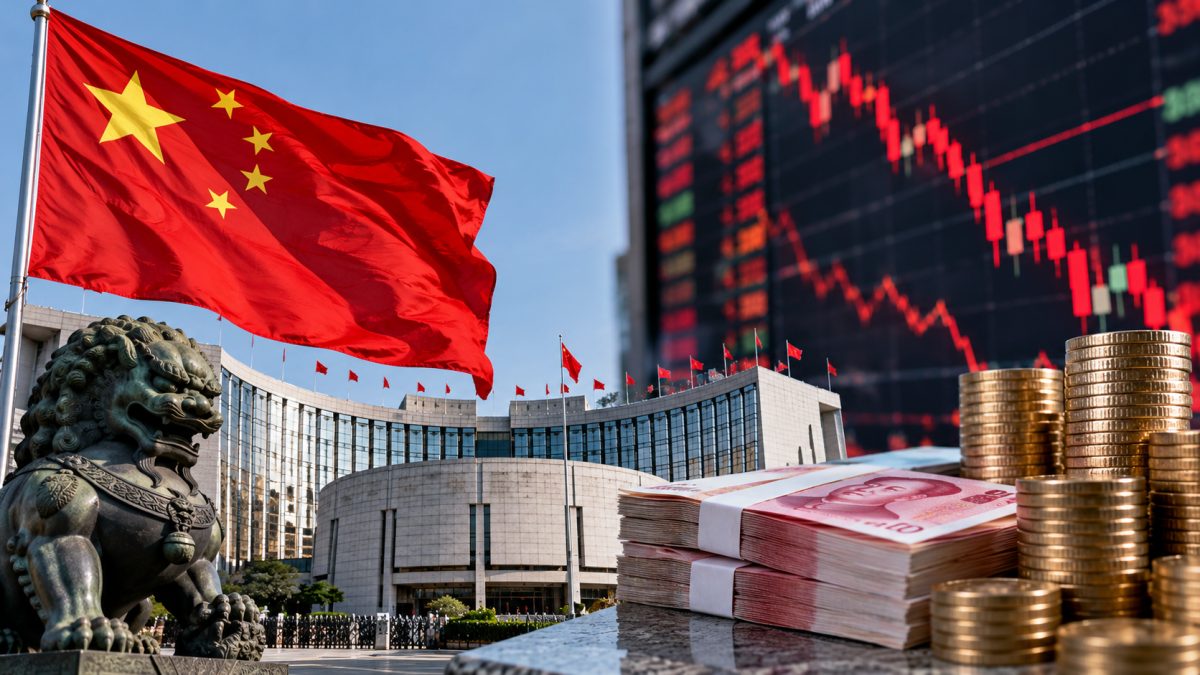

Beijing just rolled out a safety net for its bond market, and the timing says a lot about what regulators are worried about.
China's financial regulators unveiled a coordinated bond market stabilization plan on October 19, 2026, during the opening of the Financial Street Forum in Beijing. People's Bank of China Governor Pan Gongsheng said the central bank will team up with other regulators to build a new liquidity support tool for non-bank financial institutions facing heavy withdrawal demands.
Northrop Grumman Earnings Estimates Rise Amid Hidden Risks
Pan Gongsheng Lays Out the Bond Market Stabilization Plan
Standing before an audience of financial leaders, Pan said the People's Bank of China will work alongside the National Financial Regulatory Administration and the China Securities Regulatory Commission to create a liquidity backstop. The goal is simple but important: stop a chain reaction where asset managers sell bonds to cover investor withdrawals, which drives prices lower and scares more investors into pulling their money out too.
Pan called this a bond market stability mechanism. He framed it as a new tool for managing systemic risk, something regulators can activate when non-bank institutions hit serious liquidity trouble and the bond market starts acting disorderly. It's a targeted fix aimed at a specific weak spot that has worried Chinese officials for some time.
The China bond market stabilization push wasn't a standalone announcement. Pan paired it with four other measures. He said the Standing Lending Facility will now cover more types of institutions, giving a wider pool of financial firms direct access to central bank cash when they need it. He also pointed to new efforts linking the interbank bond market with the exchange-traded bond market, a move meant to make trading smoother and more efficient across the board.
Global PC Shipments Q3 2026: Why Sales Crashed 20% in Just One Year
Foreign Investors Get Easier Access to Yuan Trading
One of the more eye-catching pieces of the package involves foreign money. Pan announced a pilot program letting overseas financial institutions buy and sell yuan directly in China's onshore foreign exchange market. That's a notable shift toward opening up currency trading to outside players, and it fits into Beijing's longer-term goal of pushing the renminbi further into global finance.
Alongside the currency pilot, regulators issued guidance on financial support for technology innovation hubs. Three regions were named specifically: Beijing and the surrounding Beijing-Tianjin-Hebei area, Shanghai and the Yangtze River Delta, and the Guangdong-Hong Kong-Macao Greater Bay Area. The message here is that Beijing wants its tech sectors backed by real financial firepower, not just policy slogans.
Xinhua's coverage of the event confirmed all five pieces of the plan, describing them as measures the PBOC intends to roll out working closely with other regulators. The emphasis throughout was coordination, not just one agency acting alone.
A Bigger Shift Could Be Coming to China's Main Interest Rate
Perhaps the most striking comment from Pan wasn't about bonds at all. He said the central bank will study switching its main open-market operation from a seven-day tenor to an overnight one. If that happens, the overnight repo rate would become China's main policy rate, replacing the current seven-day benchmark.
This wasn't framed as a done deal. Pan used the word study, which signals a planning phase rather than an immediate switch. Still, the idea represents a real shift in how China manages short-term interest rates and could change how banks and markets price borrowing costs going forward.
Chinese-language reports from the following day added more texture to this picture. According to Qianlong's coverage, officials are looking at three related moves in the near term: refining how short-term rates are controlled, reforming the benchmark used to price loans, and eventually phasing out the old deposit and lending benchmark rates altogether. None of this is happening overnight, but it points to a steady move toward letting market rates do more of the heavy lifting in China's financial system.
Timing Matters: Other Stimulus Moves Came Just Days Before
This announcement didn't happen in isolation. Just over a week earlier, on October 9, China's Finance Ministry said it would issue special treasury bonds to inject capital into eight central financial institutions, aiming to strengthen their ability to absorb shocks and keep lending to the real economy. Then, around October 16 and 17, reports surfaced that authorities were pushing companies and state-linked funds to buy back shares and support the stock market.
By October 18, broader stimulus details emerged, including a 500 billion yuan swap program to help funds, insurers, and brokers get financing for stock purchases, plus up to 300 billion yuan in cheap PBOC loans for commercial banks backing share buybacks. Seen together, these moves paint a picture of regulators working on multiple fronts at once: stocks, bonds, bank capital, and now interest rate structure, all within roughly two weeks.
What Comes Next for Markets and Investors
The details that matter most now are still being worked out. Regulators haven't published exact rules for who qualifies for the new liquidity facility, what collateral would be required, or exactly when it could be activated. The same goes for the overnight rate study: there's no confirmed launch date yet.
Foreign institutions will likely be watching closely for specifics on the yuan trading pilot, since the practical rules will determine how much this actually opens up onshore currency markets. Meanwhile, banks and asset managers will want clarity on the Standing Lending Facility's expanded eligibility list. For now, Beijing has signaled its intentions clearly. The next test is whether the follow-through matches the ambition laid out at the Financial Street Forum.