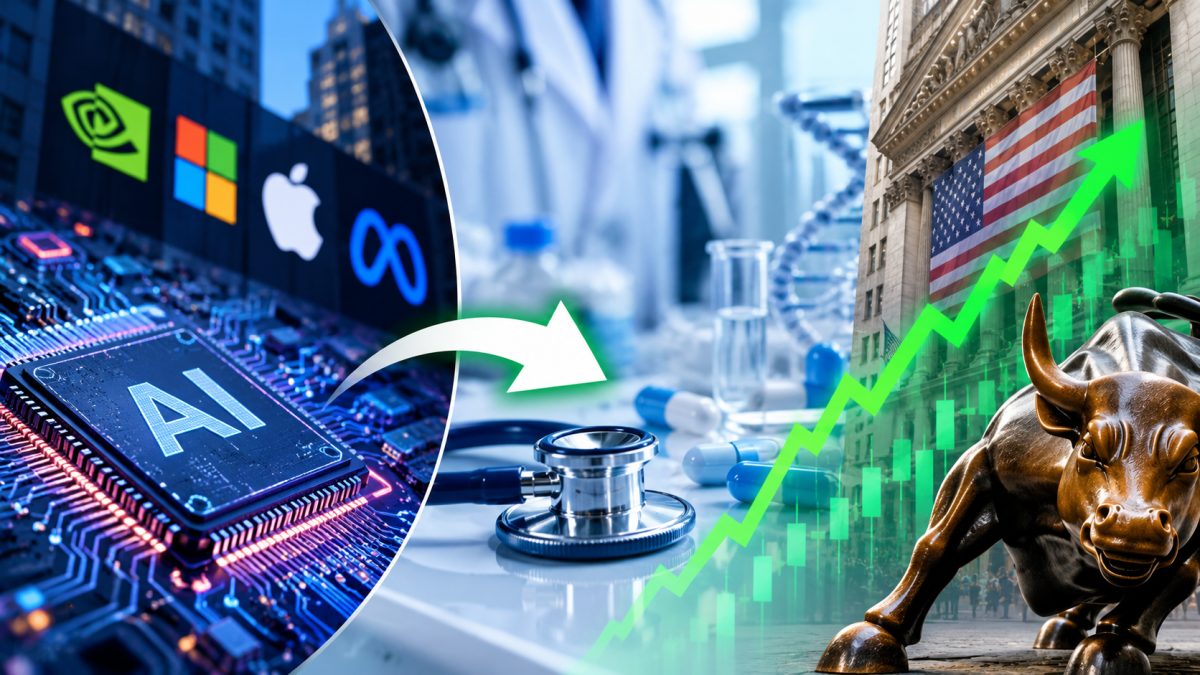

Investors ditched hot AI stocks on Thursday and ran straight into healthcare names like Eli Lilly and UnitedHealth instead.
The U.S. stocks shift from AI to healthcare became the defining story of Wall Street trading on October 15, 2026, as the Dow Jones Industrial Average jumped 556 points, or 1.08%, to close at 52,177.69. The S&P 500 added 0.33% to finish at 7,744.06, while the Nasdaq Composite clawed back an early loss to end slightly positive.
U.S. EV Charging Reliability Jumps as Car Sales Crash 50% This Year
Dow Soars While Chip Stocks Keep Sliding
Thursday started rough. The S&P 500 and Nasdaq both opened lower as traders kept dumping shares tied to artificial intelligence, continuing a selloff that had already battered the market the day before. But something shifted during the session. Money that had been pouring into chipmakers and cloud companies for most of 2026 suddenly found a new home in healthcare, consumer goods, and materials stocks.
By the closing bell, eight of the S&P 500's eleven sector groups were in the green. Healthcare led everything, climbing 1.84%, with materials close behind at 1.71%. The Dow benefited the most from this swap because it's packed with big healthcare and consumer names, which explains why it outperformed the S&P 500 and Nasdaq so clearly on the day.
Eli Lilly shares jumped more than 3%. UnitedHealth climbed about 2.8%. Walmart added roughly 1.4%. All three got a boost after Deutsche Bank raised its ratings on the companies, giving investors fresh reasons to buy into sectors seen as safer bets than high-flying tech.
US Stocks Weekly Gains October 9 2026: Why Wall Street Just Jumped
Nvidia, Broadcom, and CoreWeave Keep Bleeding
While healthcare partied, semiconductor stocks kept hurting. Nvidia fell about 2% on Thursday, piling onto a 3% drop from the previous session. Broadcom also slid further, and the Philadelphia Semiconductor Index logged its seventh straight losing day, a losing streak that shows just how nervous traders have become about the AI trade.
CoreWeave, the Nvidia-backed company that runs AI cloud data centers, has turned into the poster child for this anxiety. Its stock had already crashed more than 15% on October 14, and it kept falling into Thursday's session too. The worry centers on debt. CoreWeave has borrowed huge sums to build out data centers for AI computing, and investors are now asking hard questions about whether that debt load makes sense if AI revenue takes longer than expected to show up.
Broadcom isn't immune either. The company has projected $115 billion in fiscal-2027 AI revenue, but that massive number depends on just a handful of customers, including Anthropic and OpenAI, actually following through on planned deployments. Both Nvidia and Broadcom also lean on financing vehicles tied to firms like Apollo and Blackstone to fund lab buildouts, which adds another layer of financial risk that traders are now pricing in.
Why Wall Street Suddenly Got Nervous About AI Debt
This didn't come out of nowhere. The S&P 500 had just hit a record high the previous week and was sitting roughly 13% higher for the year, a run largely fueled by AI-related names. But that rally leaned heavily on enormous spending commitments for data centers, chips, electricity, and networking gear. The bigger those bets got, the more investors started wondering how companies would keep paying for it all.
Higher borrowing costs made that question even more pressing. When interest rates stay elevated, it gets more expensive to finance massive data-center projects, and it also makes investors value future earnings from expensive growth stocks less generously today. That combination pushed traders to rotate toward companies with steadier cash flows right now, rather than promises of AI profits years down the road.
The reporting attributes the shift directly to investors who were, in plain terms, concerned about AI stocks and moved their money into Eli Lilly, UnitedHealth, and similar names instead. It's less about abandoning AI altogether and more about investors getting pickier about which AI bets they're willing to hold onto.
Healthcare Winners and the Bigger Market Risk
Eli Lilly and UnitedHealth weren't the only healthcare names catching a bid. Johnson & Johnson, AbbVie, Merck, and Gilead all contributed to the sector's strength, and large-cap healthcare exchange-traded fund exposure reportedly touched an intraday record high during the session. That's a sign this wasn't just a one-stock story but a broader flight toward pharmaceutical and health-services companies.
On the other side, Intel and Advanced Micro Devices joined Nvidia and Broadcom in feeling the pressure, as traders questioned whether the pace of AI spending can hold up. That question matters beyond just tech investors. AI-related companies now make up around 40% of the S&P 500's total weight, meaning weakness in that group can drag down the whole index even when other sectors are climbing.
What Comes Next for AI and Healthcare Stocks
Nobody knows yet whether this rotation is a short blip or the start of something longer. A lot depends on whether AI spending keeps proving itself worth the debt and risk involved. Investors will be watching corporate earnings guidance from chipmakers and cloud providers, along with interest rates, inflation reports, and Treasury yields, for clues about where the money moves next.
If financing worries around CoreWeave and similar companies keep building, healthcare, consumer staples, and materials stocks could keep attracting cautious investors looking for safety. But if major AI players show they can manage their debt and deliver steady revenue, chip stocks and infrastructure names could bounce back just as quickly as they fell. For now, Thursday's trading made one thing clear: the AI rally that powered Wall Street through most of 2026 is facing its toughest test yet.