
A record-breaking stunt meant to make Cleveland shine instead sent a million balloons crashing back down on the city it was supposed to celebrate.
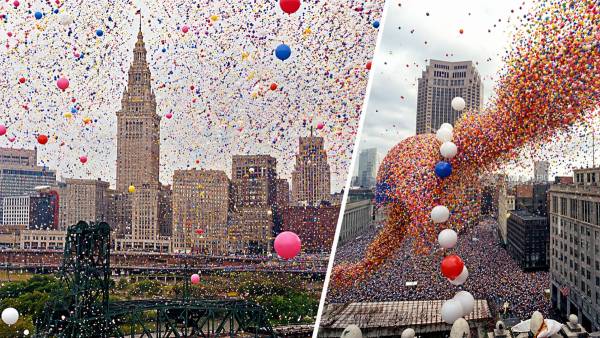
Cleveland Balloonfest 1986 took place on Saturday, Sept. 27, 1986, in downtown Cleveland's Public Square, when the local United Way released 1,429,643 helium balloons in a bid to set a world record. More than 100,000 people watched, but rain and shifting winds quickly turned the celebration into chaos across the city and Lake Erie.
Howard University and Wells Fargo to Host Financial Symposium for Student Athletes
Cleveland Balloonfest 1986 Begins With a Record-Setting Spectacle
The Cleveland chapter of United Way organized the event as both a fundraising kickoff and a way to repair the city's battered national image. For years, Cleveland had absorbed bad press, and organizers hoped a jaw-dropping spectacle would connect the city with optimism and generosity instead. The plan was simple on paper: gather volunteers, fill balloons with helium, and let them go all at once over Public Square.
Thousands of volunteers spent months getting ready. California balloon artist Treb Heining, known for large-scale balloon displays, helped run the operation. Workers packed the balloons into a giant net suspended about three stories above the square, waiting for the right moment to open it. The original goal had been far bigger, with some accounts citing 2.2 million balloons and others 2 million, but funding and material shortages forced organizers to scale back.
At about 1:50 p.m., the net opened and the balloons surged into the sky, swallowing up the view of Terminal Tower in a wash of color. One witness later described it as looking like “almost a volcano when it went off.” For a few minutes, the stunt worked exactly as planned, and the crowd below cheered as Cleveland briefly became the center of a world record attempt.
Diddy Head Injury in Prison Sends Him to Hospital Before Dawn Return
Weather Turns the Cleveland Balloonfest Celebration Into a Mess
The trouble started almost immediately. Rain had already been falling, and it weighed down thousands of balloons before they could rise and scatter the way organizers expected. Instead of drifting off safely into open sky, many balloons got pushed by shifting winds right back over the city and toward Lake Erie.
Balloons rained down on streets, highways, and open water. Drivers swerved to dodge them, and the sudden movements reportedly caused traffic accidents around the city. The mess did not stay confined to downtown streets, either. Falling balloons blanketed parts of Burke Lakefront Airport, forcing officials to shut down a runway for about 30 minutes while crews cleared the area.
Out past the shoreline, balloons settled across sections of Lake Erie right as the Coast Guard was searching for two missing boaters. The floating balloons made the search harder by cluttering the water and cutting down visibility. Both boaters were later found drowned, turning what had been a lighthearted promotional event into something far more serious.
Lawsuits Follow the Cleveland Balloonfest Fallout
Once the skies cleared, the legal fallout began. In Medina County, balloons allegedly spooked a valuable Arabian horse on a local pasture. The horse's owner, Louise Nowakowski, sued United Way for $100,000, a case that was eventually settled out of court for terms that were never made public.
The more serious lawsuit came from the widow of one of the drowned boaters. She filed a lawsuit against United Way and a balloon company, with one report putting the claim at $3.2 million, arguing that the balloon-covered water had hampered the search effort. That case also ended in a private settlement rather than a public trial, leaving many questions about direct responsibility unanswered in court records.
Despite the damage, the balloon count still made history. In 1988, Balloonfest '86 earned a spot in the Guinness Book of World Records for the largest simultaneous balloon release, a title based on the official count of 1,429,643 balloons. That record stood even as the event's reputation shifted from a civic triumph to a cautionary tale.
Why the Cleveland Balloonfest Story Still Gets Told Today
Cleveland Balloonfest 1986 followed closely behind Hands Across America, a nationwide charity event held that May, and organizers were also chasing a balloon-release record set the year before near Disneyland in California. The competitive spirit behind the event pushed planners to think bigger than the location could safely handle, releasing millions of lightweight objects near an airport, busy roads, and a major lake with little room for error.
Modern retrospectives, including oral histories marking the 40th anniversary, treat Balloonfest less as a fundraising win and more as a lesson in event planning gone wrong. There is no ongoing legal case or planned repeat of the stunt today. What remains is a widely cited example of how a feel-good publicity idea can spiral out of control when weather, geography, and sheer scale collide.
The event still shows up in conversations about environmental risk and large public gatherings, often cited alongside its strange mix of triumph and disaster. Cleveland broke its record that September afternoon, but the balloons that came back down left a far longer-lasting mark on the city than the ones that floated away.