
Wall Street had a rough Friday as tech stocks tumbled and oil prices shot higher, leaving investors uneasy about what comes next.
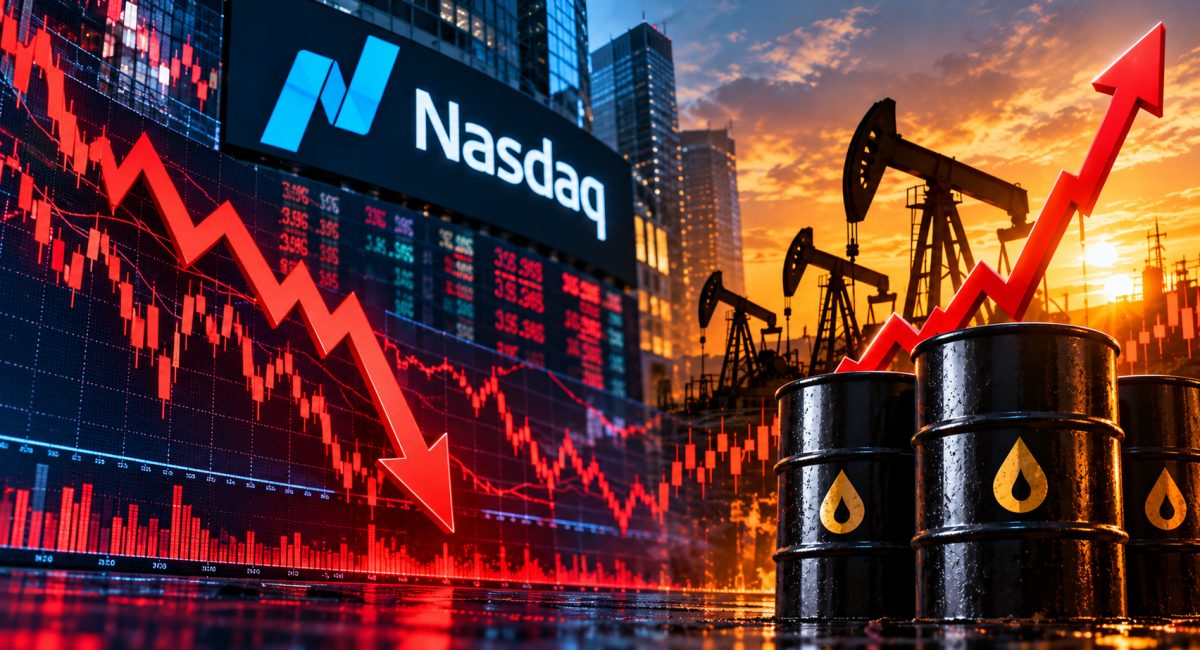
The US stocks October 16 2026 market fall sent the Nasdaq Composite down 2.14% to 26,140.03, while the S&P 500 dropped 1.09% to 7,659.44 and the Dow Jones Industrial Average slipped 175.28 points, or 0.34%, to 52,002.41, as investors dumped AI-linked shares and watched crude oil prices surge past $100 a barrel.
U.S. Stocks Shift From AI to Healthcare as Dow Jumps 556 Points
Wall Street Closes Sharply Lower As AI Names Get Hit Again
Friday's session turned ugly fast. Technology and semiconductor stocks led the retreat, with companies tied to artificial intelligence infrastructure bearing the brunt of the selling. CoreWeave and Broadcom were among the names under the most pressure, according to reports from the day. The Nasdaq, which leans heavily on tech and AI stocks, fell far more than the other two major indexes, dropping over 2% by the closing bell.
The S&P 500 also closed in the red, losing just over 1%. The Dow fared better, slipping only 0.34%, and that smaller loss had a clear explanation. Energy stocks, including Chevron, climbed as oil prices jumped, which helped cushion the blue-chip index from the kind of beating tech stocks took. This split between sectors shows the US stocks October 16 2026 market fall wasn't a simple across-the-board panic. It was investors rotating money out of pricey AI names and into energy.
Quara Finance Mobily Pay Launch Brings Digital Loans to Saudi Wallet Users
Oil Prices Surge On Middle East Supply Fears
While AI stocks were sinking, oil was doing the opposite. West Texas Intermediate crude jumped 3.51% to settle at $101.41 a barrel. Brent crude, the international benchmark, rose 3.72% to close at $109.86, touching the $110 mark for the first time since May. Traders said the spike came from growing worries about supply disruptions tied to rising tensions involving Iran and the Strait of Hormuz, a narrow waterway that carries a huge share of the world's oil shipments.
Reports also pointed to broader geopolitical tension connected to Russia and Ukraine as another factor pushing crude higher. For everyday investors, this matters because expensive oil tends to ripple through the whole economy. It raises costs for shipping, manufacturing, and travel, and it can push inflation higher at a time when many were hoping price pressures would keep easing. That combination puts the Federal Reserve in a tougher spot when deciding on interest rates.
Worries Grow Over AI Infrastructure Debt
Behind the stock selloff sits a bigger question that's been building for weeks. Investors are starting to ask whether the massive amount of money being poured into AI data centers, chips, and computing power will actually pay off fast enough to justify the debt piling up at some companies. CoreWeave has become a focal point of that worry. One report said the company's debt had climbed above $51 billion, and that yields on its bonds shot past 15% during the week, a sign that lenders see real risk in how the company is financed.
This isn't just a CoreWeave problem. It's a signal that the whole AI trade, which has powered much of the stock market's gains this year, might be built on shakier financial ground than many assumed. The Nasdaq had actually hit a record high recently and was riding a four-week winning streak before this reversal. Heading into Friday, the index was already down about 2.4% for the week, while the S&P 500 had slipped roughly 0.9% and the Dow had managed a gain of about 1%, showing money was already quietly shifting away from tech even before Friday's steeper drop.
A Choppy Week Ends With Mixed Signals
The picture wasn't entirely one-directional throughout the week. Just a day earlier, on Thursday, all three major indexes had actually closed higher, helped along by a sharp drop in Treasury yields and a brief calming of fears around heavily indebted AI infrastructure firms. The Dow had gained 556.21 points that day. That bounce turned out to be short-lived once oil prices surged and AI stock concerns resurfaced on Friday.
This back-and-forth pattern tells a story of a market that's nervous but not in full panic mode. Investors seem willing to buy the dip in tech stocks when fears ease, but they're also quick to pull back the moment new worries, like oil spikes or credit concerns, show up. That kind of whipsaw trading often continues until there's more clarity, whether that comes from economic data, corporate earnings, or signals from the Federal Reserve about where interest rates are headed next.
What Investors Are Watching Next
Going forward, three things will likely decide which way markets move. First is whether oil prices stay above $100 a barrel or start cooling off once the geopolitical picture becomes clearer. Second is whether tensions tied to Iran, the Strait of Hormuz, or the Russia-Ukraine conflict escalate into something that actually threatens oil supply, rather than just raising fears about it. Third, and maybe most important for the broader stock market, is whether AI infrastructure companies can show investors real evidence that their massive spending is turning into real profits, not just mounting debt.
Earnings reports from major tech, semiconductor, and cloud computing companies in the weeks ahead will be closely watched for clues. So will any statements from the Federal Reserve about inflation and interest rates. Until those answers become clearer, the kind of volatility seen during the US stocks October 16 2026 market fall may keep showing up, with AI stocks and oil prices acting as the two biggest swing factors for Wall Street.