
After years of saying no, Apple is finally giving the MacBook Pro a touchscreen, and the reveal is just days away.
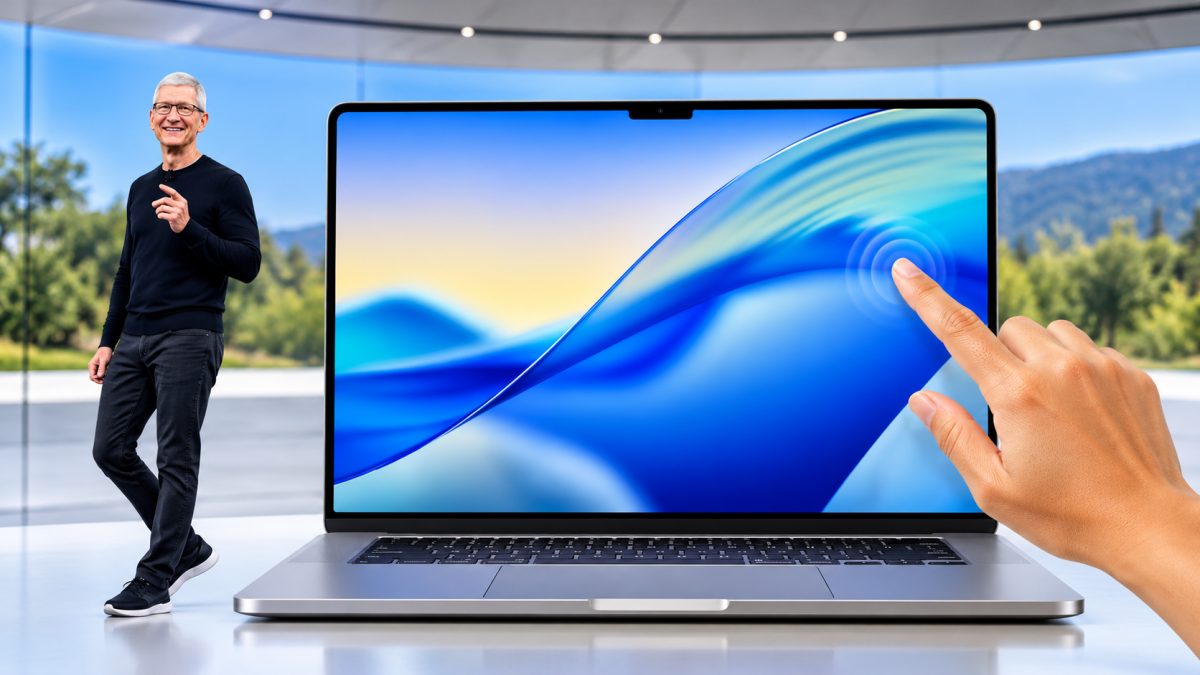
Apple is set to unveil its first touchscreen MacBook Pro on Wednesday, October 28, 2026, ending roughly two decades of public resistance to touch-enabled Mac laptops. The redesigned premium notebooks are expected to pair OLED displays with a thinner chassis, according to Bloomberg reporter Mark Gurman, who called it the company's latest major reversal.
OLED iPad Mini 8 Release Date Leaks: Here's When It May Finally Go On Sale
Apple Breaks Its Own Rule With Touchscreen MacBook Pro
For almost twenty years, Apple treated touchscreens and laptops as two things that should never mix. Now that stance is changing. Bloomberg reports the touchscreen MacBook Pro will arrive this Wednesday, a date Gurman confirmed directly on social media, writing that the launch marks "the tech giant's latest major reversal."
The new machines are expected to come in 14-inch and 16-inch sizes, built around OLED display technology that has never appeared in a MacBook Pro before. MacRumors describes this as the first major redesign of the MacBook Pro since 2021, combining a lighter body with a screen that finally responds to touch. Reports also point to a possible Dynamic Island-style cutout on the display, similar to what Apple already uses on iPhones.
Importantly, touch will not take over the laptop experience. According to Bloomberg, Apple's plan keeps the keyboard and trackpad as the main way people use the machine, with touch added only as an extra option. MacRumors' guide to the device echoes this, noting that touchscreen capability will work "alongside the trackpad and keyboard," not instead of them.
iPhone Duo Screen Cracks Along Hinge Just Hours After Launch Day Sales
Two Decades of Apple Executives Saying Touchscreen Laptops Made No Sense
The reversal is a big deal because Apple's own leaders spent years arguing against this exact idea. Steve Jobs once called touchscreen laptops "ergonomically terrible," pointing out that holding your arm up to tap a vertical screen for hours is uncomfortable and tiring.
Tim Cook kept that resistance alive after Jobs died. He compared merging tablets and laptops to combining "a toaster and a fridge," suggesting the two devices worked better as separate tools. Former marketing chief Phil Schiller and software boss Craig Federighi also pushed back on the idea over the years, with Federighi arguing touch was never the right primary way to control macOS.
Even John Ternus, who has since become a top Apple executive, reportedly dismissed the touchscreen laptop concept just a few years ago. Bloomberg's reporting suggests the real shift happened as Cook and Ternus started noticing that customers increasingly expected touch on premium laptops, even while Apple's own design team remained unconvinced it was a good idea.
Thinner Design, OLED Screens, and a Reinforced Hinge for Tapping
Beyond the touchscreen itself, the new MacBook Pro models are expected to be noticeably thinner and lighter than the current lineup. That's a meaningful shift for a product line that has kept a similar shape since 2021, based on details compiled by MacRumors.
One engineering detail stands out: a reinforced hinge. Because tapping a laptop screen can cause it to wobble, Apple is reportedly strengthening the hinge so the display stays steady when people touch it. macOS 27 is also expected to pick up new touch gestures, though reporting does not suggest Apple is turning the whole operating system into something that looks or works like an iPad.
Chip choices are shaping up to be more complicated than usual. The premium OLED touchscreen models are expected to run on M5 Pro and M5 Max chips, not the newer M6 Pro or M6 Max versions many expected. Meanwhile, a separate, more familiar-looking 14-inch MacBook Pro is expected to get the standard M6 chip. Bloomberg's reporting adds that Apple is skipping M6 Pro and M6 Max entirely, with next-generation M7 Pro and M7 Max chips not expected until late 2027.
Why This Launch Matters Beyond Just One New Laptop
This moment is bigger than a single product update. It shows Apple changing its mind on something leadership defended publicly for years, which doesn't happen often. The Verge described the touchscreen MacBook Pro as a rumor that has circulated since early 2023 and may finally become real at this event, which Apple is reportedly calling "Pro and Tell."
Inside Apple, the decision wasn't unanimous. Bloomberg's reporting notes that the company's industrial-design group remained opposed to the touchscreen idea even as top executives moved forward with it. That tension reflects a broader industry reality: many Windows laptop makers have offered touchscreens for years, and Apple's holdout position was becoming harder to justify to customers comparing options.
Early buyer reaction, based on the volume of coverage leading up to the event, suggests strong interest paired with real skepticism. Some people want a true hybrid device that works like a tablet and laptop combined. Apple's reported approach, keeping touch as a secondary input, may not fully satisfy that group, but it does let the company add the feature without abandoning the traditional Mac experience long-time users rely on.
What to Watch When Apple Takes the Stage
The October 28 event should answer several open questions. Reports differ slightly on timing, with some earlier coverage pointing to October 27, but Gurman's most recent reporting settled on Wednesday, October 28, for the announcement. Retail availability could follow around November 6, 2026, according to Bloomberg's podcast comments relayed by MacRumors.
No official Apple statement, price, battery rating, or full spec sheet has been confirmed yet. Everything about size, chip configuration, and exact display design remains based on reporting rather than company confirmation. Once Apple takes the stage, the real test will be whether this cautious, keyboard-first approach to touch satisfies buyers who have waited years for Apple to finally bend on this one.