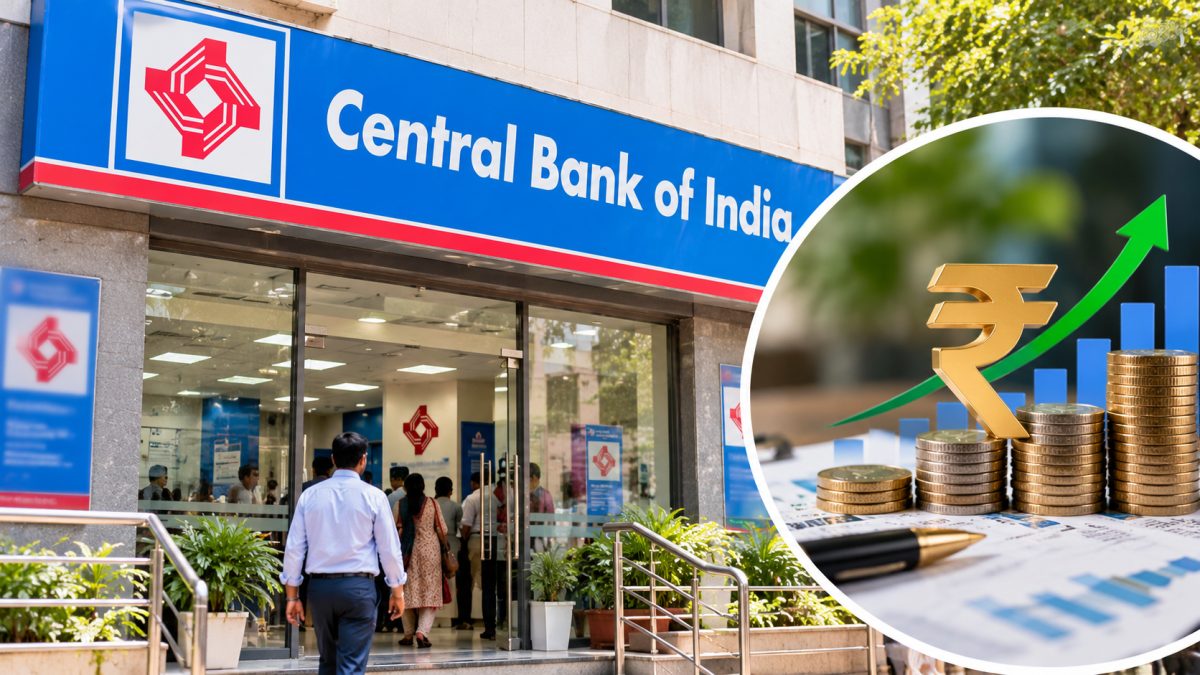

A state-run lender just posted one of its strongest quarters in years, and the numbers tell a bigger story about Indian banking.
Central Bank of India announced its Q2 FY27 results on Saturday, October 17, 2026, reporting a 21.1% jump in standalone net profit to ₹1,468.86 crore for the quarter ended September 30, 2026, up from ₹1,213 crore a year earlier, as loan growth and net interest income both surged.
Prem Watsa IDBI Bank Deal: Why Fairfax Just Paid $5.6 Billion for Control
Central Bank of India Q2 FY27 Results Show Broad-Based Growth
The Mumbai-headquartered public sector bank said its net interest income, the gap between what it earns on loans and pays on deposits, rose 26.3% to ₹4,145 crore from ₹3,283 crore in the same quarter last year. That growth outpaced even the strong profit numbers, showing the bank's core lending business is firing on all cylinders.
Operating profit climbed about 27% to ₹2,268 crore during the quarter. The bank achieved this even as it set aside money for bad loans and earned less from its treasury operations, according to the results filed with stock exchanges. For the first half of FY27, standalone net profit touched ₹6,735.3 crore, comfortably ahead of the ₹5,991 crore recorded in the same period last year.
Finance Curse: How Britain's Banking Boom Cost £4.5 Trillion
Loan Growth Powers the Central Bank of India Q2 FY27 Results
Global advances at Central Bank of India jumped 29.83% year on year to ₹3.81 lakh crore, up from roughly ₹2.93 lakh crore. Corporate lending did much of the heavy lifting, rising 42.05% to ₹1.19 lakh crore. Meanwhile, retail, agriculture and MSME loans, grouped together as RAM advances, grew 21.11% to ₹2.54 lakh crore.
Inside the retail book, growth stayed strong across the board. Retail loans rose 24.49% to ₹1.12 lakh crore, while housing loans grew 13.07% and auto loans climbed 13.09%. This spread shows the bank wasn't leaning on just one type of lending to drive its numbers. Global deposits grew too, but at a slower 14.41% pace to ₹5.09 lakh crore, and total global business rose 20.54% to ₹8.90 lakh crore. CASA deposits, the low-cost current and savings account funds banks prefer, increased 9.2% to ₹2.27 lakh crore.
Bad Loans Keep Shrinking at Central Bank of India
Perhaps the most encouraging number in the entire report is the bank's bad loan ratio. Gross non-performing assets fell to 1.61% as of September 30, 2026, down from 1.86% just one quarter earlier in June, and sharply lower than 2.60% a year ago. Net NPA also dropped to 0.31%, pointing to a much cleaner loan book than the bank carried in previous years.
This matters because Central Bank of India, like many public sector lenders, spent years working through stressed assets left over from an earlier credit cycle. Seeing bad loans shrink while the loan book itself grows by nearly 30% is not something that happens by accident. It suggests tighter underwriting and better recovery efforts are paying off, even as the bank takes on more risk through faster lending.
What the Growing Gap Between Loans and Deposits Means
One thing worth watching closely is the gap between loan growth and deposit growth. Advances grew almost 30% while deposits grew under 15%. That's a wide difference, and if it continues, it could eventually push up the bank's cost of funds or strain its ability to keep lending at the same pace. Banks typically need deposits to grow roughly in line with loans to keep their balance sheet healthy and stable.
The heavy tilt toward corporate lending also deserves attention. A 42% jump in corporate advances is a big number, and while it clearly helped drive this quarter's profit, corporate loans can sometimes carry more concentrated risk than a diversified retail book. Investors and analysts will likely keep an eye on how this corporate exposure performs in the coming quarters, especially if economic conditions shift.
Looking Ahead After a Strong Quarter
Central Bank of India filed its full investor presentation and corporate presentation for the quarter and half year ended September 30, 2026, giving analysts a detailed look at the numbers behind the headline profit figure. The filing, disclosed around October 16 and 17, 2026, is now the key document for anyone wanting to dig deeper into margins, provisioning details, and segment-wise performance.
Going forward, the big questions center on whether deposit growth can catch up to loan growth, whether the sharp rise in corporate lending stays healthy, and whether the bank can keep trimming its NPA ratios as the loan book keeps expanding. For now, though, the September quarter gave Central Bank of India a clear win: profit up 21%, loans up nearly 30%, and bad loans at their lowest level in recent memory.