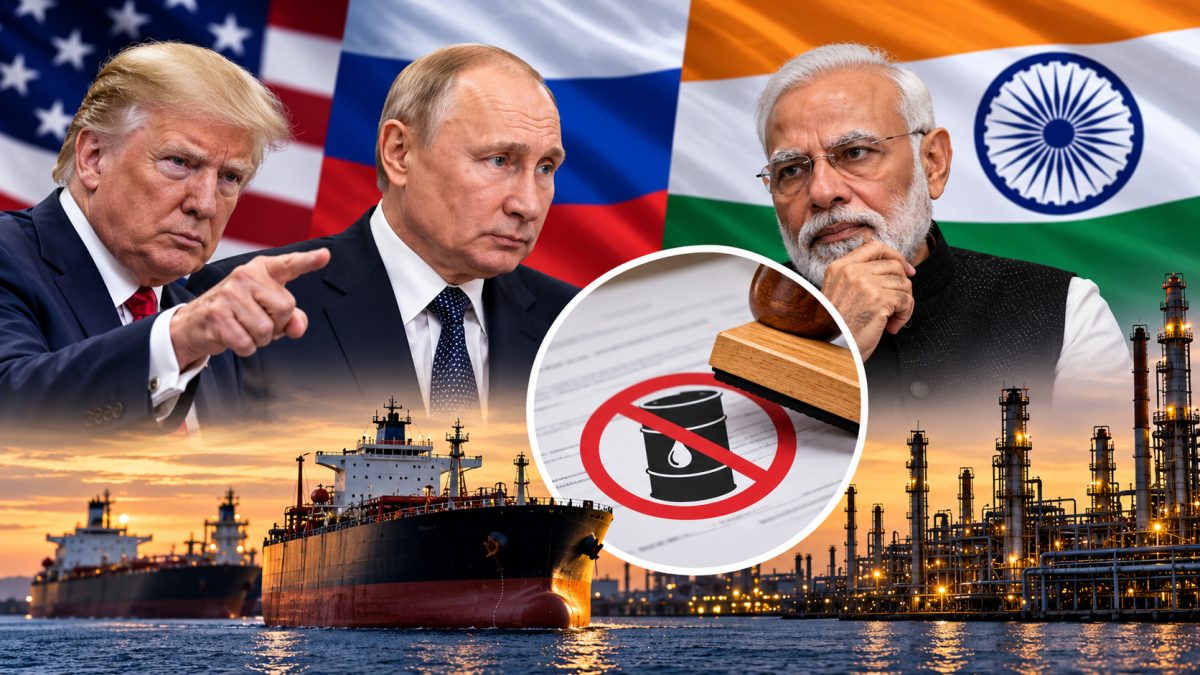

India just dodged a massive tariff bullet, but the think tank GTRI says nobody should celebrate too soon.
US President Donald Trump issued an executive order on October 16, 2026, waiving tariffs and sanctions tied to Russian oil and gas purchases, giving India last-minute protection from a threatened 100% duty that was set to kick in on October 18. The relief came through a national-interest waiver under the Lindsey O. Graham Sanctioning Russia and Iran Act, but experts at the Global Trade Research Initiative warn it can be taken back at any time.
Riyadh Airport Attack Kills 12, Will Trump Send US Troops Against Houthis Next?
Trump's Russia Sanctions Waiver India GTRI Reaction Explained
View this post on Instagram
The executive order leaned on Section 115(a) of the Graham Act, which lets the president waive penalties when he decides it serves the national interest. Trump's order stated it plainly: he was waiving duties laid out in Sections 112 and 113 of the law. Those sections were the ones threatening steep new costs on countries still buying Russian energy.
GTRI did not treat this as a win worth celebrating. The think tank called the move temporary relief, not a solution. In its own words, GTRI said Washington can restore the tariffs anytime, leaving India and other buyers uncertain about future US action. That single line sums up the entire mood among trade watchers in New Delhi right now.
Trump SpaceX Bonds Bought Days Before Big Space Policy Drop
The Deadline That Forced Washington's Hand
This whole situation traces back to September 18, 2026, when Trump signed the Graham Act into law. The legislation was aggressive by any measure. It allowed a 500% tariff hike on Russian goods and a separate 100% duty on imports from countries still making new purchases of Russian oil or gas after October 18. Reports suggest the law was aimed squarely at the five biggest buyers of Russian energy, and India's name sat right near the top of that list.
India has leaned heavily on discounted Russian crude since the Ukraine war scrambled global oil markets. Sanctions on Moscow pushed prices down, and Indian refiners took advantage of the savings. Washington never liked that arrangement, arguing it helped fund Russia's war effort, but India consistently defended its right to buy energy based on price and availability rather than political pressure.
What Changes on the Ground for India Right Now
For Indian exporters, this waiver removes an immediate and very real threat. A 100% tariff would have made countless Indian products unsellable in the US market overnight. It also would have thrown a wrench into ongoing India-US trade talks at a sensitive moment. The timing is notable too, since the waiver arrived just ahead of a planned visit by US Secretary of State Marco Rubio to India, according to reporting from National Herald.
Indian refiners also get breathing room to keep shopping for Russian crude without worrying about instant retaliation. That flexibility matters even more right now because supply disruptions elsewhere in the oil-producing world are already squeezing global markets, according to India Weekly's reporting. Losing access to discounted Russian barrels at this exact moment would have added real strain to India's energy bill.
Why GTRI Says This Is Not the End of the Story
GTRI's warning goes beyond just noting that the waiver can be reversed. The think tank specifically told India to protect its energy security, keep buying oil on normal commercial terms, and avoid trading away permanent concessions just to keep this temporary relief alive. That is a pointed message aimed at negotiators who might feel pressure to offer Washington something bigger in upcoming trade discussions.
It is worth being clear about what this waiver does not do. It does not cancel the broader web of US sanctions against Russia that exist under separate executive orders. It does not stop Washington from watching which countries are buying Russian energy and how much. And it does not come with any announced expiration date, which actually makes the uncertainty worse rather than better. Businesses like predictability, and right now there is none.
The Road Ahead for Refiners, Exporters, and Trade Negotiators
The immediate crisis has passed, but the underlying tension has not gone anywhere. Washington still holds the power to flip this decision whenever it suits its strategic interests. That means Indian policymakers now face a balancing act, keeping cheap Russian crude flowing while making sure exporters don't walk into a tariff ambush down the road.
Expect continued scrutiny from US agencies over what counts as a new Russian oil purchase versus existing contracts. Expect shipping companies, insurers, and banks tied to this trade to stay cautious. And expect this waiver to come up again, likely as a bargaining chip, whenever India and the US sit down for deeper trade negotiations. For now, GTRI's advice is simple. Take the breathing room, but don't mistake it for a settled deal.