
A new digital bridge between Indian sellers and American buyers is already pulling in thousands of sign-ups, and the government says this is just the start.
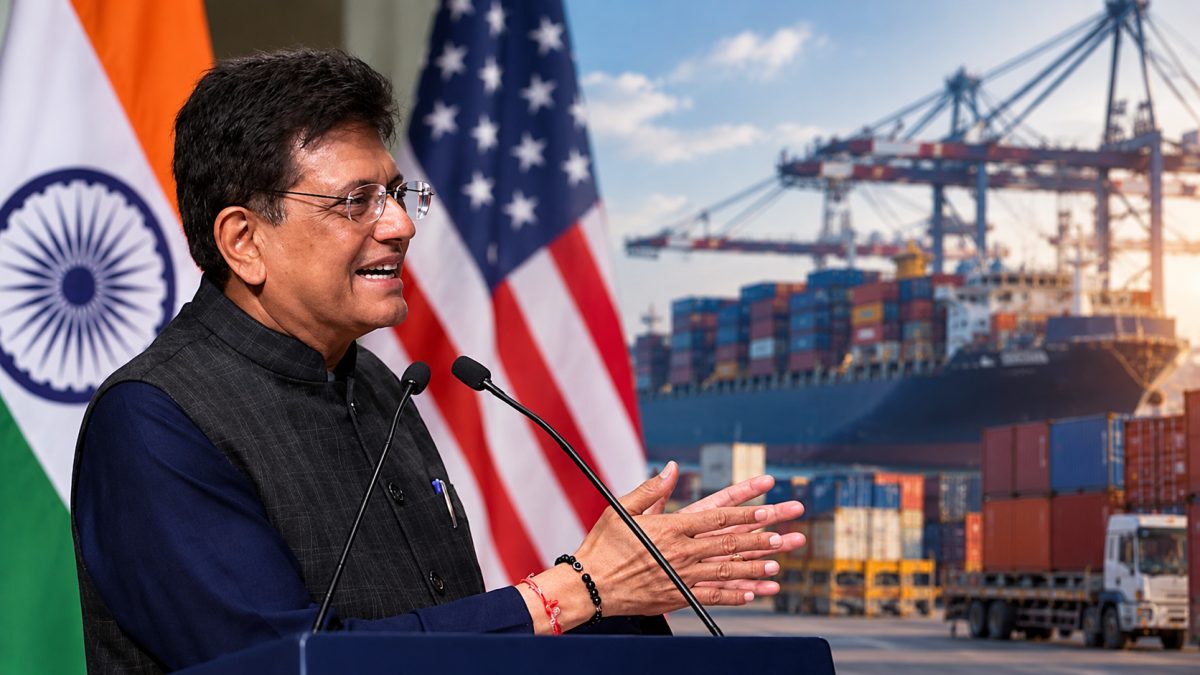
Commerce and Industry Minister Piyush Goyal announced on October 27, 2026, that the India-US Trade Facilitation Portal has recorded around 3,500 registrations within a few months of going live. He said the response shows strong early interest from Indian exporters, especially small businesses, startups and first-time exporters looking to reach buyers in the United States.
Goyal Slams Europe's Regulatory Burden, Tells Dutch Firms India Does It Better
Goyal Shares the Numbers Behind India-US Trade Facilitation Portal Growth
Goyal made the announcement in a post on social media, calling the platform's progress encouraging. He said the India-US Trade Facilitation Portal is helping businesses in both countries build partnerships, explore new markets and expand their global reach. His comments were picked up widely by Indian financial media on the same day, including reports from the Economic Times, Times of India and The Hindu BusinessLine.
The portal itself tells a similar story. As of its October 23, 2026 update, the official website showed 53,006 visitors, a sign that interest goes well beyond the people who actually signed up. That gap between visitors and registrations suggests many businesses are still exploring the site before committing to create a full profile.
Xi Jinping Corruption Crackdown Hits Top Generals as Party Meets in Beijing
How the India-US Trade Facilitation Portal Actually Works
The portal is hosted by the Consulate General of India in New York, working together with the Embassy of India in Washington, DC, and Indian consulates in Chicago, Los Angeles, Atlanta, Boston, Houston, Seattle and San Francisco. That's eight Indian diplomatic offices across the US all pointing businesses toward one shared platform.
On the Indian side, exporters, manufacturers, suppliers and service providers can build a profile, upload product catalogues and wait for inquiries. On the American side, buyers, importers, distributors and sourcing professionals can browse those profiles, send requests for quotation, and track down suppliers for deals that might last years, not just one shipment. The site also runs virtual exhibitions, webinars and awareness campaigns with export promotion councils, aiming to walk a small business through the entire journey from first contact to signed deal.
Why This Matters for Small Exporters Trying to Crack the US Market
For years, one of the biggest hurdles facing Indian MSMEs has been simple: they make good products but have no way to find buyers abroad. Flying to trade shows costs money. Hiring agents costs money. Even figuring out who to call in a foreign market takes time most small firms don't have.
The India-US Trade Facilitation Portal is built to remove some of that friction. A small manufacturer in a mid-sized Indian city can now put its catalogue online and get discovered by a buyer in Texas or California without ever leaving home. That's the theory behind the project, and the 3,500 registrations suggest plenty of businesses are willing to give it a shot.
But signing up is not the same as selling. The portal doesn't handle customs paperwork, product safety standards, labelling rules or payment terms, all of which still fall on the exporter. Reaching the US market legally and successfully requires meeting those requirements regardless of how a buyer and seller first connect. The platform's job is to get two business owners talking, not to finish the deal for them.
What the Portal's Own Users and Launch Notice Reveal
The San Francisco consulate first announced the portal was live on April 6, 2026, inviting companies to register for what it called new opportunities across goods and services sectors, along with virtual exhibitions and educational webinars. That early notice framed the platform less as a one-time directory and more as an ongoing program with events and training built in.
The portal's own website also carries user feedback, including at least one testimonial describing how the initiative helped an MSME and startup export directly to the United States while simplifying some compliance steps. That kind of feedback is useful, but it comes from the platform itself, so it should be read as encouraging rather than independently verified proof of results across all 3,500 registered users.
What Comes Next for the India-US Trade Facilitation Portal
The real test now is conversion. Registrations are easy to count, but inquiries, quotations, signed contracts and actual shipments are the numbers that will show whether this portal is changing trade patterns or simply collecting sign-ups. Right now, there's no public data breaking down how many of the 3,500 users are Indian sellers versus American buyers, or how many have exchanged even a single message.
Officials appear focused on building momentum through virtual exhibitions, buyer-supplier meetings and webinars tied to specific industries. If those events start producing confirmed orders, expect the government to publicize fresh numbers quickly, much like Goyal did with the registration count. Until then, the 3,500 figure stands as an early sign of interest, not a finished success story, and the next few months of reporting should start to show whether that interest is actually turning into trade.