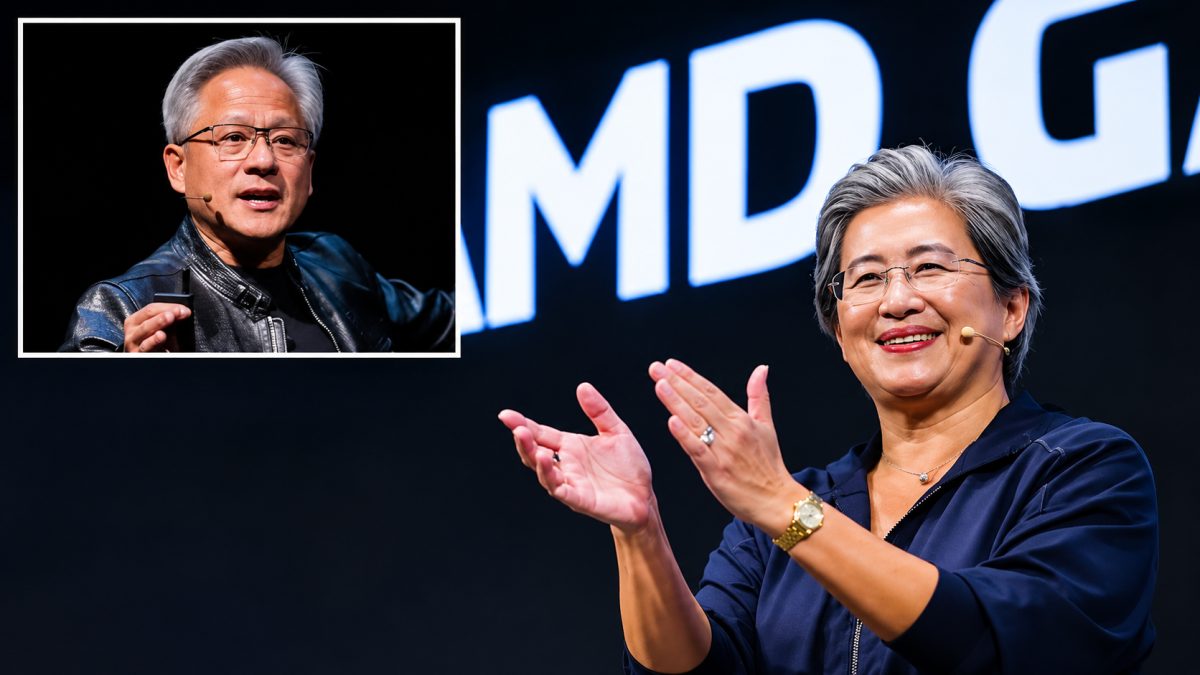

A short seller's report about old firmware and a blacklisted Chinese company just wiped billions off AMD's stock in one afternoon.
AMD shares China scrutiny took center stage on Thursday, November 19, 2026, after AMD stock closed down 7.72% at $489.19 following a Hunterbrook Media report that linked the chipmaker's firmware to IEIT Systems, a Chinese server maker the U.S. government blacklisted back in March 2025.
Stock Market Today: Nvidia Earnings Beat Estimates, Yet Dow Sinks 561 Points
How the AMD shares China scrutiny story broke
Hunterbrook Media, an investment research firm, published its findings Thursday morning and quickly rattled Wall Street. The report claimed that IEIT Systems kept receiving newer versions of AMD firmware even after landing on the Commerce Department's Entity List in March 2025. Firmware is the software that lets AMD's chips actually run inside a server, so its continued presence raised an obvious question: how did it keep showing up in a blacklisted company's products?
According to the report, Hunterbrook tracked at least six newer firmware versions tied to AMD that appeared in IEIT-related products after the blacklisting. The firm said three other companies connected to IEIT also used the same or similar firmware. Those companies were named as Maginfra in China, Kaytus in Singapore, and Aivres in California, all of which sell servers built around AMD chips under their own brand names.
Chicago CFO Ashlee Gabrysch Resignation Sparks Fight Over City's Books
Why AMD's China exposure is drawing fresh attention
Hunterbrook didn't stop at firmware. The report alleged that more than 20% of AMD's revenue gets billed to customers in China and Hong Kong, a figure that puts a spotlight on just how much of AMD's business runs through a region facing tightening U.S. trade rules. That number reflects billing exposure as estimated by the short seller, not a confirmed breakdown of where chips ultimately get used.
The report also pointed to AMD's manufacturing setup. It claimed AMD depends on two joint ventures for a large share of its chip assembly, testing, and packaging work, and that those ventures are 85% owned by China's Tongfu Microelectronics, with AMD holding the remaining 15%. On top of that, Hunterbrook said it traced $67 million in AMD licensing income during 2025 back to two Chinese chip ventures that were blacklisted in 2019. None of this, by itself, proves wrongdoing, but it paints a picture of a company with deep financial and operational ties to entities already under U.S. restrictions.
What Hunterbrook said and what AMD hasn't said
Hunterbrook described AMD bluntly, saying the chipmaker has "its own China problem." The firm's report stated that after the blacklist hit IEIT Systems, "the company kept getting newer AMD firmware, which enables AMD chips to run in servers." Hunterbrook also warned that new export rules coming out of Washington could "tighten restrictions on AMD's foreign business," a warning aimed squarely at investors worried about future regulatory moves.
What's missing from this story so far is AMD's side of it. Reports indicate AMD did not respond to Hunterbrook's questions before publication, and the company's executives didn't bring up any of these China-related concerns during their earnings call on November 3, 2026. There's also no sign yet of a Commerce Department statement confirming an investigation, a violation, or any new enforcement action tied to these allegations. Importantly, Hunterbrook itself acknowledged that its evidence does not prove AMD broke export-control law. It raises questions. It doesn't answer them.
Investors react fast while facts remain unsettled
The market didn't wait for confirmation. AMD shares dropped as much as 8% during the day before settling at a 7.72% loss, a sharp one-day move for a company of AMD's size. That kind of reaction shows how seriously investors treat anything touching export controls and China trade risk right now, especially in the semiconductor sector where U.S. policy can shift company fortunes overnight.
It's worth noting that Hunterbrook disclosed it held a short position in AMD before publishing its report, meaning the firm stood to profit directly from the stock's decline. That doesn't necessarily make the claims false, but it does mean readers and investors should weigh the source's financial incentive alongside the actual evidence presented. So far, no response has been documented from IEIT Systems, Tongfu Microelectronics, or the Commerce Department either confirming or denying the allegations.
What comes next for AMD and its China ties
The AMD shares China scrutiny saga is far from over. The next real test will be whether AMD issues a detailed public response addressing the firmware allegations, the licensing income tied to blacklisted ventures, and its ownership stake in the Tongfu-linked manufacturing joint ventures. Investors will also be watching to see whether the Commerce Department opens any formal review, since that would mark the first official step beyond a private investment firm's allegations.
Until then, what's confirmed is limited but significant: a steep stock drop, a detailed short-seller report, and a company that hasn't yet explained its side. The claims about export-control risk, China revenue exposure, and blacklisted licensing partners remain allegations, not findings. But for a company competing hard against Nvidia in the AI chip race, even unproven questions about China compliance carry real weight on Wall Street.