
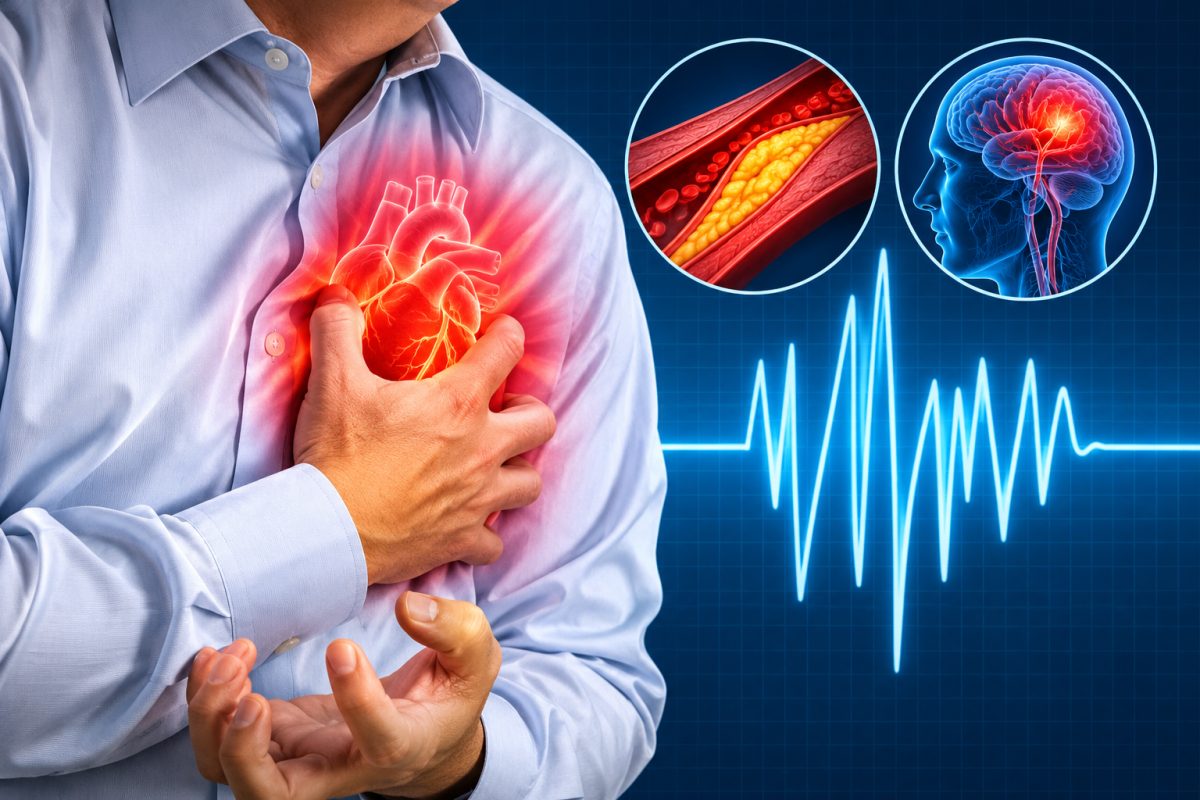

Doctors may soon spot trouble in your arteries long before you ever feel a symptom.
A major study led by the University of Edinburgh and published November 23, 2026, in JAMA Network Open found that heart attack and stroke risk 30 years in advance can already be seen in ordinary health data. Researchers tracked nearly 114,000 healthy people using records from 1985 to 2019, following some participants for as long as 34 years.
PTSD Brain Epigenetic Marks Reveal Why Trauma Isn't Just Depression
Decades-old clues hidden in blood pressure and cholesterol
The research team compared people who eventually suffered a heart attack, stroke or cardiovascular death with those who stayed healthy. The gap between the two groups showed up far earlier than most people would expect. Systolic blood pressure, the top number in a blood pressure reading, was already about 4 millimeters of mercury higher in future patients a full three decades before their event. That gap widened to roughly 7 mmHg as the event got closer.
Cholesterol followed a similar pattern. So did two blood proteins that doctors already use to check heart health: cardiac troponin, which signals damage to heart muscle, and C-reactive protein, which rises when the body is inflamed. Some reporting on the study also points to NT-proBNP, a protein tied to stress on the heart, as part of the bigger picture. None of these markers worked alone. It was the combination, tracked over time, that separated the two groups.
Great Unconformity Explained: Why a Billion Years of Earth Vanished
Why the University of Edinburgh calls this an early warning system
The University of Edinburgh summed up the point of the research directly, stating that early warning signs could help doctors predict those at risk of a heart attack or stroke up to 30 years before an event. That is a striking claim, but it comes with a boundary. The study is not saying a single appointment or one blood test can tell a person the exact year something bad will happen.
Live Science, covering the same research, reported that warning signs for these conditions can be seen in patients' health data up to 30 years before they happen. The emphasis there is on patterns across large groups of people, not a crystal ball for any one patient. Researchers quoted in coverage of the study were careful to note that a single blood pressure reading or cholesterol test cannot predict, with certainty, who will go on to have a heart attack or stroke.
Earlier research already hinted at this pattern
This is not the first time scientists have linked early-life health numbers to heart disease decades later. The CARDIA study, which has followed young adults for years, found that adults between 18 and 30 with several risk factors were two to three times more likely to develop atherosclerosis, a major driver of heart disease, later in life. A separate analysis of the Framingham Offspring Study found that high blood pressure and high LDL cholesterol in young adulthood were linked to sharply higher rates of coronary disease years down the road.
What makes the new Edinburgh-led study different is scale and timing. Instead of looking at risk factors at just one or two points in life, researchers tracked how these numbers moved over as much as three decades, watching the gap between healthy and at-risk people slowly widen. That long view is what makes the 30-year figure stand out from earlier work.
What this means for people who feel perfectly fine right now
The practical message is aimed squarely at people who think heart disease is a problem for later in life. A 30-year-old with slightly high blood pressure might look low-risk simply because of age. But if that blood pressure and cholesterol stay elevated for years, this study suggests the body is already building toward trouble long before any chest pain or hospital visit happens.
That does not mean everyone needs expensive protein testing right away. The study's authors and outside experts agree that basic, well-known measurements still matter most. Checking blood pressure, cholesterol, blood sugar, weight and smoking status regularly, starting in young adulthood, remains the clearest path to catching problems early. The newer protein markers add detail, but they build on habits doctors have recommended for years rather than replacing them.
Researchers say the next step is proving it works in practice
Scientists now want to confirm these findings in other groups of people and figure out whether adding blood protein tests to standard checkups actually improves predictions enough to matter. That means testing the approach in different countries, age groups and health systems before any hospital or doctor's office changes how it screens patients.
There is no new government screening program or official guideline change tied to this study yet. For now, the clearest takeaway is simple. Get blood pressure and cholesterol checked early, track them over time, and treat small warning signs seriously instead of waiting for a major event to force the issue. The data suggests the body keeps score long before it sends a loud signal.