
A 167-year-old math mystery might finally be cracked, but nobody has fully confirmed it yet.
The Riemann hypothesis solved claim broke on November 20, 2026, when mathematician Levent Alpöge posted what he says is a complete proof of the famous problem, created with help from Anthropic's AI tool Claude. Science News reported the development on November 23, 2026, noting that mathematicians worldwide are now racing to check his work.
Isabel Angelo Astronomer Uses AI to Hunt Strange Signals Hiding in Plain Sight
How The Riemann Hypothesis Solved Claim Came Together
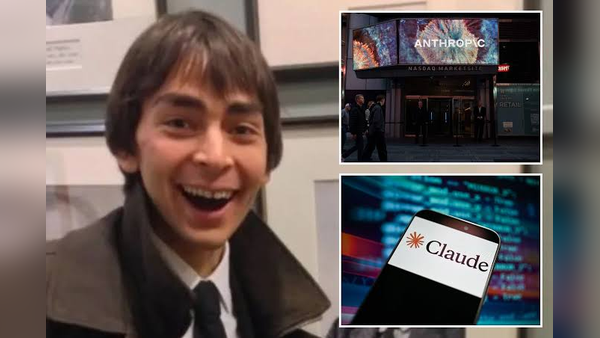
Alpöge, who works as a mathematician at Anthropic, posted his proof on his personal website on November 20. He did not claim to have done it alone. Instead, he said he built the argument working side by side with Claude, the same AI chatbot Anthropic sells to the public. That detail alone makes this story different from past claimed breakthroughs, because it puts an AI system in the room as an actual collaborator, not just a tool for checking typos.
What makes the claim even bigger is its reach. Alpöge says his work doesn't just prove the original Riemann hypothesis. He says it also proves the generalized Riemann hypothesis, a tougher cousin of the problem that stretches the same idea across a wider family of math functions. If that holds up, it would be one of the largest single leaps in modern math history, not just a narrow fix to one old puzzle.
This Star Swallowed Its Companion, and Astronomers Watched It Happen
Mathematicians Split Over Whether The Proof Actually Holds
Reactions came fast, and they did not agree with each other. A joint statement credited to the Lean Focused Research Organization and the Mathlib Initiative reportedly said, "We have full confidence that Alpöge's proof of the Riemann hypothesis is correct, and we congratulate him on this achievement." That is about as strong an endorsement as math groups tend to give in public.
But the Association for Human Mathematics pushed back hard. The group reportedly said on November 20 that no single human can take responsibility for a proof built with AI help, and that no mathematician can "confirm with full certainty that the proof is correct." That is a direct challenge, not just to the math itself, but to who gets credit when a human and a machine solve something together.
Why The Riemann Hypothesis Has Stumped Experts Since 1859
Bernhard Riemann first proposed this problem back in 1859. It asks a simple-sounding question with brutal math underneath: do all the special zero points of a certain complex function line up along one exact value? Riemann guessed yes. Nobody could prove it for 167 years, even though the guess has been tested against huge numbers of cases without ever being disproven.
A real proof matters because it would lock down patterns in how prime numbers are scattered across the number line, something that touches encryption, computer science, and pure math theory alike. It's also one of the Clay Mathematics Institute's seven Millennium Prize Problems, a list of the hardest known math questions, each carrying a $1 million prize for anyone who solves one the right way, with proper verification.
Why Checking The Proof Will Take Time And Careful Work
Right now, the honest answer is that nobody outside a small circle has fully verified the Alpöge proof. Science News reported that mathematicians are still working to understand what he posted. That is normal for huge claims like this. Proofs this complex often need months, sometimes years, of line-by-line checking before the wider math community agrees they hold up without hidden gaps or shortcuts that don't actually work.
The AI angle adds another layer. Claude helped build the argument, but that does not automatically make it correct. AI tools are good at spotting patterns and suggesting paths forward, but they can also make confident-sounding mistakes. The real test will be whether human experts, or a formal proof-checking system like Lean, can walk through every single step and confirm there are no cracks.
What Comes Next For This Historic Math Claim
Watch for whether Alpöge's proof gets translated into a fully formal, machine-checkable version, something groups like Mathlib specialize in. Watch also for whether major math journals pick it up for peer review, and whether other top mathematicians publicly back the result once they've had real time to study it.
Until that happens, the fair way to describe this story is simple. A mathematician and an AI appear to have made a stunning claim about solving the Riemann hypothesis, but "appears solved" and "proven beyond doubt" are two very different things. For now, the math world is watching, checking, and waiting.