
A tiny planet, a tight window, and one good reason to set your alarm early this month.
Mercury visibility in November 2026 is drawing attention from skywatchers because the planet has swung far west of the Sun, making it visible low in the eastern sky just before sunrise. The reported window centers on Saturday, November 21, though the exact year tied to the original report could not be independently confirmed. Still, the underlying science is solid and repeats every few months, giving early risers a real shot at spotting the solar system's most elusive planet.
Ole Rømer Speed of Light Discovery: How a Late Moon Changed Science Forever
Mercury visibility November 2026 explained in simple terms
Mercury is never easy to find. It orbits so close to the Sun that it almost always gets lost in bright glare, either right after sunset or right before sunrise. When astronomers say Mercury is "far west of the Sun," they mean it has reached a point in its orbit where it rises noticeably earlier than the Sun does. That gap gives it a small but real window of darkness, right before dawn, when it pokes above the horizon on its own.
This kind of setup is called a morning apparition, and it happens because Mercury's orbit sits inside Earth's orbit. From our point of view, the planet never strays too far from the Sun's glow. But a few times a year, it reaches what astronomers call greatest western elongation, the point where it's about as far from the Sun as it can get in our sky. That's the sweet spot for catching it before sunrise.
Shiveluch Lava Dome Oozes Like Toothpaste in Striking New Satellite Photo
Why skywatchers call this apparition tricky but doable
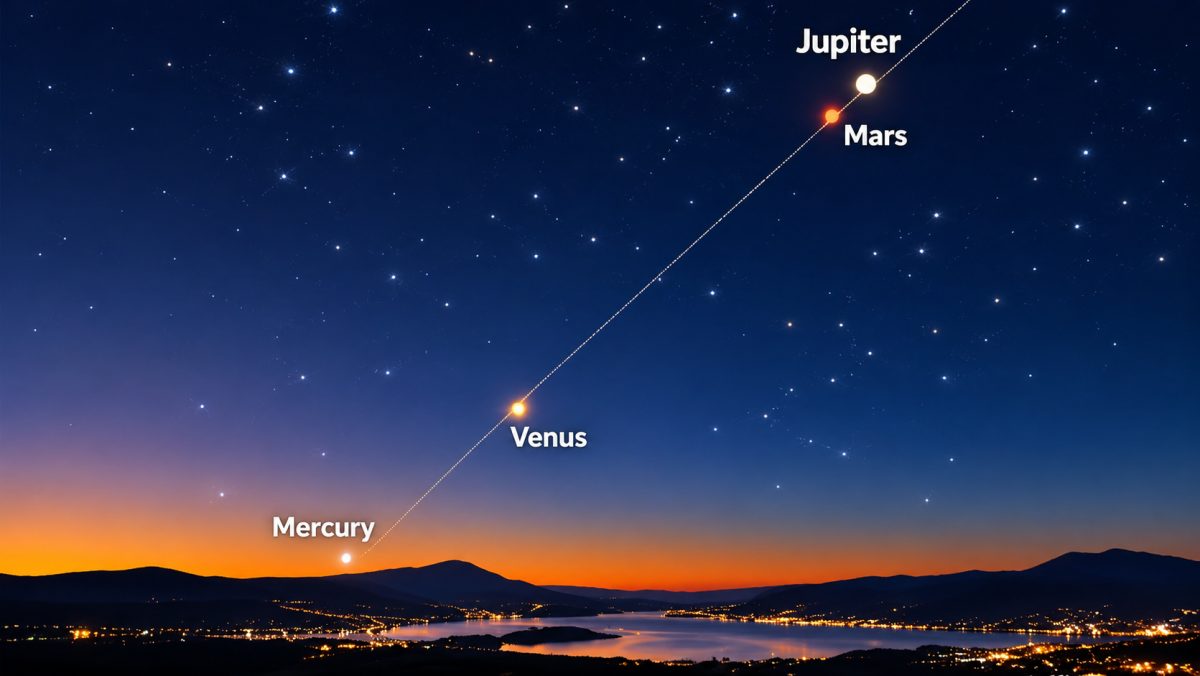
Reports connected to this event, including one from Astronomy Magazine and another from BBC Sky at Night Magazine, pointed to Mercury appearing low in the pre-dawn sky alongside Venus. Venus is much brighter and much easier to spot, so it can act like a signpost. Once you find Venus, Mercury should be somewhere nearby, though fainter and closer to the horizon.
That low position is exactly what makes Mercury so hard to catch. Even during its best elongations, the planet rarely climbs very high before the sky starts brightening. Hills, trees, buildings, and even light haze near the horizon can block it completely. A clear, flat eastern horizon makes a huge difference, and that's true no matter where you live on the globe.
What determines a good Mercury sighting beyond simple distance
Elongation angle alone doesn't guarantee a great view. The tilt of the ecliptic, which is basically the path the Sun and planets appear to trace across our sky, changes with the seasons and with your latitude. Sometimes a smaller elongation produces a terrific sighting because the ecliptic rises steeply from the horizon, lifting Mercury up quickly into darker sky. Other times, a bigger elongation disappoints because Mercury stays stuck near the horizon in bright twilight.
Mercury's brightness also shifts depending on its phase, much like our Moon goes through phases. Near elongation, the planet is close to half-lit. It can actually look brighter when it's nearer the Sun and shaped more like a crescent, even though that makes it harder to see against the glare. None of this means anything unusual is happening to the planet itself. It's simply the normal rhythm of an inner planet doing what it always does.
How to actually spot it before sunrise
Timing matters more than almost anything else. The best window is typically a short stretch right before local sunrise, after Mercury has cleared the horizon but before morning light washes out the sky. Binoculars can help you pick out the planet's dim point of light against the brightening background, but they should never be aimed anywhere near the Sun once it's up. That's a real safety rule, not just a suggestion.
Smartphone cameras can struggle here too. Autofocus often has trouble locking onto a faint point of light low in a bright twilight sky, and atmospheric distortion near the horizon can blur the image further. Patience helps. So does checking a planetarium app or local astronomy guide for the precise direction and height above the horizon from your location, since that detail depends heavily on where you're standing on Earth.
What comes next for Mercury watchers
This window won't last. As Mercury continues its orbit, it will swing back toward the Sun's position in our sky, and its morning visibility will fade within days. Eventually it disappears into the Sun's glare entirely at what's called conjunction, before reemerging months later for another apparition, this time likely in the evening sky instead of the morning.
For now, the takeaway is simple. If skies are clear and the eastern horizon is open, the days around this reported Mercury apparition offer a genuine, if brief, chance to see a planet most people never notice. No telescope required, just a clear view, a little patience, and a reason to get up before the Sun does.