
Businesses say prices keep climbing even as shoppers pull back, and the Fed is watching closely before its big December meeting.
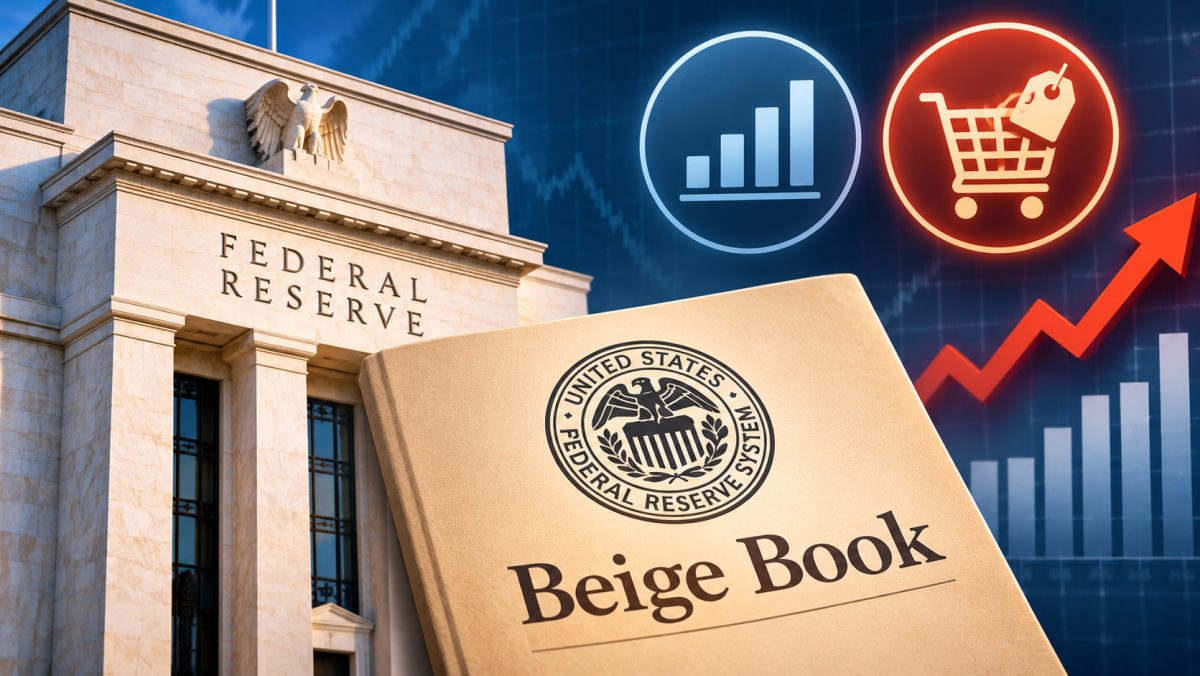
The Federal Reserve released its November 2026 Beige Book on Wednesday, showing the U.S. economy kept growing at a slight-to-moderate pace while inflation stayed stubbornly high across eight of the central bank's 12 districts, just two weeks before policymakers meet to decide on interest rates.
Financial Literacy and Sustainability: Why Smart Money Habits Help The Planet Too
November 2026 Fed Beige Book Paints a Mixed Picture
The report, built from interviews and surveys gathered by the 12 regional Federal Reserve Banks, found eight districts reporting growth in that slight-to-moderate range, while four districts said activity simply held steady. That split tells a story of an economy still moving forward, but not evenly, and not without strain.
Consumer spending told a different story than business output. Several districts described household demand as flat or soft, weighed down by high fuel prices, weak confidence, and inflation that just won't let up. Yet manufacturing held up better in places, with the national report noting surprisingly strong factory demand even as families tightened their belts.
Delta Flight Delays Atlanta November 2026: Why 1,600 Flights Got Stuck
Sticky Inflation Keeps Squeezing Business Costs
The Fed's own words captured the mood bluntly. "Prices increased moderately overall, as in the prior reporting period," the Beige Book stated. Business owners across many sectors kept reporting the same complaints: energy costs up, transportation up, health care up, insurance up, and tariffs adding even more strain on top of it all.
Raw materials, metals, freight, and specialized imports all got pricier too. And here's the twist that matters most for everyday consumers: companies said their own costs were rising faster than what they could charge customers. Competition and price-sensitive shoppers were making it hard for businesses to pass those costs along fully, which squeezes profits rather than simply pushing prices higher at the register.
Still, the Fed noted that some of those costs were finally trickling through supply chains. The report said recent evidence suggested "even higher price increases are being passed along further throughout the supply chain," and businesses expected both their expenses and their prices to keep rising in the months ahead.
Regional Reports Show Tariffs Biting Hardest
Look closely at the district reports and the tariff story gets very real. In the New York district, input prices kept rising strongly, largely because of tariffs. One New Jersey building-supply dealer told researchers that material costs, including freight, had pushed product prices higher. A logistics contact in the same region said shipping rates remained "sticky," pointing to a carrier that kept charging a Panama Canal low-water surcharge even after water levels had improved.
The Cleveland district reported robust nonlabor cost pressures for the twelfth straight reporting period, alongside strong increases in what businesses charged customers as they passed those costs through. Minneapolis saw similar strain, with strong input-price pressure hitting manufacturing, construction, tourism, and energy-related businesses all at once.
Boston's story added a different kind of worry. Banking contacts there said they felt less optimistic and more uncertain about inflation, interest rates, and geopolitical risks, including the ongoing situation in the Middle East. That uncertainty is spreading beyond retailers and factories into the financial sector itself.
October Inflation Data Raises the Stakes for December
The Beige Book landed the same day as fresh inflation numbers that gave the whole report extra weight. The personal consumption expenditures price index, the Fed's favorite inflation gauge, rose at a 3.8% annual rate in October. That's nearly double the Fed's 2% target, and it's the kind of number that makes central bankers nervous.
Markets reacted fast. With inflation running hot and the Beige Book confirming businesses still feel squeezed, traders began fully pricing in a quarter-point interest rate hike at the Federal Open Market Committee's December 8-9 meeting. The Beige Book itself doesn't set policy, but it gives Fed officials a real-world snapshot of what's happening on the ground before they vote.
What Comes Next for Prices and Policy
The real test now is whether businesses keep absorbing these higher costs or start passing them fully onto customers. If companies keep eating the costs to stay competitive, profit margins could shrink without consumer prices jumping right away. But if more businesses pass costs through, inflation could stay elevated well into next year.
That tension is exactly why the December 8-9 Fed meeting matters so much. Policymakers will be weighing a still-expanding economy against inflation that refuses to cool off, all while businesses warn that both expenses and prices look set to keep climbing. The Beige Book doesn't predict what the Fed will do, but it makes clear why the decision won't be easy.