
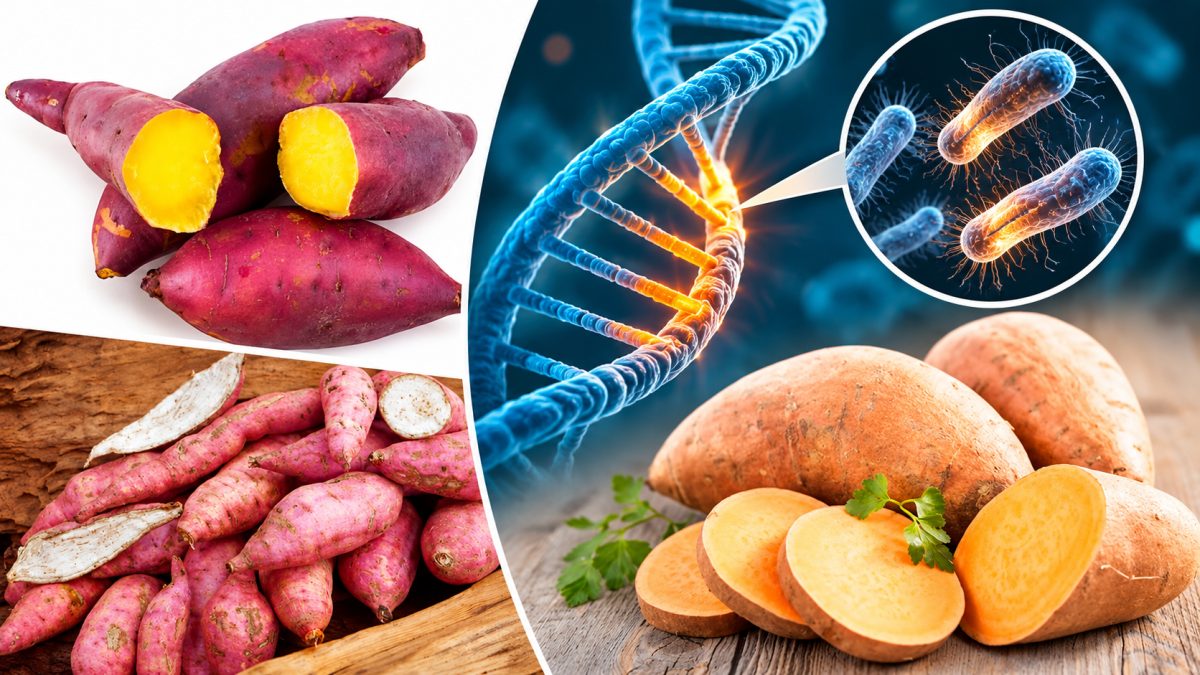

Long before scientists ever touched a gene in a lab, a soil bacterium had already rewritten the sweet potato's DNA.
Cultivated sweet potatoes around the world carry foreign genes from a bacterium called Agrobacterium, according to a 2015 study published in the Proceedings of the National Academy of Sciences. Researchers tested 291 sweet potato samples and found every single one contained this bacterial DNA, making naturally genetically modified sweet potatoes a real and surprising fact of nature.
Potatoes Grown in Simulated Lunar Soil Match Earth Yields, NASA Study Finds
How Researchers Found Bacterial DNA Hiding in Plain Sight
View this post on Instagram
The discovery started with a close look at the sweet potato genome, officially known as Ipomoea batatas. Scientists working with the International Potato Center and other partners noticed two unusual DNA segments that did not belong to the plant at all. They named these sequences IbT-DNA1 and IbT-DNA2, and traced their origin straight back to Agrobacterium, a soil microbe famous for sneaking its own genes into plant cells.
To confirm this wasn't a fluke, the team used several lab methods including PCR testing, Southern blotting, genome walking, and bacterial artificial chromosome sequencing. They focused heavily on one cultivated variety called Huachano, where they showed the bacterial genes weren't just sitting there quietly. The genes were actually active, switched on and working inside different parts of the plant's tissue.
Oldest Quasar Found at 630 Million Years After Big Bang Stuns Scientists
Why All 291 Sweet Potato Samples Told the Same Story
What makes this finding so striking is its scale. The research team examined 291 distinct cultivated sweet potato accessions, essentially different varieties and genetic lines gathered from around the globe. Every single one carried at least one of these Agrobacterium-derived T-DNA sequences, according to the study published in PNAS.
The study's own significance statement put it plainly, noting researchers found the rather remarkable observation that among all tested accessions, every one contained one or more transfer DNA sequences. A supporting interpretive summary from the USDA Agricultural Research Service described the crop's genetic makeup as containing genes transferred from a strain of pathogenic bacteria, concluding simply that cultivated sweet potato is a naturally transgenic crop plant.
An Ancient Infection That Became Permanent
This wasn't a modern lab experiment. The evidence points to something much older: an ancestor of today's sweet potato was infected by Agrobacterium thousands of years ago, likely during the plant's early evolution. Instead of causing disease and disappearing, the bacterial DNA stuck around. It got folded into the plant's genome and passed down through generations, eventually ending up in nearly every sweet potato grown and eaten today.
Researchers also connected the ancient insertion to an interruption in what's called an F-box gene, a type of gene tied to plant regulation. That detail suggests the bacterial invasion didn't just add new genetic material, it also reshaped existing instructions already present in the plant.
What This Means for How We Talk About GMOs
The word GMO usually brings to mind labs, scientists, and modern biotechnology. But this discovery complicates that picture. Scientifically speaking, sweet potato can be called naturally transgenic because its genome holds functional DNA borrowed from a completely different species, and that happened without any human involvement.
The researchers behind the original study argued this could shift public conversations around genetically modified food. Their point wasn't that all GMOs are automatically safe. It was simpler than that: the mere presence of foreign DNA in a food crop doesn't tell you whether that food is dangerous or not. Sweet potato has been eaten safely for generations, bacterial genes and all, long before anyone knew they were there.
New Research Points to Possible Benefits From the Ancient DNA
A more recent report from ScienceAlert, published in late November 2026, points to newer research in the journal Planta from October 2026. That work reportedly suggests one of these naturally acquired bacterial genes might actually help sweet potatoes handle changing temperatures, fight off disease, and reduce damage from oxidative stress inside plant cells.
Exact details from that newer Planta study, including sample sizes and specific measurements, were not fully available in current reporting and would need independent verification. Still, the direction of the research is clear: scientists want to know whether this ancient bacterial hitchhiker actually helps the plant survive, rather than just existing as leftover genetic baggage.
Separately, other scientists have looked at using sweet potato's natural transgenic history to build faster methods for creating heritable transgenic sweet potato varieties in the lab, drawing inspiration directly from how Agrobacterium did it naturally thousands of years ago. Any such work would still require standard testing and regulatory review before reaching farms or grocery shelves. For now, the sweet potato remains a quiet but powerful example of nature running its own genetic engineering experiment, centuries before humans figured out how to do it themselves.