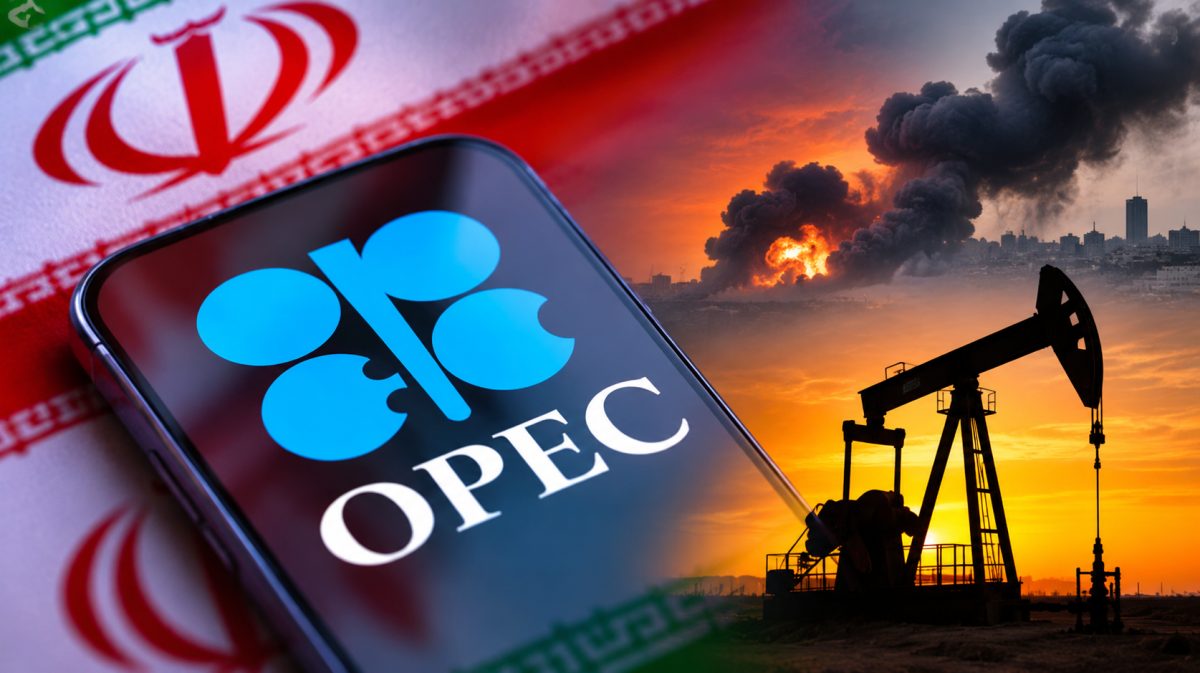

Oil ministers are leaning toward playing it safe instead of making big changes right away.
OPEC+ has reached an agreement in principle to keep its oil production targets 2027 unchanged for the first quarter, three sources told Reuters on November 27, 2026, as the Iran war and internal fights over output capacity continue to stall a final deal ahead of Sunday's meeting.
Crude Cost For Indian Companies Drops Fast As Hormuz Fears Ease
OPEC+ oil production targets 2027 face delay over capacity fight
The plan on the table is simple on the surface. Keep things the same for now. Three people familiar with the talks said OPEC+ has an agreement in principle to freeze output targets through the first quarter of 2027, rather than raise or cut them. That decision was expected to be locked in, or at least debated in full, at the group's meeting on Sunday, November 29.
But this was not a done deal as of Friday. Just a day earlier, on November 26, two people with knowledge of the talks said OPEC+ was only likely to roll over targets, and that no final decision had actually been reached. The shift from likely to agreement in principle shows how fast things moved in just 24 hours, even as the real sticking points stayed exactly where they were.
Commercial LPG Price Hike November 2026: Cylinder Now Costs ₹2,820
Why the Iran war keeps shaping OPEC+ oil output decisions
The Iran war is not just background noise in this story. It is one of the two main reasons OPEC+ cannot commit to firm numbers for next year. Fighting has disrupted Middle East exports and made it harder for anyone to predict how much oil will actually leave the region in the coming months.
That kind of uncertainty makes long-term planning risky. If OPEC+ had locked in a production jump and then exports dropped sharply because of the conflict, the group would look out of step with reality almost overnight. Holding steady lets ministers wait and watch instead of guessing.
Capacity review splits Iraq and Kazakhstan from the rest of the group
The second big problem is a disagreement over how much oil certain countries can actually pump. OPEC+ ordered a review of every member's production capacity back in 2025, and it is described as the first assessment of its kind the group has ever carried out. The goal was to build 2027 quotas on hard numbers instead of old negotiated figures.
That review has not gone smoothly. Iraq's preliminary capacity estimate came in at 4.9 million barrels per day, a number Iraq is pushing back on and wants raised. Kazakhstan is in the same boat, also asking for a higher estimate before quotas get locked in for next year. Both countries know a lower capacity number now could mean a smaller production allowance later, so the stakes are real money and real influence inside the group.
Russian Deputy Prime Minister Alexander Novak added some clarity on November 25, saying OPEC+ expects to finish the full capacity review by the end of the year. That timeline matters because it shows the review is still active and unfinished even as the Sunday meeting approaches, which helps explain why a rollover makes sense as a stopgap.
UAE's exit shows how high the stakes are in quota disputes
This is not the first time a capacity argument has caused real damage inside OPEC+. The United Arab Emirates left OPEC and OPEC+ entirely in May 2026, after years of complaining that its quota did not match the amount of oil it was actually capable of producing. That exit stands as a warning sign for how serious these capacity disagreements can get when members feel shortchanged.
Angola's earlier departure adds to the same pattern, pointing to a group that has struggled to keep every member satisfied with how output allowances get decided. Each exit chips away at the alliance's size and its ability to speak with one voice in the global oil market.
What a steady OPEC+ policy means for oil markets in 2027
Analysts are also watching a separate risk hanging over all of this: the possibility of a global oil surplus in 2027. If too much oil hits the market while demand growth slows, prices could come under pressure, giving OPEC+ another reason to avoid rushing into higher output targets right now.
The next real test comes fast. OPEC+ is set to meet on November 29, 2026, where ministers will either confirm the rollover or adjust it based on last-minute negotiations. Behind that meeting sits the bigger unfinished task, the completed capacity review expected by year-end, which will shape how 2027 quotas finally get split among members once the numbers are settled and the Iran war's impact becomes clearer.