
Adani Group just admitted it wants into the airline business, but there's one big rule standing in its way.
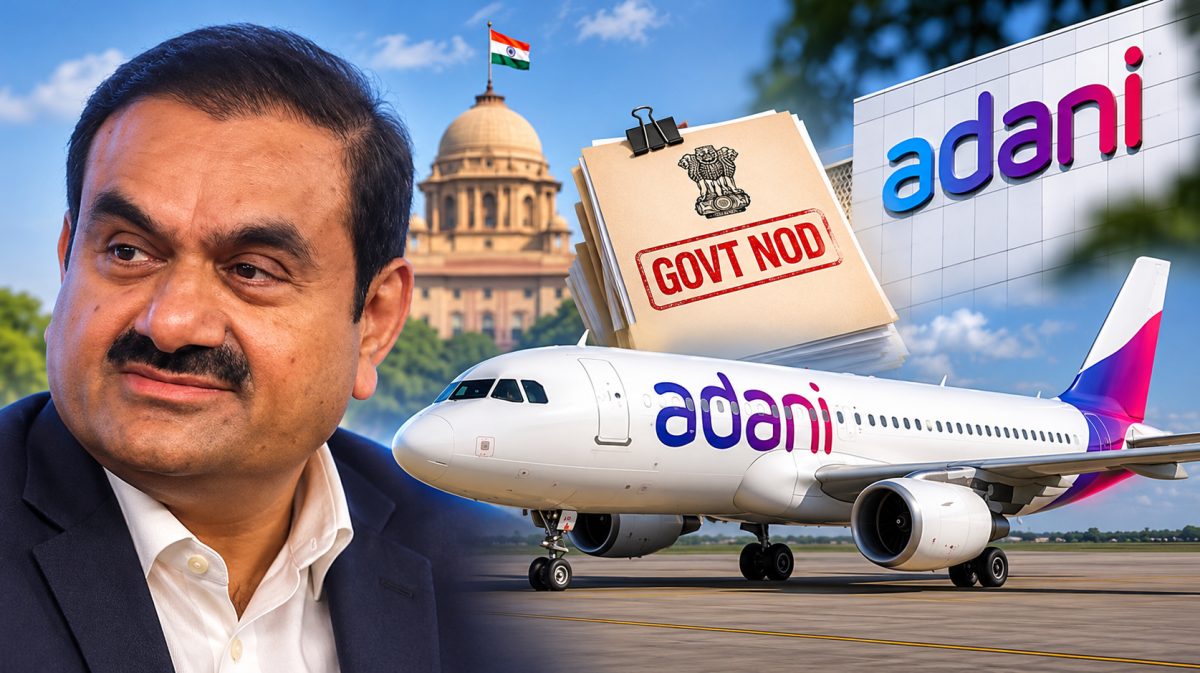
Adani Group confirmed on November 27, 2026, that it has asked the Indian government for permission to invest in the airline sector. Group CFO Jugeshinder "Robbie" Singh made the announcement on the sidelines of the India Debt Capital Market Summit in Mumbai, marking a sharp reversal from the group's earlier hands-off approach to running airlines.
Ashiana Housing Chennai Senior Living Project Bets Big With ₹1,100 Crore Land Deal
Adani airline investment plan takes shape in Mumbai
View this post on Instagram
Singh told reporters that Adani wants to put money into an existing carrier, or help fund an airline startup, instead of launching and operating a new airline itself. He described several possible routes for the Adani airline investment, including working through "some fund, some other airline company and things like that... or an entrepreneur who wants to go into that space." No airline name, deal size, or ownership percentage was shared.
This is not a done deal. It is a request sitting with the government. Singh was clear that Adani has not picked a target company, signed any paperwork, or set a timeline. The group is simply asking for the door to be opened.
Terex Sells Genie Maker to Linamar in Huge $1.4 Billion Cash Deal
Why the Adani Group airline investment needs special permission
Adani already runs Mumbai and Navi Mumbai airports, along with six other airports across India. That airport business is exactly why this request needs government sign-off. Concession agreements tied to the Mumbai and Delhi airports reportedly cap how much an airport operator can own in a scheduled airline, at around 10 percent. The idea is to stop an airport owner from giving its own airline special treatment over rivals using the same runways and terminals.
Interestingly, the rule is not a nationwide ban. In August 2026, the government told the Rajya Sabha that India has no blanket policy stopping airport operators from running airlines. The restriction lives inside specific contracts for certain privately run airports built under public-private partnerships. That distinction matters, because it means Adani's request is really about amending or getting an exception to contract terms, not changing a national law.
Robbie Singh's 60 crore passenger argument
Singh backed up the request with a big number. He said India has roughly 60 crore people, about 600 million, who could fly but currently don't. His reasoning is that routes simply don't exist yet to serve them. "We would like to invest in airlines because India has about 60 crore more people who can fly," Singh said. He added that Adani wants to invest "so that much faster growth is possible, and facilities can be made available to the 60 crore people who can fly but don't because the routes are not there."
Singh also pointed to a much bigger industry gap. Related reporting suggests India currently runs around 3,300 flights a day, a number some in the industry believe needs to climb toward 30,000 daily flights to match future demand. Singh framed Adani's capital as a way to speed up that build-out rather than wait for it to happen organically. "And that's why we requested the government to at least allow us to invest, so that we can facilitate the development of airlines," he said.
A reversal years in the making
This is not Adani's first attempt at this. Reports from July 2026 show the group had already approached the central government asking for relaxed ownership rules for major airport operators wanting a stake in airlines. Back then, Adani had mostly stuck to airport infrastructure, terminals, and ground services, steering clear of actually owning or running a carrier.
That earlier caution is what makes Friday's comments notable. Singh's statement effectively confirms Adani has changed its mind about staying out of the airline business altogether. Instead of avoiding the sector, the group now wants a financial seat at the table, even if it means not directly operating planes itself. Whether that happens through buying into an existing airline, funding a fresh startup, or backing an entrepreneur remains open.
What rivals and regulators will be watching next
The biggest unanswered question is how competing airlines react if Adani does get a green light. IndiGo, Air India, Akasa Air, and SpiceJet all depend on fair access to slots, gates, and airport services. If Adani ends up with both airport control and airline ownership, rivals may worry about preferential treatment, even if no formal complaint has surfaced yet in available reporting.
For now, the ball sits with the government. There's no confirmed deadline for a decision, no named airline partner, and no disclosed investment figure. What is confirmed is that Adani has formally asked, Singh has publicly explained the reasoning, and India's aviation industry is now watching to see whether airport-ownership rules bend to let one of the country's biggest infrastructure players into the cockpit business too.