
Two civilian workers fixing radar antennas never expected their job in Kuwait to turn deadly on a quiet Thursday.
Two Italians killed in Kuwait Iranian drone attack were technicians working for Rheinmetall Italia, dying Thursday, November 26, 2026, after drones struck a Kuwaiti air-defense site, officials in Rome and Kuwait City said, while Iran denied carrying out the strike.
Ukraine Attack Russian Ships Libya Self-Defence Claim Sparks New Fight
Two Italians Killed in Kuwait Iranian Drone Attack During Routine Repair Work
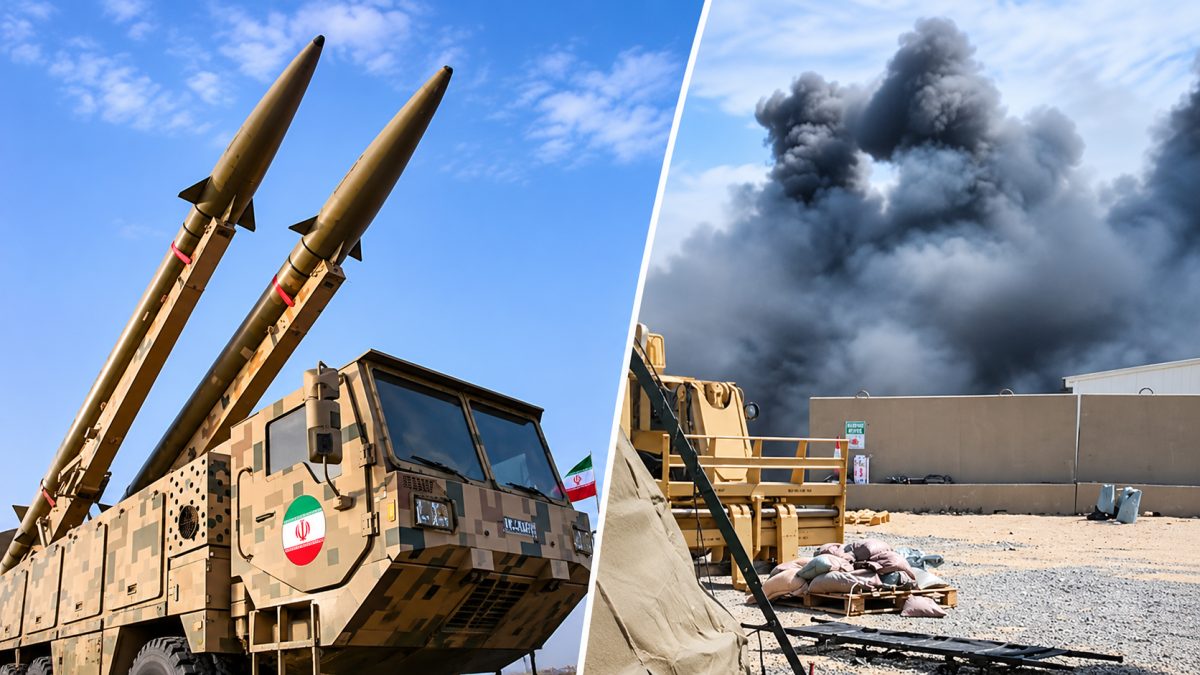
The two men were not soldiers. They were civilian contractors sent to fix antennas tied to Kuwait's Skyguard air-defense system, according to Italy's Foreign Ministry. Kuwait's Defense Ministry said drones of Iranian origin flew into Kuwaiti airspace that day and hit what it called a vital facility. That facility turned out to be an air-defense detection and surveillance station where the Italians happened to be working at the time.
ANSA identified the victims as Antonio Saccoccio, 65, from Formia, and Emanuele Lo Russo, 36, from Rome. Both worked for Rheinmetall Italia, the Italian branch of Germany's Rheinmetall defense group. Reports said two other people were also hurt in the attack, though details on their condition and nationality were limited in early coverage.
Iran Attacks Bahrain November 21: Why US Bases and Tankers Got Hit
Confusion Over How the Blast Actually Killed Them
Early reporting did not fully agree on the exact cause of death. Some outlets, including Al Jazeera, described the men as killed by falling debris after Kuwaiti defenses intercepted the drones overhead. Other accounts framed it more simply as an explosion at the site itself. Either way, the result was the same: two Italian civilians died doing maintenance work far from any battlefield.
Italy's Foreign Ministry put it plainly in a statement, saying an explosion caused by a drone attack occurred at a site where the two Italian technicians were working. That single sentence became the anchor fact repeated across nearly every major outlet covering the story, from Reuters to Bloomberg to The New York Times.
Tajani Briefs Senate as Kuwait Points Finger at Tehran
Italy's Foreign Minister Antonio Tajani addressed the Italian Senate hours after the news broke. He said several drones of Iranian origin had targeted Kuwaiti military installations, specifically naming the air-defense detection station where the two Rheinmetall Italia technicians were working. His remarks gave the Italian government's clearest public accounting of what happened and who was being blamed.
Kuwait's Defense Ministry went further in its language, describing the strike as heinous Iranian aggression against a vital site. That phrasing left little doubt about where Kuwait placed responsibility. Iran, for its part, rejected the accusation outright. According to reporting, Tehran firmly and completely denied any involvement in the attack, setting up a direct contradiction between Gulf and Italian officials on one side and Iranian officials on the other.
A Strike That Fits a Bigger, Darker Pattern
This attack did not happen in isolation. The New York Times noted it came amid an ongoing war involving Iran, following the United States and Israel launching military action against Tehran back in February. Gulf Arab states have increasingly found themselves caught in the crossfire of that wider conflict, even when they are not direct combatants. Kuwait's air-defense infrastructure, built to protect against exactly this kind of aerial threat, became the site where that risk turned fatal for two foreign civilians.
Rheinmetall's presence in Kuwait explains why Italian nationals were even at a military installation in the first place. The company had technicians stationed there specifically to maintain detection antennas feeding into the Skyguard system. That technical relationship, a European defense contractor servicing Gulf military hardware, is common across the region. But this incident shows how exposed those workers can be when the broader conflict spills into the country where they happen to be stationed.
What Remains Unresolved as Italy and Kuwait Seek Answers
No independent investigation findings had been published in the hours after the attack. It remained unclear whether an international or joint Kuwaiti-Italian inquiry would follow, or whether Iran would face any formal consequence for the strike it denies carrying out. Reporting so far has not mentioned any retaliatory action, legal proceeding, or parliamentary vote tied directly to the incident.
What is confirmed is narrower but significant. Two Italian civilians, both employed by Rheinmetall Italia, died after drones linked by Kuwait and Italy to Iran struck a Kuwaiti air-defense facility on November 26, 2026. Kuwait and Italy assigned blame to Iran. Iran rejected that blame entirely. The gap between those two positions is likely to shape diplomatic conversations between Rome, Kuwait City, and Tehran in the days ahead, even as the human toll, two named victims and at least two more injured, remains the clearest fact to come out of the attack.