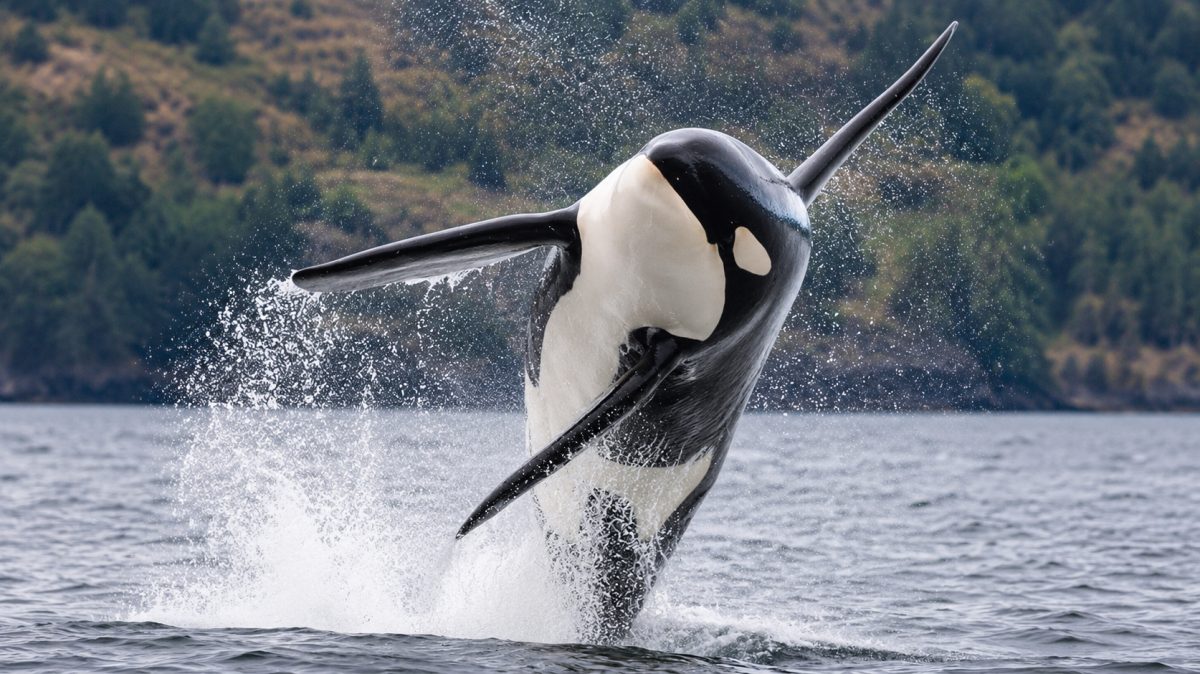

A dead whale on a Scottish beach held a secret that took nearly a decade and a bit of Cold War history to unlock.
Scientists believe they may have found the oldest male orca ever recorded, a killer whale that washed up dead on South Uist in Scotland's Western Isles back in 2015. By studying radioactive traces left behind by old nuclear bomb tests, researchers now think the animal lived to be roughly 65 years old, maybe even older.
Shiveluch Lava Dome Oozes Like Toothpaste in Striking New Satellite Photo
How scientists cracked the mystery of the oldest male orca
View this post on Instagram
The breakthrough came from something nobody expected to find useful: leftover radiation from nuclear weapons tests conducted decades ago. Those tests pumped huge amounts of radiocarbon into the atmosphere, and that radiocarbon eventually settled into oceans and worked its way into sea creatures, including whales.
Orca teeth grow in layers, kind of like tree rings. Each layer locks in a little snapshot of the chemistry around the whale at that time. Researchers checked the innermost layers of the South Uist orca's tooth and found no trace of the nuclear testing signal. That told them something important. The whale had to be born before atmospheric testing ramped up and changed ocean chemistry. Since he died in 2015, that pushes his age back to at least 65 years, according to findings published October 1, 2026, in the journal Frontiers in Marine Science.
Nighthawk Bison Jump in Texas Reveals 3,000 Years of Cliff Hunts
Why the oldest male orca discovery matters so much
Male orcas are usually said to live around 30 years on average, though that number shifts depending on the population being studied. A confirmed age of 65 or more would mean this animal lived more than twice as long as the typical estimate for his sex. That is a massive gap, and it raises real questions about how long male killer whales can actually survive in the wild when conditions line up right.
The University of Glasgow, one of the institutions behind the research, said the evidence suggests the South Uist male "was around 65 or perhaps even older," adding that this "would make him one of the oldest male killer whales on record." Researchers are careful not to call it a confirmed world record. Wild animal ages are notoriously hard to pin down exactly, and this method gives a minimum age rather than an exact birth date.
The dental time machine behind the discovery
The project behind this finding looked at teeth from five stranded whales found along Scottish shores over several decades, three orcas and two sperm whales. The team came from the Scottish Universities Environmental Research Centre's Centre for Isotope Sciences, working alongside the universities of Glasgow, Edinburgh and St Andrews, plus National Museums Scotland.
One coverage described the approach as creating a kind of dental time machine, since scientists can read backward through a tooth's layers the same way someone might read backward through a diary. Another orca in the study, a male named Moby who died in 1997, was found to be at least 43 years old using the same method, since his oldest tooth layers also predated the nuclear testing signal.
Not every whale in the study carried the same kind of clue. Lulu, a female orca that died in 2016, had no clear nuclear-testing signature in her tooth. Instead, scientists found something called the Sellafield signal, a radioactive fingerprint tied to discharges from the Sellafield nuclear reprocessing site that flow into the Irish Sea and drift toward western Scotland. It is a different marker from global bomb fallout, but it still worked as a kind of timestamp locked inside her tooth.
What comes next for whale age research
Researchers now want to apply this same radiocarbon approach to more stranded whales. A bigger sample size could help confirm whether other long-lived males are out there, and whether 65 years is closer to a rare outlier or a sign that male orcas routinely live far longer than commonly assumed.
For now, the South Uist orca's status as the oldest male on record remains provisional. No official record-keeping body has certified the age, and scientists are sticking with cautious language like "around 65 or older" rather than declaring an exact figure. Still, the case has already reshaped how researchers think about reading the hidden chemical history stored inside a single tooth.
The discovery also shows how events completely unrelated to marine biology, in this case, nuclear weapons testing from the mid-20th century, can end up solving puzzles scientists never originally intended them for. A technology built out of Cold War tension is now helping biologists understand how long a killer whale can actually live.