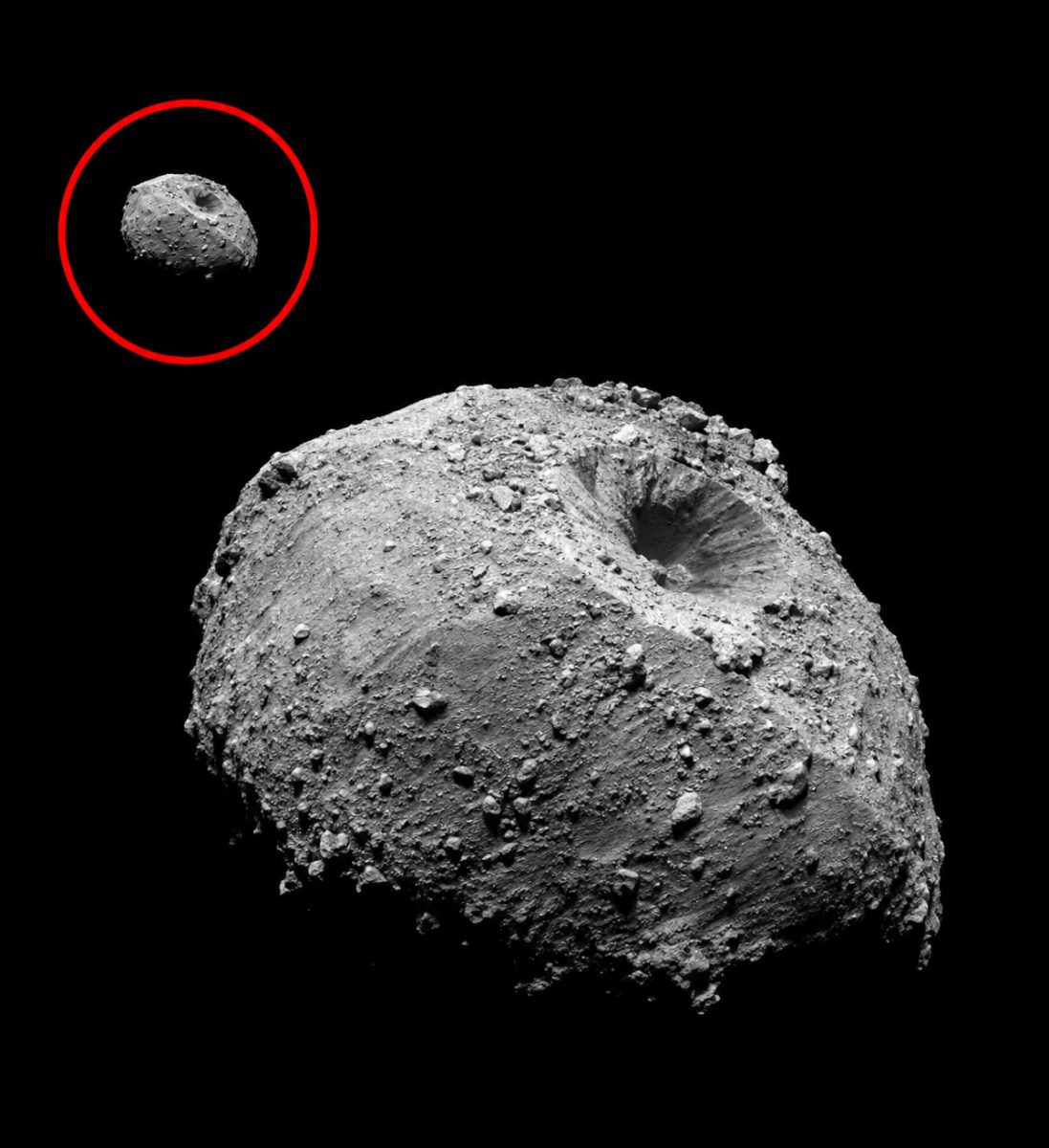

Four years after a spacecraft smashed into a tiny asteroid on purpose, we finally get to see what it actually did to it.
On November 25, 2026, the European Space Agency released the first detailed images of the Hera Dimorphos crater, showing that NASA's DART spacecraft left a scar nearly as wide as the asteroid itself. The pictures came from Hera, ESA's follow-up probe, which reached the Didymos-Dimorphos system in November 2026, more than four years after the original DART impact.
SN 2026ahvu Supernova: Why This Close Blast Could Solve a Cosmic Mystery
First Close Looks at the Hera Dimorphos Crater
The images show something far bigger than scientists expected. ESA said the face of Dimorphos that DART struck has been flattened into a crater described as the size of a sports stadium, stretching across the asteroid's entire width. Dimorphos itself is only about 151 meters across, roughly the length of a football field, which means this crater basically eats up one whole side of the small space rock.
Hera's Asteroid Framing Camera caught the clearest view on November 7, from a distance of about 29 kilometers. Other early shots came from roughly 30 kilometers out, giving scientists their first real forensic look at what DART left behind. Before this, nobody had seen the actual damage up close. DART was destroyed the moment it hit, so all anyone had were distant telescope images and a quick glimpse from the doomed spacecraft itself right before impact.
Heart Attack and Stroke Risk Can Be Spotted 30 Years in Advance, Study Finds
Why the Hera Dimorphos Crater Caught Scientists Off Guard
Sabina Raducan, a scientist on the Hera team, put it simply. "The crater is almost as large as the body itself, which is really, really spectacular," she said. That reaction matters because it tells you this wasn't some neat little dent. It was a near-total reshaping of a small world.
ESA mission scientist Michael Kueppers added another twist to the story. He said that as Hera sent back more pictures, it became clear the impact left Dimorphos "tumbling wildly in its orbit." So DART didn't just carve out a crater, it also knocked the asteroid's spin completely out of its old rhythm. Hera's imagery further shows boulders scattered around Dimorphos, likely material that got blasted loose when DART slammed in at high speed back in 2022.
The Road From DART's Impact to Hera's Arrival
None of this happened overnight. NASA launched DART on November 24, 2021, with one job: test whether slamming a spacecraft into an asteroid could actually change its path. Dimorphos was picked because it wasn't a threat to Earth, but it orbited a bigger asteroid called Didymos in a way scientists could precisely measure.
DART hit its target on September 26, 2022. NASA later confirmed the collision shortened Dimorphos' orbital period around Didymos by about 33 minutes, far more than the minimum result scientists needed to call the test a success. That number proved momentum didn't just come from the spacecraft hitting the rock. A lot of it came from debris blasting off the surface afterward, like a rocket effect pushing the asteroid along.
What nobody could measure right away was the physical damage. How deep did the crater go? How much rock got thrown off? Was Dimorphos solid or just a loose pile of rubble barely holding together? That's exactly why ESA built Hera and launched it in October 2024, sending it on a years-long journey to go inspect the crime scene DART left behind.
What the Hera Dimorphos Crater Means for Planetary Defense
This whole story matters way beyond scientific curiosity. DART was humanity's first real test of planetary defense, the idea that we could nudge a dangerous asteroid off course before it ever reached Earth. The 33-minute orbital shift already proved the concept works in theory. Now Hera is filling in the practical details that would matter in a real emergency.
Patrick Michel, Hera's principal investigator, has been central to explaining what these images mean for future missions. If Dimorphos turned out to be a loosely packed rubble pile rather than solid rock, that would explain why the impact caused such massive reshaping instead of just a small dent. Knowing that changes how engineers would plan a real deflection mission against an actual threatening asteroid someday.
Media outlets from CNN to the BBC to Newsweek quickly picked up the images, turning an abstract science experiment into something people could actually picture, a stadium-sized hole punched into a tiny moon orbiting another asteroid millions of miles from home. That visual impact, pun fully intended, is part of why this release landed so widely across news coverage.
Next Steps for the Hera Mission
ESA has been clear that this image release is just the beginning, not the finish line. Hera is expected to keep studying Dimorphos and Didymos closely, measuring their mass, mapping their surface material, and figuring out the exact shape and depth of the crater in far more detail than these first pictures allow.
Future work will try to nail down how much material actually left Dimorphos during the impact, how the boulder field around it formed, and whether the binary asteroid system's long-term orbit has shifted in ways nobody has fully calculated yet. Those answers will shape how space agencies design the next planetary defense mission, one that might not be a test at all, but a real response to an asteroid actually headed toward Earth.