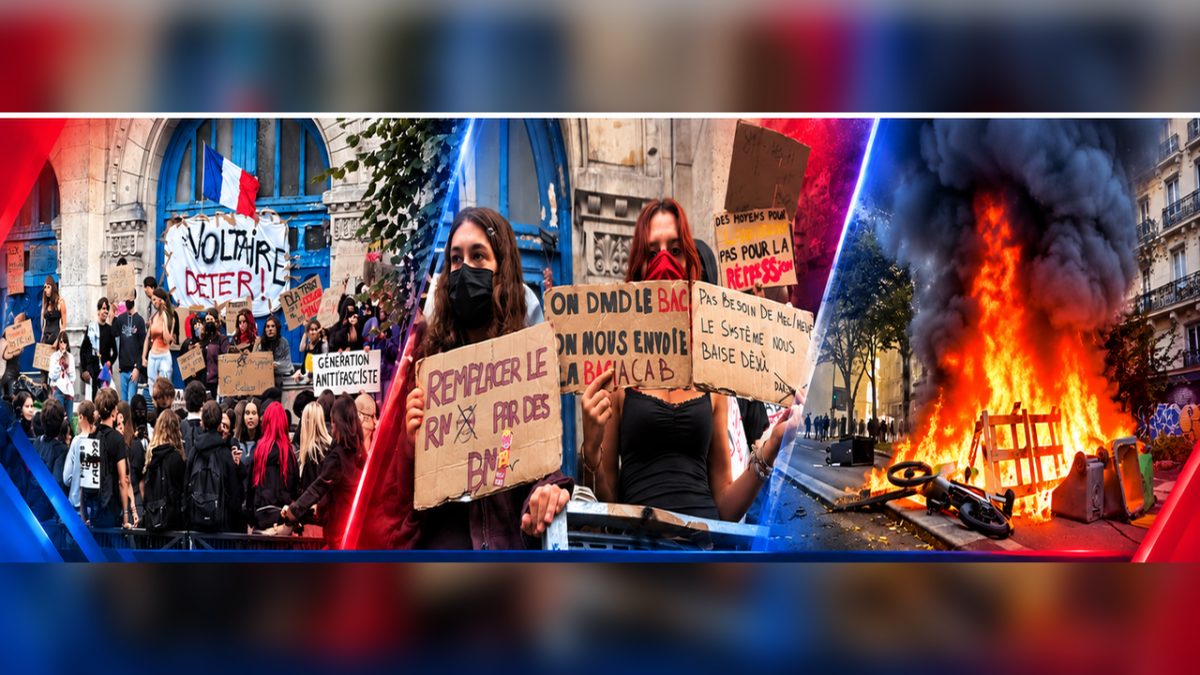

Fires, barricades and hundreds of arrests have engulfed French high schools as a protest over crumbling classrooms spirals into a national crisis testing the government's grip on order.
French Prime Minister Sébastien Lecornu convened an emergency interministerial crisis meeting on Thursday, October 1, 2026, in Paris, after student protests that began in late September over overcrowded classrooms, teacher shortages and decaying school buildings spread nationwide and turned violent, with arson attempts, street clashes and an attack in which a teacher was doused in petrol, according to the Guardian, Reuters and Al Jazeera.
CMS Fires Superintendent Crystal Hill Days Before Criminal Probe Into $2.1 Billion Budget Surfaces
From Paris Suburbs to a National Flashpoint
View this post on Instagram
The unrest began last week with students blocking entrances to lycées — the secondary schools attended by French teenagers aged 15 to 18 — in poorer suburbs of the Paris region, according to Al Jazeera and UPI. Grievances centered on long school hours, staffing shortages, crowded classrooms and deteriorating facilities, concerns that had simmered locally before exploding into a broader movement within days.
By Thursday, the protests had spread far beyond their origin, reaching cities across France and extending into higher education. Student unions reported blockades at roughly 30 university campuses, while government and police figures pointed to hundreds of affected high schools, Reuters reported. The expansion from a localized dispute over school conditions to a nationwide mobilization happened in little more than a week, catching officials off guard with its speed and intensity.
CMS Contract Scandal Widens as Activist Named in Memo Quits Black Political Caucus Post
Fires, Petrol and Clashes With Police
The escalation took a dangerous turn as students set fire to rubbish bins and erected barricades outside schools in several cities. Officials said attackers doused a headteacher in petrol and started fires at a minimum of two schools on Thursday, according to Reuters and the Jerusalem Post. The incidents marked a sharp departure from the peaceful blockades that characterized the movement's early days.
Clashes between protesters and police intensified alongside the arson attempts, with authorities reporting attempted attacks on officers and damage linked to the blockades. CNN, citing Interior Minister Laurent Nunez, reported that 83 police officers were injured amid the disturbances. Reuters described dozens of people injured overall, while Fox News, citing French broadcaster RFI, put the figure at 83 police and gendarmes injured on Thursday alone, plus 119 students and school staff injured since the unrest began. The discrepancies between tallies likely reflect different reporting windows rather than contradictory accounts, though no single consolidated casualty figure has emerged from the material reviewed.
Mass Arrests and a Blurred Line Between Protest and Violence
Arrest figures climbed rapidly as the protests intensified. Nunez said 625 people, mostly students, were arrested on Wednesday, September 30, during that day's disturbances, CNN and Fox News reported. Separate reporting cited by Yahoo News and UPI described nearly 3,000 students aged 15 to 18 detained since the protests began, including more than 1,900 on Thursday alone — though these figures use varying terms such as "arrested," "detained" and "taken into custody" that may describe different procedural stages and timeframes.
Demonstration counts have similarly varied by source and hour. Al Jazeera reported approximately 340 demonstrations outside high schools and more than 160 schools closed as of Thursday morning. Other outlets, including the Guardian, cited roughly 900 demonstrations, blockades and related incidents nationwide, also with more than 160 schools shut. The gap between figures appears to stem from timing — the lower count reflecting mid-morning tallies, the higher one capturing a broader sweep of incidents reported later in the day — rather than conflicting data. Authorities have been careful to distinguish between peaceful school blockades, which most protesting students have engaged in, and criminal acts such as arson and assaults on officers, which remain under investigation.
Government's Emergency Response and the Budget Backdrop
Lecornu's office described the situation in unusually stark terms, stating that "this upsurge in violence makes it virtually impossible to maintain the continuity of public education and is exposing staff and students to danger," according to the Guardian. The prime minister responded by calling the Thursday afternoon crisis cabinet meeting and instructing ministers to cancel official travel, freeing the government, prefects and police to focus on managing the unrest at the local level, as reported by Al Jazeera and Reuters.
The government also said many schools would shift to online classes to protect pupils and staff, though no national count of schools moving to remote instruction or timetable for reopening was provided. Complicating the response, the crisis unfolded the same day the government unveiled deeply unpopular spending cuts in its proposed 2027 budget, Reuters and TRT World reported. While available reporting does not establish that the budget directly triggered the original school protests, the announcement sharpened the political stakes, giving students and opposition figures a wider platform to link school conditions to government funding priorities.
A Government Under Pressure on Two Fronts
Lecornu's administration now faces simultaneous pressure to restore order and to answer accusations that public education has been chronically under-resourced. Student organizations have kept their focus on staffing levels, class sizes, building conditions and workload, while the prime minister's office has emphasized safety for both staff and students. Telesur English noted the standoff has placed the Macron administration "in a tight spot" as demonstrations and blockades show no sign of abating.
No final settlement, nationwide education agreement or reversal of the 2027 budget measures had been announced as of October 1. The near-term trajectory hinges on whether authorities can reopen blocked schools without triggering fresh confrontations, and whether the government moves beyond crisis management toward concrete commitments on staffing and infrastructure that could address the grievances driving students into the streets.