
Renewed exchange of strikes near the Strait of Hormuz ends weeks of relative calm between Washington and Tehran.
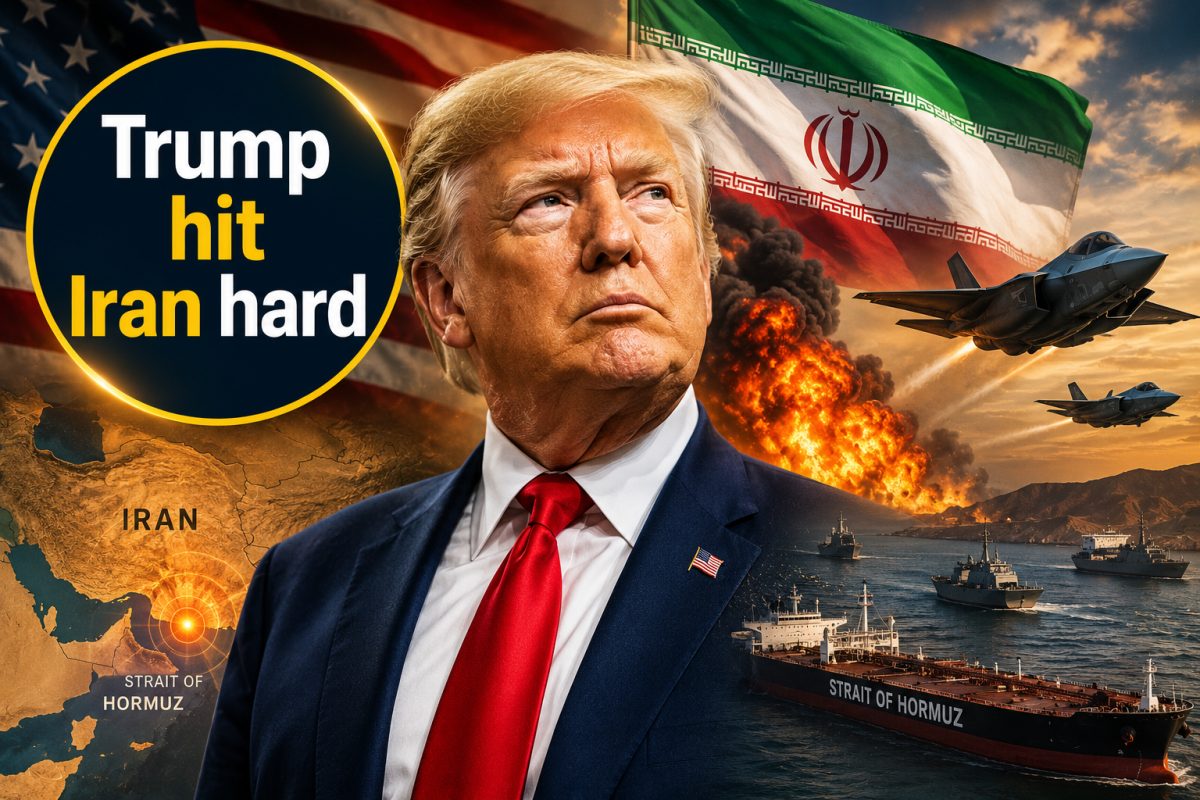
President Donald Trump vowed on Monday, August 31, 2026, to hit Iran hard in retaliation after Tehran fired missiles toward U.S. military facilities in Jordan and the United Arab Emirates, a response Iran's Islamic Revolutionary Guard Corps said followed American strikes on Iranian rocket launchers near the Strait of Hormuz. The strikes mark the first direct U.S. military action against Iran in about a month, according to U.S. Central Command, breaking a period in which Washington had shifted its emphasis toward economic pressure and a blockade around the strategic waterway. Trump made his comments in a phone interview with Fox News reporter Trey Yingst, telling him, "We're going to hit them hard," and adding that "there will be a response."
The renewed hostilities unfolded over the weekend into Monday, with U.S. forces striking Iranian positions on Larak Island on Sunday, August 30, and Iran's missile launches toward Jordan and the UAE following shortly after. U.S. officials say Iran's attacks did not successfully strike American forces, though the episode is being treated as a significant escalation after weeks of relative quiet.
Dow Jones Falls 373 Points On Trump Iran Warning As SpaceX, Tesla Rally
US Strike Targets Iranian Rocket Launchers Preparing Sea Mines
According to U.S. Central Command, American forces struck two Iranian rocket launchers on Larak Island, a location in the Strait of Hormuz that sits at a critical chokepoint for global oil shipping. CENTCOM spokesman Commander Tim Hawkins said the launchers were preparing to fire rockets carrying sea mines into the strait when U.S. forces intervened.
The Pentagon has characterized the operation as a self-defense strike intended to prevent Iranian forces from mining the waterway, a move that would have posed a direct threat to commercial shipping and U.S. military assets operating in the region. The strike represented the first American military action against Iranian territory in roughly a month, following a stretch in which Washington had leaned more heavily on economic sanctions and a maritime blockade rather than direct strikes.
Iran's Revolutionary Guard Claims Retaliatory Missile Launches
Iran's Islamic Revolutionary Guard Corps said it launched missiles toward U.S. military facilities in Jordan and the United Arab Emirates in direct response to the Larak Island strikes. Tehran framed the launches as retaliation for what it described as American aggression in the Strait of Hormuz.
U.S. officials said the missiles fired toward Jordan were intercepted, and there has been no confirmation of successful strikes on American forces or facilities in either country. Despite the apparent failure of the attacks to inflict damage, the exchange has been treated by U.S. officials and outside analysts as a meaningful escalation after a rare stretch of calm in the monthslong conflict.
Trump's Vow To Retaliate And The Broader US Strategy
Speaking to Fox News, Trump said the United States would respond forcefully to Iran's missile attacks, repeating language he has used in past phases of the conflict when he pledged to hit Iran "hard" or "extremely hard." He has previously threatened wide-ranging strikes on Iranian energy infrastructure and power plants if Tehran does not reopen the Strait of Hormuz or agree to U.S. terms, and has announced what he called a "crushing economic operation" against Iran alongside continued military pressure.
U.S. Ambassador to NATO Matthew Whitaker told USA Today that Trump's vow does not necessarily signal a return to a large-scale bombing campaign. Whitaker said the president "maintains all possible options" and will not allow attacks on the United States or its allies to go unanswered, but suggested the administration may continue relying on its blockade and control of shipping lanes in and out of the strait rather than immediately escalating to broader strikes. He added that the U.S. has ample military assets to pursue both economic and military pressure simultaneously.
Oil Markets React As Diplomatic Prospects Remain Uncertain
The renewed strikes contributed to a rise in oil prices, as the fresh U.S.-Iran clashes stoked fears of disruption to shipping through the Strait of Hormuz, a corridor vital to global energy flows. Analysts have noted that Iran's attempts to deploy sea mines pose a direct risk to commercial vessels and energy supplies moving through the strait.
Some analysts have cautioned that further U.S. escalation is unlikely to fundamentally alter Iran's behavior, warning that Washington risks repeating past strategic missteps by relying heavily on military force without securing lasting political concessions. Previous rounds of U.S.-Iran negotiations, including talks involving Middle East envoy Steve Witkoff and Jared Kushner, have proceeded in fits and starts, with earlier ceasefire and settlement efforts failing to hold. As of Monday, there was no indication that renewed diplomatic talks were imminent, leaving the trajectory of the conflict dependent on how the U.S. chooses to follow through on Trump's pledge to hit Iran hard.