
Power-hungry AI data centres can't wait years for new equipment, so buyers are chasing old machines instead.
Utilities, data-centre developers and power suppliers are searching the globe for used turbines for AI data centres, according to a Reuters report published November 9, 2026, from Bengaluru, Frankfurt and London. Brokers say buyers are reviving mothballed equipment and even converting retired jet engines because new turbine orders now stretch into the next decade.
Stock Market Monday Predictions: Why Oil And FII Exit Could Sink Nifty Again
A Global Scramble For Old Machines
More than a dozen brokers, service companies and suppliers told Reuters that the hunt for used turbines for AI data centres has turned into a worldwide chase. Companies are not just buying new equipment anymore. They are restarting old power plants, pulling turbines out of storage, and even looking at aircraft engines as a backup plan.
The math explains why. Wood Mackenzie estimates that worldwide turbine orders now top 100 gigawatts, while global manufacturing capacity sits at only 60 to 70 gigawatts a year. That gap means a company ordering a brand-new turbine today might not get it installed for many years. For an industry racing to build AI data centres right now, that kind of wait is simply too long.
Save Mass Effect Billboard Fundraiser Hits Goal in Under 15 Minutes
Jet Engines Get A Second Life As Generators
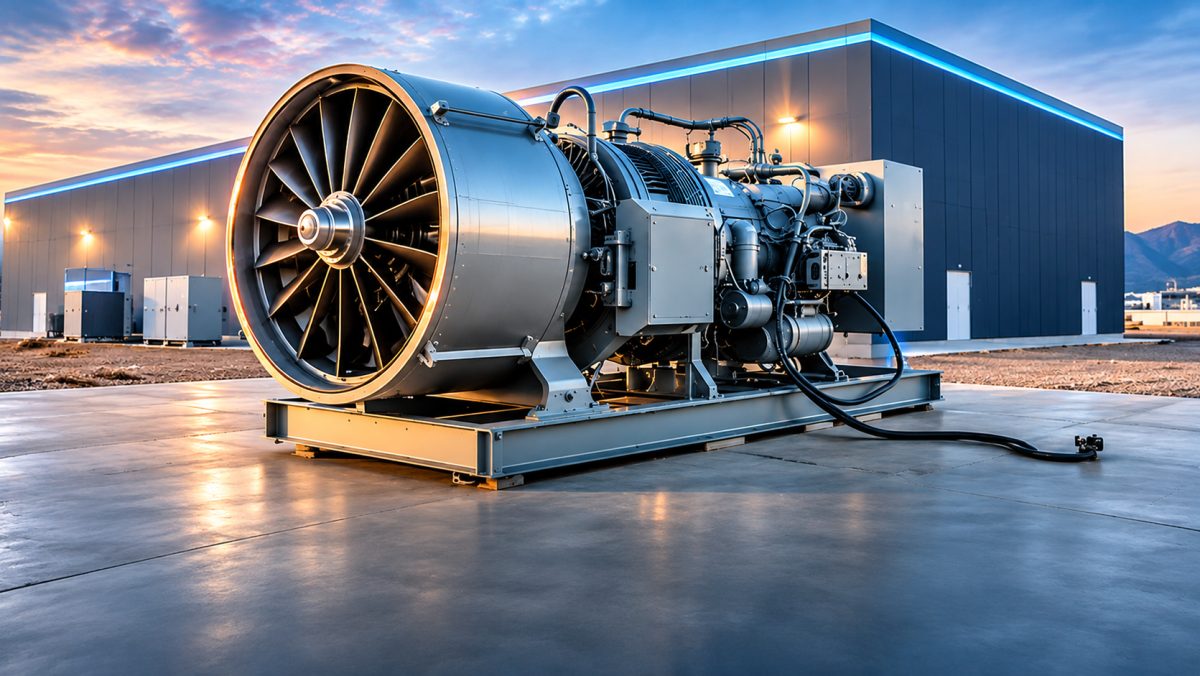
One of the strangest fixes in this story involves old airplane engines. The New York Times reported that Elon Musk's company xAI installed eight converted jet turbines at its data-centre site in Mississippi, based on state permits and satellite images reviewed by the paper. TechCrunch later identified the location as xAI's Colossus 2 facility near Memphis, and reported that Missouri-based company ProEnergy supplied the converted equipment.
These are not new machines built for power plants. They are engines pulled from retired aircraft, then rebuilt to burn natural gas and spin generators instead of jet turbines. A separate company, FTAI Infrastructure, has built something similar called Mod-1, using the core of a CFM56 commercial aviation engine. FTAI said tests at its Miami facility showed the unit could produce 23 megawatts of continuous power, with a peak output of 25 megawatts. It is a clever fix, but reporting from The New York Times and TechCrunch both note that repurposed aircraft turbines tend to burn more fuel and release more pollution than turbines built specifically for stationary power plants.
Why AI Computing Is Draining The Grid So Fast
None of this would be happening without a massive jump in electricity use tied to artificial intelligence. The International Energy Agency reported that global data-centre electricity demand grew 17% in 2025, but electricity use at AI-focused data centres jumped 50% in the same year. That is a huge difference, and it shows how much more power AI training and AI inference workloads need compared to older computing tasks.
In the United States, the pressure is even sharper. Jefferies analysts estimate that U.S. data centres account for nearly 17 gigawatts of electricity demand in 2026, and they expect that number to more than triple by 2028. At the same time, the IEA says gas turbine orders jumped 70% in 2025, a sign that the entire energy-equipment industry is straining to keep up. This isn't only a turbine problem either. Developers are also stuck waiting for transmission line upgrades, gas pipeline connections and other utility work needed before a data centre can even plug into the grid.
Batteries And On-Site Power Join The Rush
Turbines are not the only tool developers are grabbing. Research firm Omdia projects that data centres could deploy 35 gigawatts of behind-the-meter power by 2030, a category that includes gas turbines, reciprocating engines and battery energy-storage systems working together. Some companies are now ordering battery systems to replace older backup generators, using them as a buffer when AI computing loads swing up and down quickly.
On-site power, whether from turbines, converted jet engines or batteries, lets a data centre start running without waiting on a slow grid connection. But it is a trade-off. Companies take on more responsibility for fuel supply, local permitting, emissions rules and equipment reliability instead of simply drawing power from the public grid. For communities near these projects, that shift raises real questions about air quality and noise, especially when the power source is a decades-old aircraft engine rather than a purpose-built turbine.
What Comes Next For Power-Hungry AI Projects
The short-term picture looks like more of the same. Buyers will keep chasing used turbines for AI data centres, keep reviving old power plants, and keep testing aircraft-engine conversions while they wait for new turbine factories and grid upgrades to catch up. GE Vernova alone reportedly holds a backlog of 122 gigawatts in gas turbine orders and reservations, according to one industry market map, showing just how backed up the supply chain has become.
The bigger question is whether this is a temporary bridge or a long-term shift in how AI data centres get their electricity. If new turbine factories ramp up and grid connections speed up, some of this scavenging for old equipment could fade. But if AI computing keeps growing at its current pace, used turbines, retired jet engines and battery backups may become a permanent part of how the industry keeps the lights on.