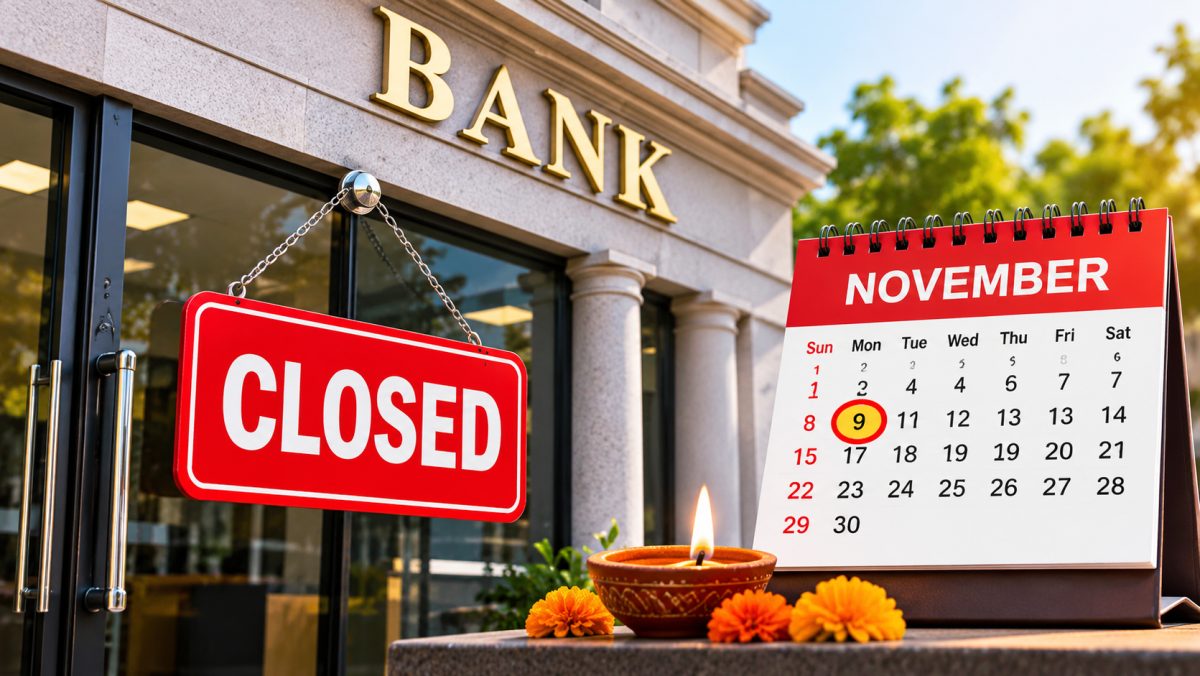

Planning a bank visit this week? Nine states are shutting branch doors right after Diwali, and the list keeps changing by the day.
Banks will remain closed on Monday, November 9, 2026, in Tripura, Madhya Pradesh, Chandigarh, Sikkim, Assam, Manipur, Rajasthan, Uttar Pradesh and Chhattisgarh. The closures mark Diwali, Laxmi Puja, Deepawali, Govardhan Puja and Vishwakarma Day, depending on the state, right after Diwali fell on Sunday, November 8.
Thomas Markle Child Porn Investigation: Son Says He Found Hidden Boxes in Cebu
Why the bank holiday on November 9 looks different in every state
India does not treat Diwali as a single, one-day holiday. Different states celebrate different parts of the festival on different days. Some mark Govardhan Puja on November 9. Others call it Laxmi Puja or simply Deepawali. That is why the same festival season produces a patchwork of closure dates instead of one neat national holiday.
According to the Times of India, "Banks will remain closed on Monday, November 9, with further closures scheduled for November 10 and 11." The report adds that "the holidays will vary from state to state, depending on the festivals being observed, including Diwali, Laxmi Puja, Govardhan Puja, Bali Pratipada and Bhai Dooj." That single line explains why someone in Chandigarh might find their branch locked while a friend in Delhi sees it open as usual.
This isn't random. The Reserve Bank of India allows each state to set its own festival holiday list. Banks follow those regional calendars on top of the fixed national closures. So a holiday in Tripura does not automatically mean a holiday in Tamil Nadu or Punjab. Customers have to check their own state's list every single time, not just assume Diwali means a blanket shutdown everywhere.
Cleveland Balloonfest 1986: How 1.5 Million Balloons Turned Into a Civic Disaster
Bank holiday November 10 and 11 2026 add more states to the list
The closures do not stop at November 9. On Tuesday, November 10, banks will be shut in Gujarat, Maharashtra, Karnataka, Uttarakhand and Sikkim. The occasions listed include Diwali, Bali Pratipada, Deepawali, Govardhan Puja, Laxmi Puja and Vikram Samvat New Year Day, which many communities treat as the start of a new calendar year.
Then on Wednesday, November 11, the holiday shifts again. Sikkim, Manipur, Uttar Pradesh, West Bengal and Himachal Pradesh are listed as closed for Laxmi Puja, Deepawali, Ningol Chakkouba, Bhratridwitiya, Bhai Dooj and Chitragupt Jayanti. Notice how Sikkim shows up on all three dates, November 9, 10 and 11. Manipur and Uttar Pradesh also repeat, appearing on both November 9 and November 11.
That repetition is the clearest sign that this is not a one-size-fits-all holiday. Customers in these particular states need to track multiple closure days in a row, while someone in a state that appears on none of these lists might see normal banking all through the week.
What the Diwali bank holiday pattern means for everyday banking
A bank holiday on paper does not mean the entire banking system goes dark. Physical branches will not process counter transactions, cheque deposits, or paperwork that needs a staff member's signature on these closure days. But mobile banking apps, internet banking portals and ATMs are expected to keep working through the holiday period, since those systems run independently of branch staffing.
Still, digital access has its limits. If a transaction needs manual verification, a physical document, or a branch manager's approval, it will likely sit pending until the branch reopens. Anyone with urgent paperwork, loan processing, or safe-deposit box access should try to finish that business before the holiday starts rather than after.
Businesses face a trickier situation. A company with branches or vendors spread across multiple states could have one office closed while another stays open on the very same day. That matters a lot for payroll runs, vendor payments, or settlement deadlines that fall during this festival window. Anyone managing finances across state lines should map out exactly which days their specific branches are shut, rather than relying on a general sense that "it's Diwali week, so banks are closed."
Second Saturday closure and the rest of November's calendar
On top of the festival-driven closures, scheduled and non-scheduled banks also observe the second and fourth Saturdays of every month as regular holidays, in line with the Reserve Bank of India's holiday schedule. That means November 14, a second Saturday, adds one more closure date to the month, separate from the Diwali-linked holidays already covered.
Since Diwali itself landed on Sunday, November 8, banks were already closed that day by default, holiday calendar or not. The real complexity begins the next morning, when nine states open their week with a Monday holiday instead of normal business hours.
For now, the safest approach is simple. Check the exact list for your state before heading to a branch between November 9 and November 11. If your state is not named in any of these three lists, your local branch is likely functioning as usual. If it is named, especially if it repeats across multiple dates, plan branch-dependent work either before the holiday run begins or for the first working day once it ends.