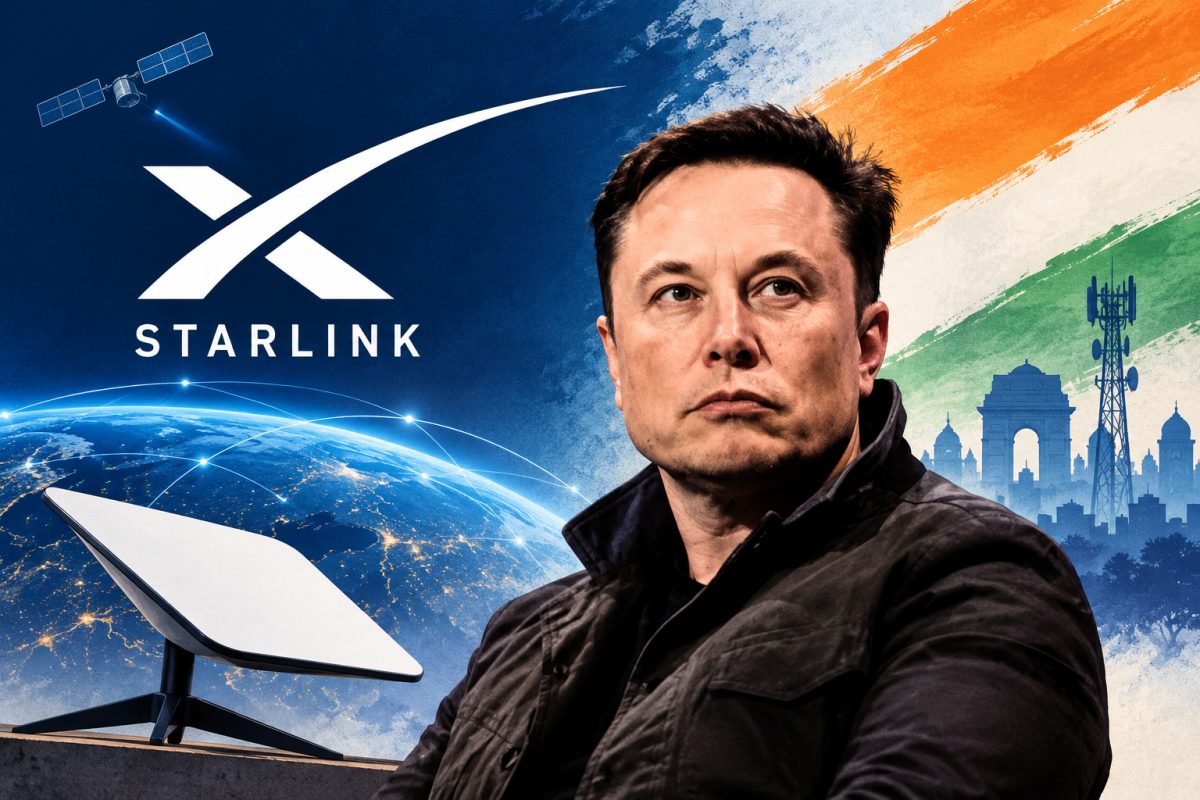

Musk calls the delay a 'crime against the people of India' as SpaceX says Starlink is ready to launch, pending government clearances and an unresolved spectrum pricing battle with Reliance Jio and Bharti Airtel.
Elon Musk on Wednesday, October 7, 2026, accused unnamed Indian business interests of obstructing Starlink's entry into the country, alleging in a post on X that they were trying to preserve a "monopolistic chokehold" over consumers. "Unfortunately, we are being blocked by certain oligarchs in order to maintain their monopolistic chokehold on the Indian people," Musk wrote. "You can guess who they are … This is a crime against the people of India!" Musk did not name any individual or company, but the remark landed squarely inside an ongoing dispute involving Reliance Jio, Bharti Airtel and the Indian government over how satellite spectrum should be assigned.
Goyal Heads to Washington as India Calls Trade Deal 'Done and Dusted'
What Musk Alleged and What Remains Unproven
Musk's accusation is a claim, not a finding by any Indian regulator or court. Available reporting does not show that the government, the Department of Telecommunications, or any judicial body has concluded that a specific company or individual is deliberately blocking Starlink's launch. Musk offered no documentary evidence and did not distinguish between lawful corporate lobbying over spectrum policy and improper interference.
The timing of the post, a day before continued reporting on the regulatory standoff, intensified speculation that Musk was referring to Reliance Jio and Bharti Airtel, both of which have pushed back against the government's preferred method of assigning satellite spectrum. Neither company has been publicly named by Musk, and neither has issued a direct rebuttal captured in available reporting.
Four Global Agencies Raise India's Growth Forecast in One Day — Here's What Triggered the Rush
The Real Bottleneck: Licences Secured, Clearances Pending
Starlink is licensed to operate in India but has not received all the approvals needed to begin commercial service. SpaceX's satellite venture obtained India's Global Mobile Personal Communications by Satellite licence from the Department of Telecommunications in June 2025, followed by authorization from the Indian National Space Promotion and Authorisation Centre on July 8, 2025, covering its first-generation constellation of 4,408 satellites. Those were significant regulatory milestones, but they did not amount to final permission to switch on service.
What remains outstanding is spectrum allocation and completion of security-related clearances. Licensed satellite providers in India must meet additional conditions, including compliance with security requirements, local storage and handling of user data, and restrictions on equipment sourced from outside the country. Lauren Dreyer, a SpaceX vice-president, said the company's operational preparation was substantially complete and that Starlink was ready to begin once the remaining government clearances were granted. SpaceX has reportedly built 20 gateways in India — the ground infrastructure needed to link satellites with terrestrial networks — and has said Indian user data will remain within the country.
A Fight Over Auctions Versus Administrative Allocation
At the center of the dispute is a policy question: should satellite spectrum be assigned administratively or sold through competitive auction? India's government has opted for administrative allocation, a method Starlink supports. Jio and Airtel have argued that satellite broadband providers should face conditions comparable to terrestrial telecom operators, including competitive payments for spectrum, contending that administrative allocation would hand satellite companies an unfair advantage over carriers that paid heavily for airwaves through auctions.
The disagreement carries legal weight. Reliance Jio has reportedly invoked the Supreme Court's 2012 judgment on 2G spectrum allocation, which rejected arbitrary assignment of a scarce public resource and stressed transparent procedures, and has submitted supporting legal opinion, including one from retired Supreme Court judge L. Nageswara Rao. Whether that precedent applies directly to satellite spectrum remains contested rather than settled.
On September 3, 2026, the Digital Communications Commission, the DoT's top decision-making body, approved a spectrum usage charge of 5% of annual adjusted gross revenue, with a reduced 4% rate proposed for rural and remote service. The approved tenure was five years, with a possible two-year extension. That decision still requires ratification by an inter-ministerial panel and final approval from the Union Cabinet, meaning the framework Starlink needs to launch under remains incomplete.
Partnerships With Rivals Complicate the Narrative
Despite the standoff, Starlink has signed memorandums of understanding with both Bharti Airtel and Reliance Jio — the same companies at odds with it over spectrum policy. The arrangements would let Starlink tap into Airtel's and Jio's established customer bases, regulatory experience and physical infrastructure rather than building a parallel distribution network from scratch. Starlink also said it has been engaging with state governments to assess how the service could serve local connectivity needs once authorized.
India's satellite-broadband field includes two other licensed contenders: Eutelsat OneWeb, backed by Bharti Group chairman Sunil Mittal, and Jio Satellite Communications, a subsidiary of Reliance Jio Platforms. Both have already secured market access, underscoring that the fight over spectrum rules affects more than just Starlink, even as Musk's public complaint has framed the delay as a uniquely targeted obstruction.
What Happens Next
The remaining steps are regulatory, not technical. The government must finalize the spectrum framework, secure inter-ministerial ratification, obtain Cabinet approval, and confirm Starlink has met all security and data-localization conditions before commercial service can begin. Available evidence confirms Starlink holds the necessary licences, has built infrastructure, and has partnered with incumbent operators — but it does not establish a launch date.
For consumers in rural, mountainous, island and sparsely populated parts of India, satellite broadband could fill gaps left by fibre and mobile networks, though actual impact will hinge on pricing, terminal costs and spectrum terms. For Airtel and Jio, the dispute is framed as a competitive-neutrality issue after years of costly spectrum auctions. Musk's "oligarchs" remark raises the political stakes but leaves the core regulatory questions — and the identity of his alleged blockers — unresolved.