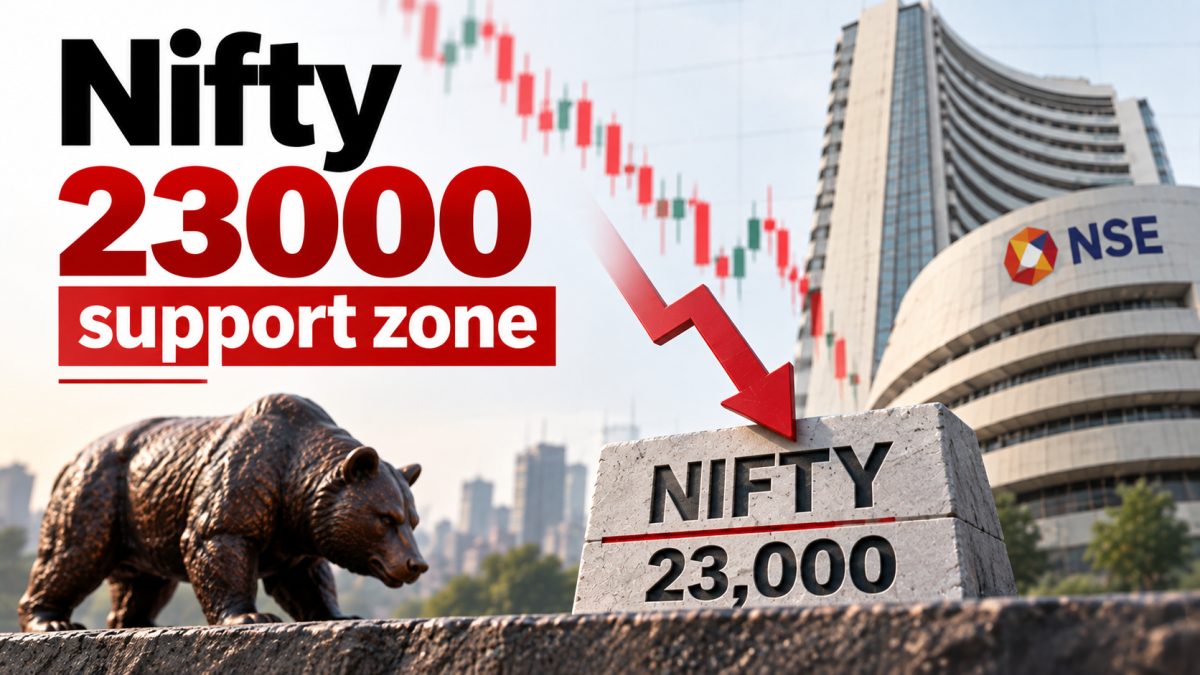


NSE chairperson Srinivas Injeti says self-listing on the exchange's own platform is technically feasible, but insists the final call rests entirely with market regulator SEBI.
Mumbai, September 25, 2026: The National Stock Exchange of India (NSE) may one day list and trade its own shares on its own trading platform, but such self-listing remains barred under current regulations, NSE chairperson Srinivas Injeti said at a media briefing in Mumbai on Friday. His remarks came a day after NSE shares began trading on rival exchange BSE, in a debut that Reuters reported valued the exchange operator at approximately $47 billion.
Sebi To Review Derivatives Settlement Pricing After CAS Rollout Feedback
Injeti's Remarks Come a Day After NSE's Landmark BSE Debut
Speaking to reporters, Injeti described self-listing as a regulatory possibility rather than an imminent corporate plan. "Self-listing may not be permitted today, but may be permitted tomorrow," he said, according to reports from Times of India and Economic Times Legal. He added that granting such permission was "something which is the regulator's prerogative," while stressing, "There is no problem. But this (self-listing) is something which is in the realm of feasibility… it is feasible."
The comments followed NSE's much-anticipated market debut on BSE on September 24, 2026, which gave investors public-market exposure to India's largest stock exchange for the first time. Because NSE shares are unavailable for trading on NSE itself, the arrangement created an unusual cross-listing structure: NSE shares trade on BSE, while BSE's own shares continue to trade on NSE, as they have for years. Business Standard reported that NSE management indicated the exchange could "live with whatever is permissible under the current regulations" for now.
Nasdaq Hits Record High on Micron Surge While Dow Sinks as Oil Nears $100 a Barrel
The Regulatory Wall: Why NSE Cannot List on Itself
Under the SEBI Stock Exchanges and Clearing Corporations Regulations, 2018, specifically Regulation 45(1), a recognised stock exchange may list its securities only on another recognised stock exchange, not on its own platform. This provision is why NSE's public debut was structured for BSE rather than NSE's own exchange, according to reporting cited by ETBFSI. NSE managing director and chief executive Ashish Chauhan had clarified before the listing that the exchange would not seek SEBI approval to list or trade its own securities under existing rules, telling reporters at a post-listing interaction that "at the current juncture, it is not permissible by regulations," though he indicated NSE would share comments with SEBI if regulations evolve.
The restriction stems from long-standing concerns about conflicts of interest. A stock exchange functions simultaneously as a commercial company and as the market institution responsible for operating trading infrastructure, monitoring participants, enforcing listing rules and preserving market integrity. Allowing an exchange to trade its own shares on its own platform raises questions about whether it could access information or regulatory advantages unavailable to other listed companies, or whether commercial interests might color its supervisory functions.
SEBI's Firmer Stance Versus NSE's Forward-Looking Position
SEBI's public position has been notably more cautious than NSE's characterization of feasibility. On September 17, 2026, SEBI chairman Tuhin Kanta Pandey said no formal request had been received from NSE seeking permission to trade its shares on its own exchange, describing the proposal as "too early" to consider, according to The New Indian Express. Other outlets, including Nation Press and Flash Finance News, reported Pandey as confirming that current rules did not permit such self-trading and that no formal application or letter had been submitted by the bourse.
This creates a clear distinction between feasibility in principle and permission under existing rules. Injeti's comments represent NSE's leadership floating a possible future regulatory shift, not announcing an approved pathway. Fortune India reported that Injeti tied the outcome to whether NSE could adequately address SEBI's conflict-of-interest concerns, while The Hindu BusinessLine reported NSE's position as being "open to self-listing if SEBI permits," contingent on the regulator being satisfied that potential conflicts can be managed.
Historical Precedent and SEBI's Own Earlier Guidance
The debate is not entirely new. In a January 30, 2003 circular on corporatisation and demutualisation of stock exchanges, SEBI stated it would be desirable for a demutualised exchange to list its shares on itself or another exchange, but added that self-listing should not be made mandatory. The circular also specified that monitoring of listing conditions should remain with the Central Listing Authority or SEBI itself, drawing on regulatory approaches used in the United Kingdom and Australia.
That 2003 guidance shows SEBI has long recognized both the appeal and the risks of self-listed exchanges, without resolving how such a structure would be supervised. More than two decades later, with NSE's IPO now complete and its valuation established through the BSE listing, the question has resurfaced with fresh commercial weight, though the regulatory answer remains unchanged.
What Happens Next for NSE and SEBI
No formal application, consultation paper, rule amendment or implementation timetable has been identified in current reporting. The next step, if any, would be regulatory rather than operational: NSE would need to formally engage SEBI, and the regulator would have to determine whether Regulation 45(1) should be amended or reinterpreted, and what safeguards around surveillance, disclosure and enforcement would be required.
Until such a process unfolds, NSE's shares will continue trading exclusively on BSE, even as its own leadership signals openness to eventually hosting trading in its own stock. The cross-listing arrangement, meanwhile, offers investors transparent price discovery and liquidity through an independent venue while preserving the separation between NSE's corporate securities and the platform it supervises.