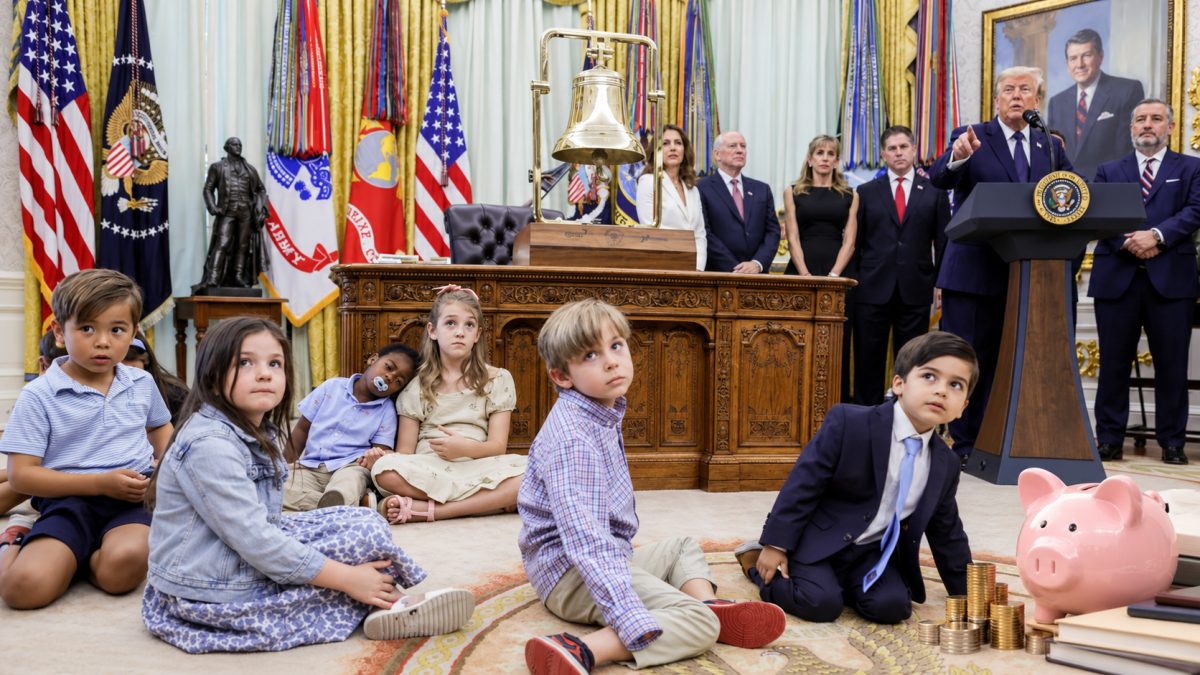

Treasury's nationwide auto-enrollment push created Section 530A investment accounts for over 60 million children, though parents must still claim them to access government seed money.
The Treasury Department announced on Oct. 1, 2026, that it had automatically created Trump Accounts for more than 60 million eligible American children, completing a nationwide expansion of the tax-advantaged savings program first launched July 4. The accounts, formally designated Section 530A accounts under the Internal Revenue Code, are available to any U.S. child under 18 with a valid Social Security number, but automatic creation alone does not mean parents have claimed the accounts or that federal money has been deposited, according to the Treasury announcement.
Trump Threatens to 'Annihilate' Iran at UN, Then Reveals Secret Three-Hour Talks Hours Later
How Treasury Moved From Opt-In to Automatic Enrollment
View this post on Instagram
When Trump Accounts debuted July 4, 2026, parents or guardians generally had to actively opt in to establish an account for their child. Participation grew slowly at first. Treasury Secretary Scott Bessent told the House Financial Services Committee on Sept. 15 that only approximately 7 million to 8 million children had been signed up to that point. Bessent signaled a dramatic shift was coming, telling lawmakers, "We anticipate within a month we will have 70 million because we will go to auto-enroll."
That shift required a regulatory change. Treasury and the IRS issued temporary regulations, designated T.D. 10056, along with proposed regulations on Sept. 29, published in the Federal Register and taking effect Sept. 30. According to the Journal of Accountancy, the agencies said the new structure "overcame barriers that previously made automatic enrollment impractical," allowing the government to establish accounts and make the administrative elections needed to run the contribution system without requiring an individual parent to file first. Treasury described the mechanism, according to analysis from Current Federal Tax Developments, as a "single nationwide bulk election" used to establish accounts en masse.
Trump Backs Diesel Export Ban to Ease Fuel Prices:Why His Own Team Is Divided
The Scale and Mechanics of the Rollout
Treasury's Oct. 1 press release, SB-0642, confirmed that automatic enrollment was complete and that every eligible child under 18 with a valid Social Security number — and who would not turn 18 before the end of 2026 — now has a Trump Account available to be claimed. CNBC, which received the announcement exclusively, reported the figure at more than 60 million children newly enrolled, consistent with the CBS News and CNBC reporting from Sept. 29-30 that described the regulatory change as potentially adding up to 60 million new accounts.
Treasury has estimated that the broader regulatory framework could affect roughly 73 million children across 44 million families, according to the Yahoo News and Journal of Accountancy coverage of the guidance. That estimate suggests the more than 60 million accounts created through auto-enrollment represent the bulk of the eligible population, though not necessarily every potentially eligible minor in the country. The gap between the 73 million estimate and the over-60-million auto-created figure likely reflects children already enrolled under the earlier opt-in system before Oct. 1.
What Comes Next for Parents Seeking the $1,000 Contribution
A central financial incentive tied to the program is a one-time $1,000 federal contribution available to qualifying children. Under program rules, children must be U.S. citizens born between 2025 and 2028 to qualify for this pilot contribution. Critically, the automatic creation of an account does not trigger this deposit. Parents or guardians must still actively claim the account and elect to receive the government contribution.
Treasury's published instructions direct parents to use the Trump Accounts app to verify their identity, confirm their relationship to the child, review the account details, and accept the account terms before the account becomes fully activated from the family's perspective. Until that claiming process is completed, the account exists in the federal system but remains, in Treasury's own framing, merely "ready to be claimed" rather than under family control.
Official Reactions and the Policy's Broader Aims
Bessent cast the auto-enrollment completion as a landmark moment for the administration's economic agenda. "With automatic enrollment, over 60 million more eligible children now have an account ready to be claimed," he said, according to Treasury's statement and a post on X. He called it "a transformative milestone" in the administration's effort to extend financial opportunity to American children, framing the initiative around building "generational wealth" and improving long-term "financial futures."
The administration has positioned the program as a default system designed to reach families who might not otherwise navigate opt-in paperwork or even know the benefit existed. By removing the initial enrollment barrier, Treasury effectively shifted the burden from account creation to account activation — a distinction that will shape the program's real-world impact in the months ahead.
Unresolved Questions as Claims and Verification Begin
With account creation complete, Treasury's operational focus is expected to shift toward claims processing, identity verification, and contribution elections rather than further enrollment expansion. The available reporting does not establish how many of the more than 60 million newly created accounts will ultimately be claimed by families, how many children will qualify for and receive the $1,000 seed contribution, or what investment products, fees, and returns will define the accounts over time.
Because Trump Accounts are investment vehicles rather than conventional savings accounts, their eventual value will hinge on market performance, contribution levels, and the specific rules governing withdrawals — factors that remain unresolved as the claiming phase begins. Whether the auto-enrollment strategy produces broad, durable family participation or leaves millions of accounts dormant and unclaimed will become clearer only as Treasury reports on claim rates in the coming months.