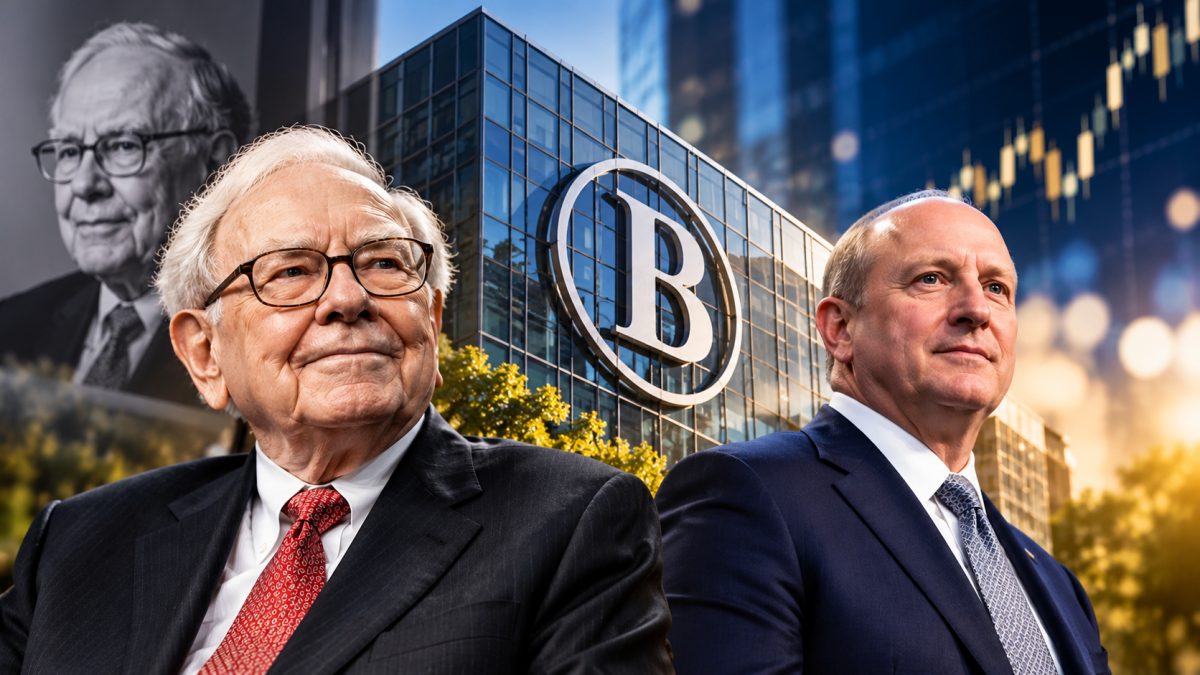

The 96-year-old investor closes a 61-year chapter atop Berkshire Hathaway, splitting his authority between family succession and professional management as the $1 trillion conglomerate charts its next era.
Warren Buffett has officially stepped down as chairman of Berkshire Hathaway, the company confirmed in a parting shareholder letter released around September 18, 2026, ending more than six decades of leadership at the helm of one of the world's most closely watched conglomerates. Buffett, who turned 96 in 2026, will become chairman emeritus while remaining a company director, and his son, Howard Buffett, a Berkshire director for 33 years, will succeed him as chairman, according to the letter cited by Business Insider and the Guardian.
FPI Selloff Headlines Hide a Sharper Truth: Foreign Investors Are Picking, Not Fleeing India
The Farewell Letter and Its Central Message
View this post on Instagram
Buffett's exit was framed not as a response to crisis but as an acknowledgment of the limits imposed by age. "Father Time always wins. He has, however, been generous with me," Buffett wrote, according to multiple outlets including the Economic Times and Fast Company. He added that time had allowed him to watch Berkshire "reach a point where I am more confident than ever about what lies ahead," a line that recast the otherwise somber farewell as an expression of institutional strength rather than decline.
Buffett also told shareholders that "serving as your chairman has been the privilege of a lifetime, and I have never taken your trust for granted," as reported by both the Guardian and Fast Company. The phrase "Father Time always wins" draws on the long-standing idiom "Father Time is undefeated," used to describe the inevitability of aging catching up with even the most accomplished individuals, the Economic Times noted in its analysis of the farewell message.
Four Global Agencies Raise India's Growth Forecast in One Day:Here's What Triggered the Rush
Two Successions, Not One: Howard Buffett and Greg Abel
The announcement carries an important nuance that has generated confusion in public discussion: Howard Buffett's appointment as chairman is a distinct development from the long-anticipated succession plan for chief executive. Greg Abel, Berkshire's vice-chairman overseeing non-insurance operations, has for years been identified as Buffett's chosen successor for the CEO role, a point reinforced in Fast Company's coverage of the farewell letter, which described Buffett's continued vote of confidence in Abel's operating leadership.
Howard Buffett's new position addresses governance and board-level continuity rather than day-to-day executive management. The available reporting does not indicate that Howard Buffett has assumed Abel's expected responsibilities as chief executive, and the two roles should not be conflated, even though headlines emphasizing the family transition have sometimes obscured that distinction. Berkshire's structure now separates stewardship, resting with Howard Buffett as chairman, from operational command, which remains associated with Abel.
Six Decades of Compounding: The Record Buffett Leaves Behind
Buffett's tenure transformed Berkshire Hathaway from a struggling textile manufacturer into a diversified conglomerate spanning insurance, railroads, utilities, industrial businesses and a vast portfolio of publicly traded securities, now valued at roughly $1 trillion, according to the Guardian. Figures cited by Yahoo Finance show that Berkshire's per-share market value compounded at approximately 19.7% annually between 1965 and 2025, a rate that would have turned a hypothetical $100 investment into roughly $6.1 million over the period.
Central to that record in recent years has been Berkshire's investment in Apple. The company began buying Apple shares in 2016 and invested about $35 billion in the stock between 2016 and 2018, according to the Economic Times. That position later grew to approximately $185 billion before tax, including gains and dividends, based on figures attributed to Buffett and reported by Business Insider, with Apple representing nearly 22% of Berkshire's roughly $263 billion equity portfolio. The investment marked a departure from some of Buffett's earlier "cheap stock" purchases, with Berkshire's thesis instead resting on Apple's ecosystem, brand loyalty, pricing power and recurring consumer demand for the iPhone.
A Parting Warning About Market Speculation
Alongside the reflections on his career, Buffett's farewell reportedly voiced concern about the direction of financial markets, specifically that speculation and short-term trading were crowding out disciplined analysis of business fundamentals, as characterized in the Economic Times report. The coverage frames this as consistent with Buffett's long-standing criticism of investor behavior driven by excitement or leverage rather than underlying value, though it stops short of describing any new regulatory proposal or formal policy intervention. The point, as presented, was philosophical rather than prescriptive.
That caution arrives at a moment when Berkshire itself sits atop a substantial cash position and a portfolio increasingly defined by a handful of large, long-held equity stakes. Analysts and shareholders are expected to watch closely whether Berkshire's post-Buffett leadership preserves the conservative balance sheet, decentralized operating model and insurance discipline that defined his tenure, or whether new decisions on acquisitions, buybacks or dividend policy signal a shift in approach.
What Comes Next for Berkshire Hathaway
The transition leaves Buffett formally connected to Berkshire as chairman emeritus and director, even as operating and governance responsibilities shift to Abel and Howard Buffett respectively. The letter's confident tone was designed to reassure shareholders that Berkshire had reached institutional maturity capable of outlasting its founder's direct involvement, according to the framing in both the Guardian and Business Insider accounts.
The coming months are likely to serve as the first real test of that claim, with markets watching how Howard Buffett's board leadership and Abel's executive decisions interact, whether Berkshire's culture of long-term value investing survives intact, and how the company manages concentrated positions like Apple amid Buffett's own warnings about speculative excess. For now, Berkshire's succession stands as a deliberate split of duties rather than a single handoff, an arrangement its architects hope will prove as durable as the compounding record it inherits.