
Manufacturing, services and robust domestic demand powered growth beyond RBI projections even as geopolitical and weather risks loomed.
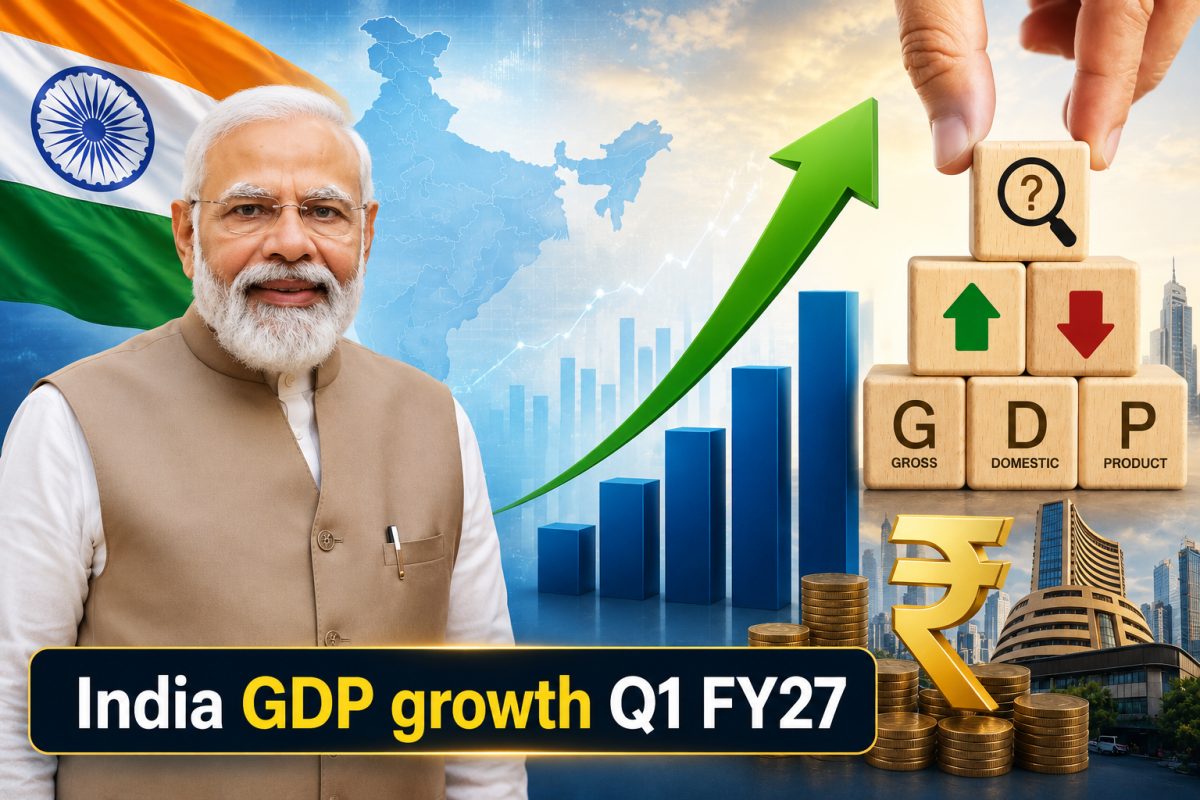
India's real GDP grew 7.8% year-on-year in the April-June quarter of the 2026-27 financial year, according to data released by the National Statistics Office (NSO) in New Delhi on 31 August 2026. The growth, driven by strong manufacturing and services activity alongside resilient domestic demand, came despite headwinds from the US-Iran/West Asia crisis and El Nino-related weather risks. The figure beat most economist forecasts and outpaced the Reserve Bank of India's earlier projection for the quarter, prompting widespread commentary about the economy's resilience even as analysts flagged risks of moderation ahead.
The 7.8% print marks a moderation from the roughly 8.6% growth recorded in the preceding quarter, but the number still surprised many observers who had expected a sharper slowdown given the challenging global backdrop. Reuters described the result as India "smashing growth forecasts" as an investment boom and manufacturing strength added to already-solid consumer demand.
Manufacturing and Services Drive the Headline Number
Manufacturing emerged as a central driver of the quarter's performance. Reuters reported that manufacturing activity accelerated sharply, contributing significantly to the overall beat against forecasts, with an investment boom running in parallel. The Economic Times' commentary similarly pointed to investment and manufacturing activity as the twin engines behind the robust economic performance during the period.
Services also played a defining role, expanding faster than the headline growth rate and acting as the main engine of the economy's expansion. Coverage of the quarter highlighted financial services and real estate as leading contributors within the services basket, alongside public administration, defence and other government-linked services. India Today noted that the economy held steady at the prior year's growth rate, delivering what it called a stronger-than-expected start to the financial year despite a challenging global environment.
Construction and infrastructure-related activity also supported the quarter's momentum, consistent with continued government capital expenditure and infrastructure build-out that has underpinned investment-led growth in recent quarters. The Times of India's coverage specifically noted surging investment as a hallmark of the quarter.
Domestic Demand and Investment Offset External Shocks
Robust domestic demand featured prominently in explanations for the strong print. The Times of India framed this as a key factor that allowed the economy to grow at 7.8% despite external shocks from the West Asia crisis and El Nino conditions. Reuters echoed this, citing solid consumer demand running alongside the investment boom and manufacturing strength.
Exports also rose during the quarter, according to the Times of India's reporting, contributing positively even as global trade conditions remained difficult. The US-Iran war and the broader West Asia crisis have been widely flagged as a risk channel for the Indian economy through higher oil prices, elevated energy costs, and potential disruption to trade and shipping routes through the Middle East. Analysts quoted in coverage from ANI and Latestly described the Q1 growth figure as having "defied" this West Asia shock, meaning the anticipated drag on GDP proved smaller than feared, at least in this first quarter of the fiscal year.
Growth Beats RBI Forecasts as El Nino Risk Persists
The 7.8% figure exceeded the Reserve Bank of India's earlier projection for the quarter, a gap that has drawn attention from economists and market watchers. The scale of the beat has raised questions about the strength of underlying demand and the implications for the future path of monetary policy, according to reporting from the Economic Times and other outlets tracking the RBI's estimates.
El Nino-related weather risks were widely flagged ahead of the data release as a potential drag on agricultural output and rural incomes through disrupted monsoon patterns. Coverage from Bhaskar English explicitly connected the Q1 growth figure to these worries, noting that the economy still grew faster than expected despite the looming threat to rainfall and crop yields. The realized effects of El Nino on farm output and food inflation remain a forward-looking concern rather than a fully materialized drag on the Q1 numbers themselves.
Economists Flag Risk of Moderation in Coming Quarters
Despite the stronger-than-expected headline number, economists cited in ANI and Latestly coverage cautioned that growth could moderate in subsequent quarters as the cumulative impact of global tightening, geopolitical tensions and trade headwinds intensifies. The Economic Times' commentary was direct in stating that despite a strong Q1 showing, risks remain skewed to the upside in terms of potential negative shocks, driven by geopolitics and geo-economics.
The Q1 FY27 print also sits within a broader context of sustained high growth. Separate government data referenced in coverage from mid-2026 showed full-year growth of around 7.7% for FY26, with momentum picking up in the final quarter of that year to reach 7.8%. Reports also noted that the government has revised upward its growth projections for prior financial years, reinforcing a narrative of India sustaining a multi-year phase of high single-digit growth even as external risks continue to evolve.