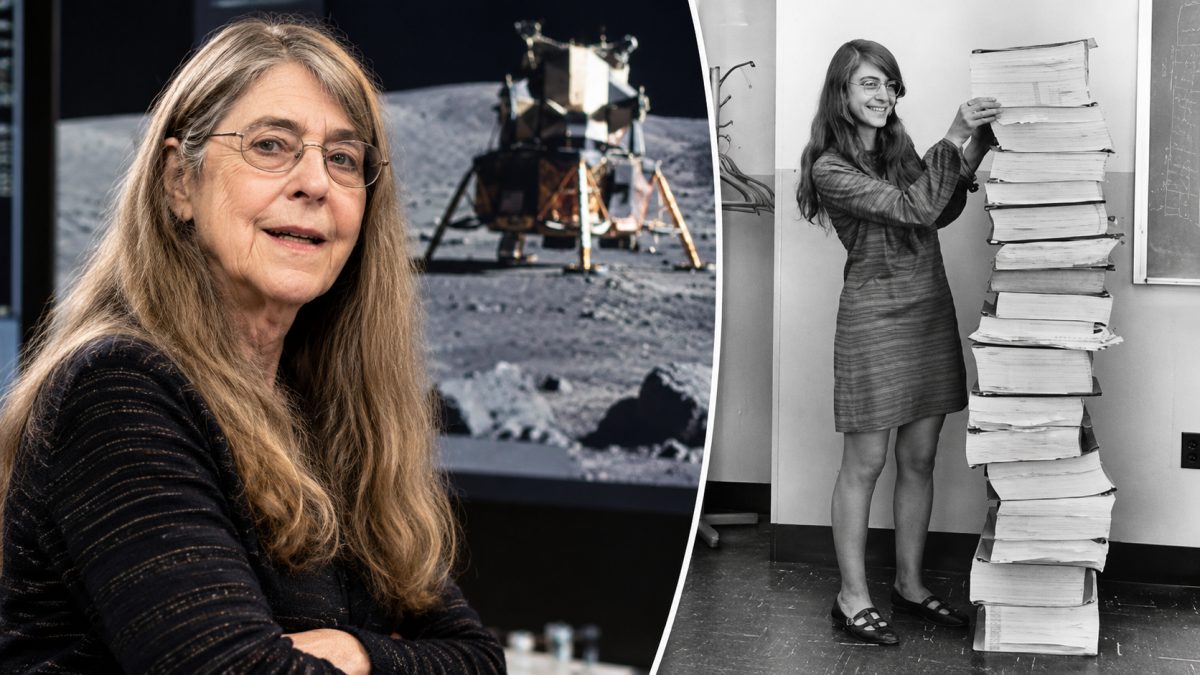

She wrote code before anyone called it software engineering, and it helped land men on the moon.
Quick Summary: Margaret Hamilton, who led the MIT team that built the Margaret Hamilton Apollo software, died September 30, 2026, at 90 in Cambridge, Massachusetts. Her code handled computer overload alarms during Apollo 11's 1969 moon landing, helping the mission succeed.
Space Marine 2 Finally Lets Players Become Chaos Space Marines as Anniversary Update II Goes Live
Who Was Margaret Hamilton and Why Her Apollo Software Matters
View this post on Instagram
Margaret Hamilton was a computer scientist who led the team that wrote the onboard flight software for NASA's Apollo missions. She worked at MIT's Instrumentation Laboratory, where she became the first programmer hired for the Apollo project. She was also the lab's first female programmer, according to MIT.
Who she was: An American mathematician and computer scientist born in Paoli, Indiana, in 1936. What she built: The Margaret Hamilton Apollo software that guided astronauts to the moon and back.
Team size: She led a team of about 100 people who wrote the Apollo flight code, according to The New York Times. Her legacy: MIT credits her with helping create software engineering as its own serious field.
From Indiana to MIT's Apollo Lab
Hamilton started studying math at the University of Michigan in 1955. She then moved to Earlham College, graduating in 1958 with a math degree and a minor in philosophy. In 1965, she spotted a newspaper ad for a job at MIT's Instrumentation Laboratory. She applied, got hired, and joined the team working on NASA's new Apollo contract.
Amazon Drops Apple Prices to Record Lows Days Before Prime Big Deal Days Even Starts
How Margaret Hamilton's Apollo Software Saved the Moon Landing
The biggest test came during Apollo 11 in July 1969. As Neil Armstrong and Buzz Aldrin's lunar module came down toward the moon, the onboard computer started flashing alarms. It was getting more data than it could handle all at once.
The problem: The spacecraft computer was overloaded with incoming data right before landing. The fix: Hamilton's team had built the software to sort tasks by priority, so critical guidance jobs ran first.
The result: Lower-priority tasks got paused or dropped, and the computer kept working on what mattered most. The outcome: Mission control in Houston saw the computer was behaving as designed, and the landing went ahead.
This moment is now seen as proof that software can be just as important as hardware when it comes to keeping a space mission safe. Without that priority system built into the Margaret Hamilton Apollo software, the alarms could have forced the crew to abort the landing.
A Career Spent Building a New Field
Back in the 1960s, software was not treated as important work. The New York Times reports that colleagues at MIT used to tease her, saying, "There goes Margaret with her software engineering." Hamilton pushed for the term anyway, wanting software to be respected like any other engineering discipline.
Looking back on those years, Hamilton said, "There was no choice but to be pioneers." She also described her team warmly, saying, "Looking back, we were the luckiest people in the world."
Margaret Hamilton's Life After Apollo and Her Final Years
Hamilton worked at MIT from 1959 until the mid-1970s. After leaving, she became an entrepreneur and ran her own computing company. MIT says she authored more than 130 publications over her career.
1959 to mid-1970s: Hamilton worked at MIT, spanning more than two decades. After MIT: She became a CEO and entrepreneur in the tech industry.
Her death: Hamilton died September 30, 2026, at a hospital in Cambridge, Massachusetts. She was 90. Who confirmed it: Her daughter, Lauren Hamilton, confirmed her death, and MIT called her a "computing pioneer."
News outlets, including The New York Times, The Washington Post, and CBS News, published tributes calling her a symbol of women's early role in computing. Her Apollo work is now remembered as one of the clearest early examples of why careful software design can make or break a mission.