
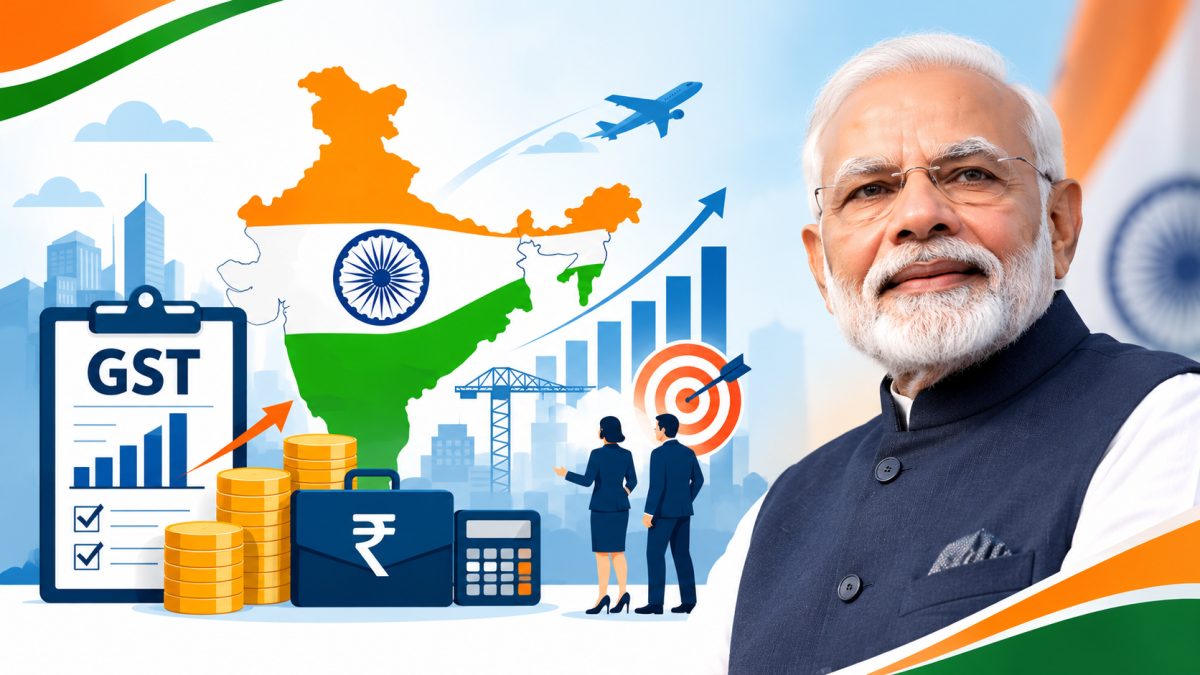

After overhauling tax rates in September 2025, India's GST Council now targets the bureaucratic friction of registration, refunds and disputes that businesses say still burdens daily compliance.
The GST Council is set to meet for the 57th time on 7 October 2026 in New Delhi to take up a package of process reforms described as the second phase of India's "next-generation GST" agenda, according to a Times of India report. The move follows the rate rationalisation that took effect on 22 September 2025, when the government consolidated most goods and services into two primary slabs of 5% and 18%, retaining a special 40% rate for luxury and demerit items. The forthcoming package, by contrast, is aimed not at tax rates but at how taxpayers interact with the system—covering registration, refunds, input-tax-credit processing, litigation and decriminalisation of minor procedural offences.
Senior Citizen Wrongly Taxed ₹25 Lakh on Tax Free Bonds: ITAT Delhi Orders Refund
From Rate Overhaul to Process Reckoning
GST was introduced in July 2017, unifying a patchwork of central and state indirect taxes under a federal GST Council chaired by the Union finance minister with state finance ministers as members. The system originally ran on multiple slabs—nil, 5%, 12%, 18% and 28%—plus special rates of 0.25% and 3% for precious metals, a structure that generated years of disputes over classification, refunds and credit eligibility.
Prime Minister Narendra Modi signalled the shift in August 2025, telling a high-level business meeting that the government was preparing "next-generation GST reforms" to "reduce the tax burden across the country," following his Independence Day pledge of a Diwali gift of lighter taxes. The Centre subsequently proposed a two-slab model of 5% and 18%, with the 40% rate reserved for luxury and sin goods, a structure approved at the Council's 56th meeting and implemented from 22 September 2025. The Press Information Bureau described the overhaul as marking "a new" chapter in GST's nine-year history, branding it GST 2.0.
Goyal Heads to Washington as India Calls Trade Deal 'Done and Dusted'
What the Next Phase Actually Covers
According to the Times of India, the rate changes represented only the first component of the government's broader programme. The next tranche of proposals—expected before the Council on 7 October—focuses squarely on operational friction rather than further rate restructuring. Reported areas include streamlined registration intended to help smaller firms enter the formal tax net more easily, faster refund processing to ease cash-flow pressure on exporters and businesses with accumulated credits, and reforms to input-tax-credit rules, which govern how businesses offset tax paid on purchases against tax collected on sales.
Also on the agenda, per reporting cited in the research, are measures to reduce litigation and decriminalise certain minor or procedural offences, alongside greater use of technology such as e-invoicing and improved invoice matching to cut discretionary decision-making by tax officials. A report on the 57th Council meeting noted the session is expected to focus primarily on these process reforms while reviewing how the two-rate structure introduced after the 56th meeting has functioned, with no broad-based additional rate changes anticipated—though product-specific representations could still surface.
The Economic Case Being Made
The government has pointed to early data as evidence the reform is lifting formal economic activity. Between October 2025 and July 2026, the value of reported taxable supplies rose 25.8% compared with the same period a year earlier, the Times of India reported. That figure, however, measures reported taxable supplies rather than underlying real growth alone—it can reflect shifts in tax rates, compliance behaviour, reporting practices and prices, in addition to actual transaction volumes, making it an indicator of formal-sector momentum rather than conclusive proof of GST-driven growth.
Separately, the finance ministry has linked the rate cuts to broader macroeconomic signals, noting India's GDP growth climbed to a five-quarter high of 7.8% in the first quarter of the current fiscal year, with growth for the following quarter expected around 7.3% amid what officials described as strong consumption demand despite global risks. The two-slab structure, effective since September 22, has lowered rates on numerous household goods, a change the ministry credited with supporting that consumption.
Competing Priorities: Simplification Versus Enforcement
Business stakeholders, particularly small and medium enterprises without large tax departments, are expected to welcome faster refunds, clearer credit rules and reduced procedural exposure. Exporters stand to gain if refund processing becomes more predictable, while larger companies may benefit from clearer rules and less litigation, even as new technology and system changes could impose short-term transitional costs.
Tax administrators face a parallel challenge: preserving audit trails and preventing fraudulent registrations, fake invoices and improper credit claims even as the system is simplified. The core tension is that lower-friction compliance could improve voluntary participation, but poorly designed automation risks introducing fresh errors or merely relocating disputes elsewhere in the process. Decriminalisation proposals require similarly careful boundaries—protecting honest businesses from criminal exposure over technical lapses while keeping serious fraud and deliberate evasion as enforcement priorities.
What Happens After the Council Meets
Because GST decisions require coordination between the Centre and the states under the Council's constitutional structure, any simplification touching exemptions, credits or enforcement procedures must balance taxpayer relief against safeguards on revenue leakage. The available reporting describes the registration, refund, ITC and decriminalisation measures as proposed or forthcoming, not as finally approved by the Council as of publication.
The immediate next step is Council deliberation on 7 October 2026, to be followed by detailed rules, technology upgrades and administrative guidance before any changes take practical effect. Officials and businesses alike have framed the real test as implementation: whether firms experience quicker registrations and refunds, more reliable credit processing and fewer disputes, while government revenue collection and enforcement capacity remain intact.