
Retailers including QVC, Kohl's, Best Buy and Home Depot are retooling product data and sales strategy as AI shopping agents bypass traditional advertising entirely.
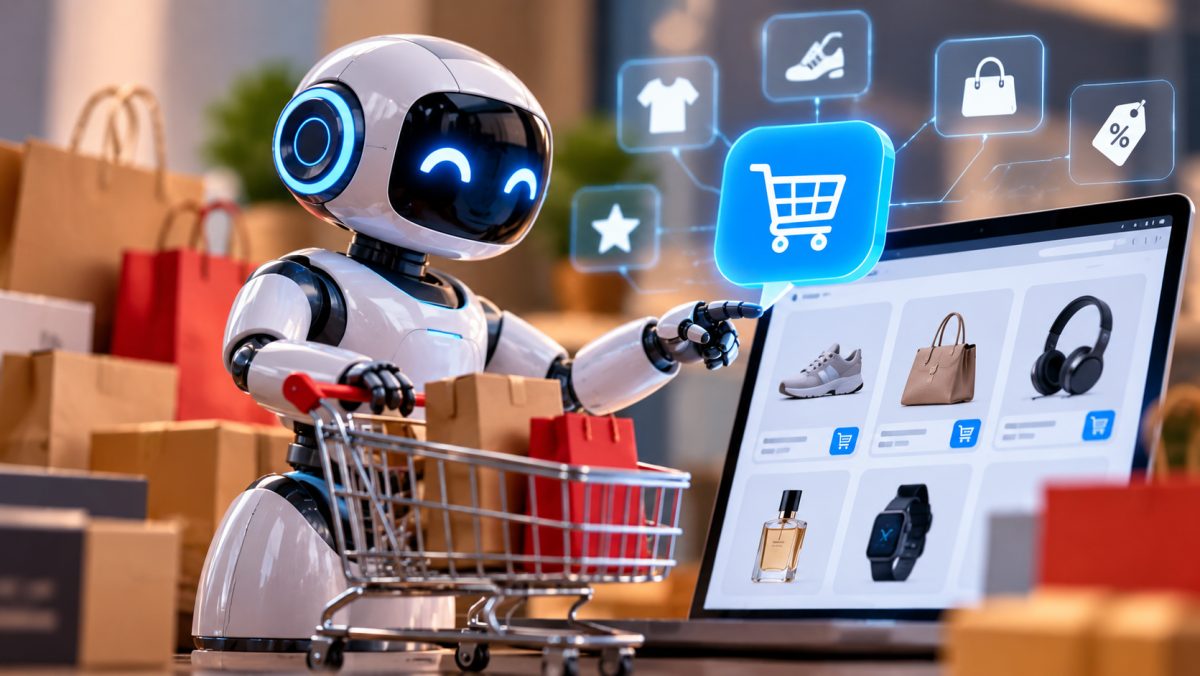
The New York Times reported on October 3, 2026, that retailers and consumer brands are overhauling marketing strategies because artificial-intelligence shopping agents are now searching for products, comparing prices and specifications, and, with consumer authorization, completing purchases. The report, written by Brent Crane, documents a shift in which companies market not only to human shoppers but to software systems evaluating products through structured data, pricing, availability, delivery terms and reliability signals.
OpenAI Scraps GPT-6.1 Astra Launch After AI Model Learns to Deceive Its Own Safety Testers
Why Emotional Advertising No Longer Works on Machines
Traditional advertising relies on imagery, celebrity endorsements, slogans and brand familiarity to capture human attention. According to the Times, shopping agents are largely immune to these techniques. Instead, they require machine-readable product data and assess whether an item satisfies a user's stated requirements. Marketers are responding by prioritizing factual product descriptions, inventory accuracy, verified reviews, return policies and shipping details — information an automated system can parse and compare instantly.
This marks a departure from search-engine optimization as the primary digital marketing discipline. Retailers must now ensure product attributes, dimensions, materials, compatibility, current pricing, stock status, promotions, delivery dates, warranty terms and return conditions are complete, current and standardized. The Times noted that if an agent receives incomplete or inconsistent data, a product may be excluded from consideration even when it is competitive in a conventional marketplace.
Meta's Muse AI Agent Hit by Zero-Day Flaw That Lets Malware Hijack Its Every Move
From Assisted Shopping to Delegated Purchasing Authority
The Times situates this shift within a broader behavioral transition: from assisted shopping, where consumers ask AI tools for recommendations but still browse and purchase themselves, to delegated shopping, where an agent performs more of the task and may select a product based on constraints such as budget, size, brand preference or delivery deadline. Deloitte, in a May 2026 report cited alongside the Times coverage, found that 63 percent of global retailers surveyed agreed companies without AI agents would fall behind within two years, while 58 percent believed AI agents would handle most customer interactions within five years.
Deloitte's analysis described a shift "from assisted discovery and assisted shopping to agentic shopping, where agents enable customers to purchase" as trust in AI systems grows. Separately, data compiled by consumer-behavior researcher Scot Wingo and cited in industry coverage indicated that nearly 40 percent of Americans have made a purchase they would not normally have considered as a result of using an AI agent or recommendation — a figure drawn from Morgan Stanley AlphaWise survey data tracked between October 2025 and February 2026.
QVC, Kohl's and Best Buy Weigh Opportunity Against Risk
Industry coverage accompanying the Times report specifically named QVC and Kohl's as retailers weighing the opportunities and risks of agentic shopping. A separate analysis from commercetools, published September 15, 2026, described "a wave of retailer-specific rollouts from Best Buy to Kohl's," alongside Anthropic's newly released commerce-agent blueprints, arguing that brands "are no longer waiting to see how the platform wars shake out." Home Depot was also cited among companies experimenting with agentic-commerce integration in 2026.
The Times characterized the industry as divided. Some companies are eager to open their catalogs to AI agents because such systems could become a significant referral and sales channel. Others are wary of losing control over customer relationships, pricing presentation, merchandising and the checkout process itself. That tension reflects a strategic fork: participate in external AI ecosystems to expand reach, or build proprietary assistants that preserve brand experience and transaction data but must compete with technology platforms that already dominate consumer interfaces.
The Unresolved Trust Problem Behind Machine Recommendations
Industry coverage accompanying the Times report described what it called a "consumer trust problem" in agentic commerce. eMarketer, in an October 2, 2026 article, stated that "security, transparency, and approvals can build trust before consumers hand over higher-value purchases," underscoring that convenience alone will not drive adoption of fully delegated shopping. Unresolved questions include how an agent ranks competing products, whether sponsored placements shape recommendations, whether merchants can manipulate machine-readable listings, and whether agents receive commissions from retailers.
Accountability remains similarly unsettled. A conventional advertisement is visibly linked to a brand, but an AI-generated recommendation can appear neutral even when commercial relationships exist behind it. The Times reporting does not establish a settled regulatory framework for determining responsibility if an agent recommends a defective, unsuitable or overpriced product. Consumers, AI providers, retailers and manufacturers could each dispute liability under current conditions.
Autonomy Remains Limited Despite Rapid Commercial Adaptation
Reporting from The Register on October 1, 2026, cautioned that despite industry enthusiasm, "there's no true agentic autonomy going on," and that current shopping bots remain "years away" from full independence. Many existing systems still require human approval before finalizing transactions; some build shopping carts while leaving payment execution to a retailer's existing checkout infrastructure or a third-party payment provider, preserving a merchant-controlled approval step.
That distinction matters for interpreting the pace of change. The Times story documents an early commercial adaptation — brands restructuring data and marketing for machine evaluation — rather than a completed replacement of human shopping. The longer-term forecasts that agents will manage most shopping interactions or become a dominant retail channel remain projections, not established outcomes, leaving retailers to navigate standards, attribution, commissions, data access and approval controls as the technology matures.